
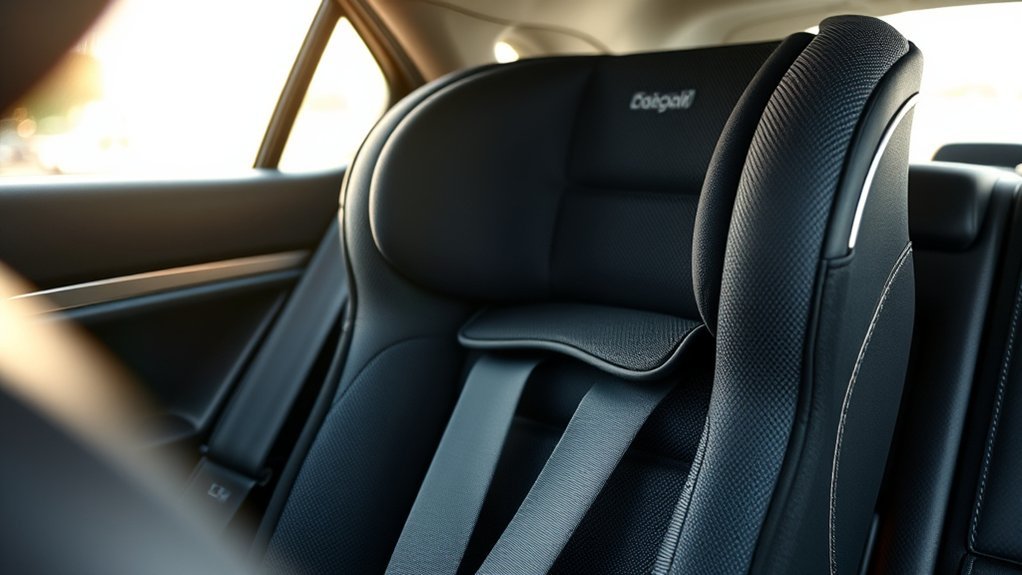
What Is a Car Seat Test
A car seat test evaluates how effectively a child restraint system protects young passengers during collisions by simulating crash forces and analyzing structural integrity, harness performance, and energy absorption.
It also checks ease of installation to prevent misuse.
These tests follow rigorous standards like FMVSS 213 and ECE R44/04, using crash sleds and dummies to replicate real impacts.
Understanding these results helps you choose seats that minimize injury risks.
Exploring this further will clarify key safety factors.
What Is a Car Seat Test and Why It Matters
Understanding the importance of safety, a car seat test evaluates how well a child restraint system protects young passengers during a collision. When you consider newborn safety, these tests are crucial; they simulate crash forces to determine the seat’s ability to minimize injury risks.
You’ll find that the test assesses factors like structural integrity, harness effectiveness, and energy absorption. Additionally, ease of installation is a critical aspect since improper setup compromises protection.
The test examines how intuitively and securely the car seat attaches to the vehicle, ensuring caregivers can correctly install it without error. By rigorously analyzing these parameters, car seat tests provide you with reliable data, enabling informed decisions that enhance your child’s safety on every journey.
Key Safety Standards for Car Seat Tests
Car seat tests rely on stringent safety standards established by regulatory bodies to ensure consistent and reliable evaluations. These safety standards form the foundation of car seat testing, guiding the design and execution of each test.
You must understand the following key standards:
1. FMVSS 213 (Federal Motor Vehicle Safety Standard)
Dictates performance requirements for child restraint systems in the U.S., focusing on crash protection and labeling.
2. ECE R44/04 and R129 (i-Size)
European regulations emphasizing dynamic testing, side-impact protection, and height-based classification.
3. ISOFIX Compliance
Ensures standardized attachment systems for secure car seat installation, minimizing misuse risks.
Simulating Real-World Car Seat Crash Scenarios
The safety standards outlined earlier set the framework, but testing must replicate the complex forces and conditions a child seat faces during an actual collision. You’ll need to understand crash dynamics, which involve rapid deceleration, impact angles, and kinetic energy transfer.
Simulations use crash sleds and dummies to recreate these forces precisely, allowing you to observe how the seat behaves under stress. Seating stability is critical; you’ll assess whether the seat maintains its position without excessive movement, which can compromise protection.
What Car Seat Test Results Tell You
How do you interpret the data from car seat tests to make informed safety decisions? Car seat test results provide critical insights into how well a seat protects a child during a collision by analyzing crash test metrics grounded in car seat physics. These results quantify forces exerted on crash test dummies, reflecting real-world injury risks.
- Impact force distribution: Measures how effectively the car seat absorbs and disperses collision energy.
- Head and neck acceleration: Indicates potential for traumatic injury based on kinematic responses.
- Structural integrity: Assesses whether the seat maintains its form under stress, ensuring restraint reliability.
How to Use Car Seat Test Ratings to Pick the Safest Seat
Where should you focus when selecting a child restraint based on test ratings? Prioritize seats with consistently high safety ratings across multiple car seat testing organizations, as these indicate superior crash protection and restraint performance.
Analyze the specific impact scores and structural integrity data rather than just overall grades. Pay attention to dynamic crash test results, side-impact protection, and ease of correct installation, since improper installation compromises safety.
Compare how different models handle various crash scenarios, noting any recurring weaknesses or strengths. Don’t overlook factors like harness security and energy absorption capabilities highlighted in testing protocols.
Using safety ratings as a precise, data-driven guide enables you to identify the safest seats tailored to your child’s size and your vehicle’s compatibility. This analytical approach ensures you maximize protection based on verified car seat testing outcomes.
Frequently Asked Questions
How Often Should Car Seats Be Replaced After Manufacturing?
You should replace car seats according to the manufacturer’s recommended replacement cycle, typically every 6-10 years. Testing standards evolve and materials degrade, ensuring optimal safety performance throughout the seat’s lifespan.
Can Car Seats Be Used in Airplanes?
Think of your car seat as a shield; you can use it on airplanes if it meets airline travel regulations. Always verify car seat safety standards and FAA approval to ensure secure, compliant use during your flight.
Are There Eco-Friendly Car Seat Options Available?
Yes, you’ll find eco-friendly car seats made from sustainable materials like recycled plastics and organic fabrics. These options reduce environmental impact while maintaining safety standards, offering a technically sound, sustainable choice for conscientious parents.
How Do Car Seat Tests Differ Internationally?
You’ll find car seat tests differ internationally due to varying interstate regulations and labeling standards. This requires you to analyze regional compliance criteria, crash test protocols, and certification processes to ensure safety across borders with precise adherence.
What Materials Are Commonly Used in Car Seat Manufacturing?
Ever wondered how materials engineering shapes safety? You’ll find high-strength steel, impact-absorbing foam, and durable plastics meeting strict production standards.
These materials ensure car seats reliably protect passengers under various crash conditions with precision and resilience.
Conclusion
Understanding car seat tests is essential because they simulate real-world crashes to guarantee your child’s safety. For instance, some tests reveal that up to 40% of car seats fail to adequately protect against head injuries.
By analyzing these results, you can make informed decisions when choosing a seat. Trusting rigorous safety standards and test ratings helps you confidently select the safest option.
Ultimately, understanding car seat tests is crucial for reducing risks in critical moments and keeping your child protected.