How to Install Forward Facing Car Seat
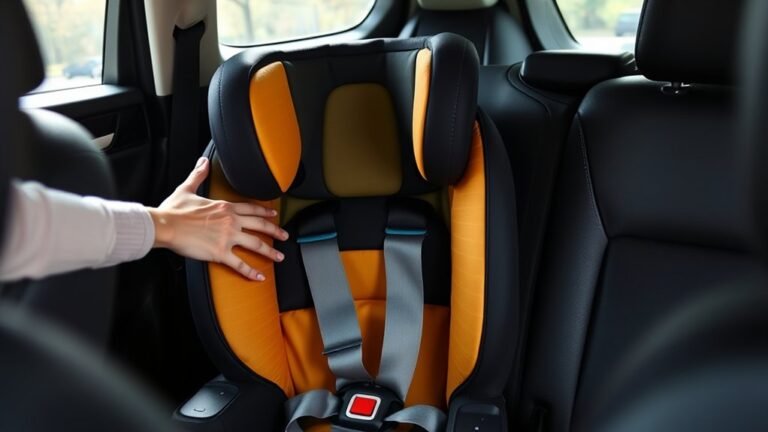
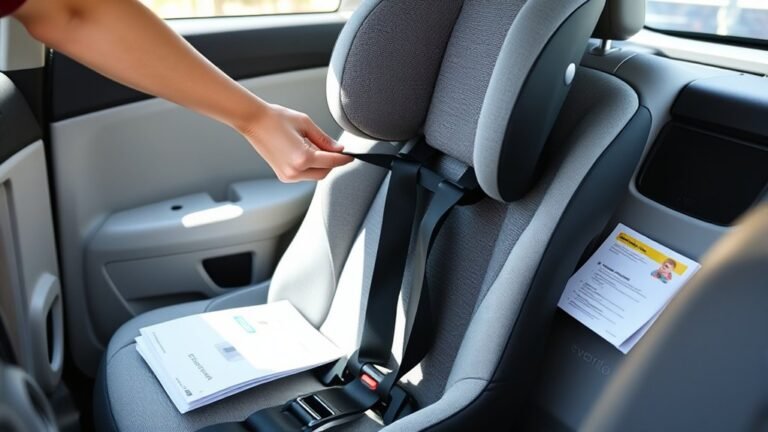
To install a forward-facing car seat, first clear the back seat area and confirm no safety recalls on your seat model. Use either the seat belt or LATCH system, threading and tightening straps per manufacturer instructions until the seat moves less than an inch side-to-side.
Position the seat upright in the back seat, ideally the middle, and securely fasten the tether strap to reduce forward movement. Adjust the harness snugly at or above your child’s shoulders for safety.
Keep following for tips on perfect placement and maintenance.
When Should You Switch to a Forward-Facing Car Seat?
When should you switch to a forward-facing car seat? You should make the switch only after your child exceeds the rear-facing seat’s height or weight limits, as specified by the manufacturer. It’s essential to follow these guidelines because rear-facing seats offer superior protection in crashes.
In edge cases, where a child is close to these limits, consult your car seat manual and consider your pediatrician’s advice. Always check for safety recalls before switching or installing any car seat to verify your seat meets current safety standards.
Ignoring recalls could compromise your child’s protection. Remember, transitioning too early can increase injury risk, so prioritize your child’s size and the seat’s specifications over age alone for safest results.
How to Choose the Best Forward-Facing Car Seat
Why does choosing the right forward-facing car seat matter? Because safety and comfort depend on it. You need a seat that fits your child’s height and weight, meets current safety standards, and installs securely.
Look for seats with side-impact protection and adjustable harnesses for a snug fit. Also, consider your vehicle’s space. If you carry bulky items like bike storage racks or camping gear, ensure the seat fits without compromising room.
Some models are more compact, allowing better access to rear storage. Check ease of installation, since a correctly installed seat is crucial. Don’t overlook durability and padding for long trips.
How to Prepare Your Vehicle for Installation
Start by clearing the seating area where you plan to install the car seat, removing any loose items or debris.
Next, locate the seat anchors or LATCH system in your vehicle’s back seat to ensure a secure fit. Taking these steps will make the installation process smoother and safer.
Clear Seating Area
Preparing your vehicle’s seating area is an essential step before installing a forward-facing car seat. Clearing the space ensures a secure fit and contributes to overall road trip safety. Start by removing any loose items that could interfere with the car seat’s stability or become projectiles in a sudden stop.
Next, vacuum the seat thoroughly to eliminate dirt and debris that might prevent the car seat from sitting flat. Finally, check the seat surface for any damage or wear that could affect installation.
Focus on these key tasks:
- Remove bags, toys, and other loose objects
- Clean the seat surface thoroughly
- Inspect upholstery for damage or excessive wear
Taking these steps complements regular car maintenance and boosts your child’s safety on every journey.
Locate Seat Anchors
After clearing and inspecting your vehicle’s seating area, the next step is to locate the seat anchors that will secure the forward-facing car seat. These anchors, often found in the crease between the seat back and bottom cushion, are part of the LATCH system designed for easy and secure installation.
Check your vehicle’s manual to identify their exact position. Before proceeding, examine the car seat’s safety labels for installation guidelines and verify there are no car seat recalls on your model by visiting the manufacturer’s website.
Confirming these details ensures you use the correct anchors and maintain maximum safety. Properly locating and using the seat anchors is crucial for a secure installation that protects your child in case of sudden stops or collisions.
How to Install Your Forward-Facing Car Seat Using Seat Belt or LATCH
You can securely install your forward-facing car seat using either the vehicle seat belt or the LATCH system, depending on your car’s compatibility. Make certain to follow the manufacturer’s instructions closely for the method you choose to ensure a tight, safe fit.
Both methods require you to lock the belt or tighten the LATCH straps until the seat doesn’t move more than an inch side to side or front to back.
Using The Vehicle Seat Belt
How do you guarantee your forward-facing car seat is securely installed using your vehicle’s seat belt? Start by locking the seat belt to prevent slack, which is vital for safety and compliance concerns. Follow these discussion ideas to ensure proper installation:
- Thread the seat belt through the car seat’s designated belt path, either on the base or backrest.
- Buckle the seat belt and pull it tightly to remove any slack; use the vehicle’s locking mechanism if available.
- Check for less than one inch of movement side-to-side or front-to-back at the belt path.
Installing With LATCH System
Once the seat belt is securely fastened and the car seat shows minimal movement, you can also choose to install your forward-facing car seat using the LATCH system. Locate the lower anchors in your vehicle seat, usually found between the seat cushion and backrest.
Attach the car seat’s lower anchor connectors to these anchors, ensuring they click firmly into place. Tighten the straps to eliminate any slack, and push down on the car seat to check for less than one inch of movement side-to-side or front-to-back.
How to Position Your Forward-Facing Car Seat Correctly
Where should you place your forward-facing car seat to ensure maximum safety? Position it in the back seat, ideally in the middle if your vehicle allows, as this spot offers the most protection. Before installation, check for any manufacturer recalls to ensure your seat meets safety standards.
Place forward-facing car seats in the back seat’s middle for optimal safety and always check for recalls before installing.
If you need to remove or adjust your seat, follow disassembly tips carefully to avoid damaging safety features.
Keep these positioning points in mind:
- Ensure the seat is upright and not reclined beyond the manufacturer’s guidelines.
- Confirm the harness is at or just above your child’s shoulders.
- Avoid placing the seat near active airbags.
Proper positioning helps protect your child during sudden stops and collisions, maximizing the car seat’s effectiveness.
How to Tighten and Check Your Car Seat’s Stability
Now that your forward-facing car seat is positioned correctly, it’s essential to tighten it properly for maximum safety. Make sure you route the seatbelt or secure the LATCH system exactly as the manufacturer instructs.
Then, perform the wiggle test by pushing and pulling the seat at the base. There should be less than an inch of movement.
Proper Seatbelt Routing
Although you’ve secured the car seat in the right position, proper seatbelt routing is essential to guarantee maximum stability and safety. Follow parental guidance carefully to ensure the seatbelt threads through the correct path, usually indicated by the car seat manufacturer.
Incorrect routing compromises the seat’s security, so double-check every step. Here’s what to focus on:
- Make sure the seatbelt lies flat without twists or slack.
- Route the belt through the designated belt path on the car seat frame.
- Buckle the seatbelt securely and engage the vehicle’s locking mechanism to prevent loosening.
Always inspect your vehicle’s seatbelt condition as part of routine vehicle maintenance to avoid wear or malfunctions. Proper routing and tightening ensure your forward-facing car seat remains stable, protecting your child effectively.
Securing With LATCH System
How do you ensure your forward-facing car seat is securely anchored beyond just the seatbelt? Use the LATCH system, designed for easy installation and enhanced safety. Start by locating the lower anchors in your vehicle seat, then attach the car seat’s lower anchor connectors firmly.
Pull the straps to tighten, removing any slack. Tighten until the car seat doesn’t move more than an inch side to side or front to back. This method improves stability and reduces crash forces on your child.
Understanding car seat economics helps here: LATCH-compatible seats, often part of purchasing incentives, can save you time and money by simplifying installation. Always consult your car seat and vehicle manuals to confirm compatibility and weight limits for LATCH use.
This ensures you maximize safety and value.
Performing the Wiggle Test
Where should you focus when checking if your forward-facing car seat is securely installed? The key is to perform the wiggle test at the belt path. You want the seat to move less than an inch side-to-side or front-to-back.
To do this effectively:
- Grab the car seat near the belt path and pull firmly.
- Ensure the LATCH straps or seat belt are tightened properly.
- Double-check there are no safety recalls on your car seat model, as unresolved issues can affect stability and insurance coverage.
Performing this test helps ensure your child’s safety and can prevent complications with insurance claims after accidents. Always tighten any loose connections before finalizing the installation.
This simple but crucial step confirms your car seat is secure and ready to protect your child.
How to Adjust the Harness and Headrest for Comfort
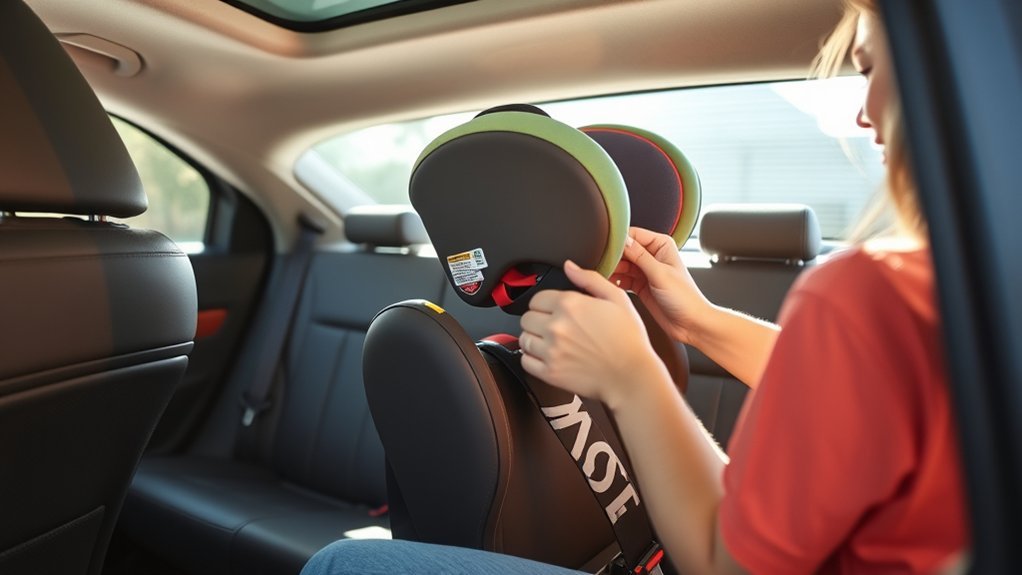
Adjusting the harness and headrest properly guarantees your child’s comfort and safety in the forward-facing car seat. Start by positioning the headrest so it supports your child’s head without pushing it forward or letting it fall back.
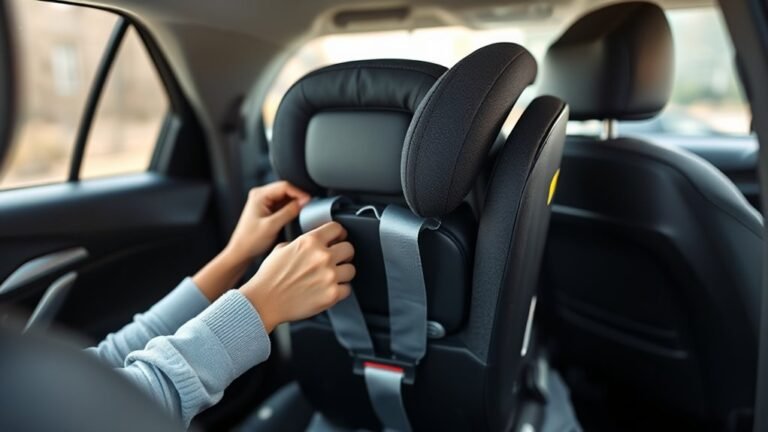
The harness straps should sit at or just above your child’s shoulders, lying flat without twists. Tighten the harness so you can’t pinch any slack at the shoulder. This snug fit keeps your child secure during the ride, even if they move around reaching for travel snacks or sipping drinks, which helps maintain good hydration habits.
Regularly check these adjustments as your child grows to ensure ongoing comfort and safety, especially on longer trips where proper fit prevents discomfort and distraction.
Common Forward-Facing Car Seat Installation Mistakes to Avoid
Ensuring the harness and headrest fit your child correctly is only part of the safety equation. Installing the forward-facing car seat properly in your vehicle is just as important. Avoid these common installation mistakes to keep your child safe:
Properly fitting the harness and installing the car seat correctly are both crucial for your child’s safety.
- Ignoring car seat materials compatibility: Not all car seat fabrics and materials work well with every vehicle seat. Make sure the car seat materials don’t slip or bunch up, which can reduce stability.
- Incorrect tether or lower anchor use: Failing to properly secure the tether or lower anchors compromises the seat’s effectiveness during a crash.
- Overlooking the recline angle: Installing the seat at the wrong angle can affect comfort and safety, especially with certain car seat fabrics that may shift.
How to Confirm Your Forward-Facing Car Seat Is Secure
How can you be certain your forward-facing car seat is installed securely? First, give the seat a firm shake at the base where it attaches to the vehicle. It shouldn’t move more than an inch side-to-side or front-to-back.
Next, check the harness straps. They must lie flat without twists and fit snugly against your child’s chest, ensuring safety and comfort for proper child nutrition habits during travel.
Confirm the tether strap is tightly fastened to the anchor point, adding stability. Finally, inspect the car seat for cleanliness, as regular car seat cleaning prevents buildup that can affect the seat’s fit and safety.
Following these steps guarantees your forward-facing car seat stays secure every time you hit the road.
Tips for Maintaining Your Forward-Facing Car Seat Safety
Why should you regularly maintain your forward-facing car seat? Proper maintenance ensures your child’s safety and comfort during every ride. Neglecting upkeep can compromise the seat’s effectiveness, especially on long journeys.
Incorporate these essential road trip tips to keep your child seating secure and reliable:
- Inspect the harness and buckles regularly for wear or damage, ensuring they latch securely and adjust smoothly.
- Clean the seat fabric and padding following manufacturer instructions to prevent deterioration and maintain comfort.
- Verify installation tightness before each trip; even slight loosening affects safety during sudden stops.
Frequently Asked Questions
Can I Use a Forward-Facing Car Seat on an Airplane?
You can use a forward-facing car seat on an airplane if it meets airplane restrictions and fits the seat. Ensure it complies with seatbelt requirements for safety and is FAA-approved for secure installation during the flight.
How Long Can My Child Remain in a Forward-Facing Car Seat?
You should keep your child in a forward-facing car seat until they reach the height or weight limit specified by the manufacturer.
Prioritize child safety by following installation tips carefully to guarantee proper, secure placement every time.
Are There Specific Car Seats for Children With Special Needs?
Just like a trusty horse and buggy, specialized car seats for children with special needs exist, featuring special needs adaptations and accessibility considerations.
You’ll find options with extra support, adjustable harnesses, and customizable padding to guarantee safety and comfort.
Can I Transfer My Forward-Facing Car Seat Between Vehicles?
Yes, you can transfer your forward-facing car seat between vehicles, but always check seat compatibility and follow transit safety guidelines to guarantee a secure installation each time.
Double-check the seat’s fit and harness adjustments every transfer.
What Should I Do if My Car Seat Is Recalled?
Think of your car seat as a trusty shield; if it’s recalled, follow recall procedures immediately. Contact the manufacturer for replacement options, ensuring your child’s safety remains unbroken and your shield stays strong and reliable.
Conclusion
Installing a forward-facing car seat is like planting a strong tree—it takes care, precision, and steady support to help your child grow safely. By choosing the right seat, securing it properly, and adjusting it thoughtfully, you’re setting a foundation of protection.
Remember, each buckle click and harness snug is a branch holding your child steady through every journey. Stay vigilant, avoid common mistakes, and your child’s safety will always stand firm, no matter the road ahead.
When done correctly, installing a forward-facing car seat ensures your child is secure and protected on every trip.