How to Get Grease Out of Car Seat
To get grease out of your car seat, start by quickly blotting the stain with a clean cloth—don’t rub, as that pushes grease deeper. Identifying your upholstery type is crucial for effective treatment.
For fabric seats, apply a fabric-safe cleaner and blot from the edge of the stain toward the center. For leather seats, use a leather cleaner and gently wipe in circular motions. Pre-treat stubborn stains carefully and avoid over-wetting the area.
Always test cleaners on hidden spots first to prevent damage. Following these precise steps ensures effective grease removal without harming your car seat. Explore further for specialized techniques and care tips.
Quickly Blot and Prep Grease Stains on Car Seats
How do you address grease stains on car seats before they set? Start with quick blotting using a clean, absorbent cloth or paper towel. Avoid rubbing, as this spreads the grease deeper into the fabric or leather fibers. Your goal is to lift as much grease as possible immediately.
Next, prep grease by gently applying a dry cleaning solvent or a specialized upholstery cleaner designed for grease. Test any product on an inconspicuous area first to prevent discoloration. Use a soft brush or cloth to work the cleaner into the stain lightly.
This pre-treatment loosens grease without embedding it further. After prepping, let the cleaner sit for a few minutes to break down the grease molecules before moving to the next cleaning steps. Acting fast and methodically is key to effective grease removal.
Remove Grease From Fabric Seats With Household Items
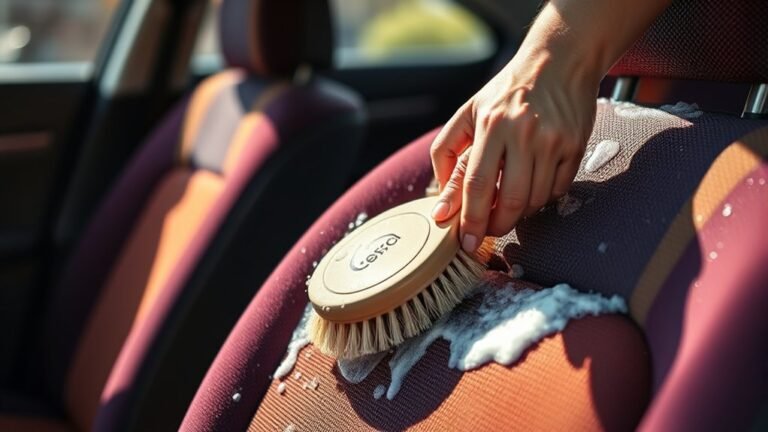
You can use common household degreasers like dish soap and baking soda to tackle grease stains on fabric seats effectively. Start by applying a small amount of degreaser directly to the stain, then gently scrub with a soft brush to break down the grease.
Finish by blotting the area with a clean cloth and rinsing with water to remove residue.
Common Household Degreasers
Why reach for specialized cleaners when common household items can effectively break down grease on fabric car seats? Household degreasers like dish soap, baking soda, and white vinegar offer practical solutions for grease removal.
Dish soap contains surfactants that emulsify grease, making it easier to lift from fabric fibers. Baking soda acts as a mild abrasive and absorbent, helping to break down grease molecules and reduce stains. White vinegar’s acidity helps neutralize grease while deodorizing the fabric.
These items are readily available, cost-effective, and safe for most car upholstery when used correctly. By understanding the chemical action of these household degreasers, you can tackle grease spots efficiently without resorting to harsh solvents.
Always test on a hidden area first to ensure fabric compatibility and avoid damage.
Step-by-Step Cleaning Process
When tackling grease stains on fabric car seats, which method guarantees thorough removal without damaging the upholstery? You should balance model specific maintenance versus DIY methods to ensure safety and effectiveness. Start by testing any household degreaser on a hidden area to avoid adverse chemical reactions.
Follow safety precautions strictly, such as wearing gloves and ventilating the area.
Blot excess grease gently with a clean cloth, avoiding rubbing.
Apply a mild detergent mixed with warm water using a soft brush.
Let the solution sit for 5-10 minutes to break down grease.
Rinse the area with a damp cloth and air dry completely.
This step-by-step process leverages common items while respecting your car’s fabric integrity and safety standards.
Clean Grease Off Leather Seats Without Damage
You need to use gentle cleaning techniques to avoid damaging the leather’s surface. Select cleaning products specifically formulated for leather to guarantee safety and effectiveness.
Always test the product on an inconspicuous area before applying it to the grease stain.
Gentle Cleaning Techniques
How can you remove grease from leather seats without causing damage? Start by addressing the stain alarm immediately to prevent permanent marks and odor buildup. Use gentle cleaning techniques that preserve the leather’s integrity while tackling grease and odor mitigation effectively.
- Blot excess grease with a soft, dry cloth. Never rub, to avoid spreading.
- Apply a mild leather cleaner diluted with water; test on a hidden area first.
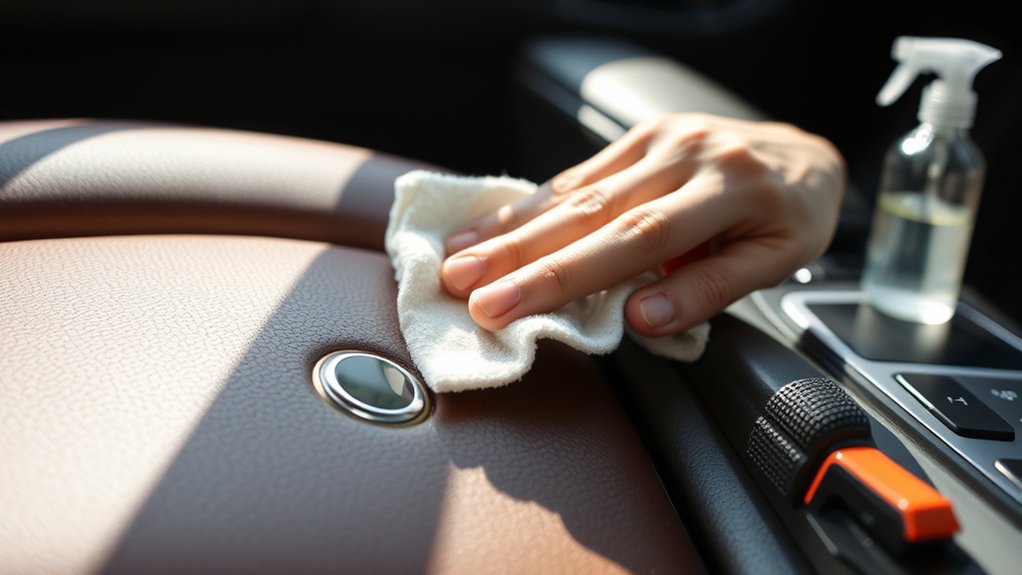
- Use a microfiber cloth to gently wipe the stain in circular motions.
- Allow the seat to air dry completely, then condition the leather to restore moisture.
These steps minimize abrasion and chemical exposure, ensuring you clean thoroughly without compromising the leather’s texture or finish.
Safe Cleaning Products
Maintaining the leather’s integrity while removing grease depends heavily on selecting the right cleaning products. You need safe cleaners formulated specifically for leather to ensure effective grease removal without causing damage or discoloration. Avoid harsh chemicals, which can dry or crack the leather.
Here’s a quick reference for safe cleaning products:
| Product Type | Effectiveness on Grease | Notes |
|---|---|---|
| Leather Cleaner | High | Designed for leather care |
| Mild Dish Soap | Moderate | Dilute before use |
| Vinegar Solution | Low | Use sparingly, test first |
| Baby Wipes | Moderate | Alcohol-free only |
| Leather Conditioner | N/A | Use after cleaning |
Always test any product on a hidden area first to confirm compatibility with your car seat’s leather.
Avoid Damage When Cleaning Grease Stains
Although grease stains demand prompt attention, taking care to avoid damage to your car seat’s material is essential. When tackling stains, focus on two word discussion ideas like “fabric sensitivity” and “cleaning method” to maintain subtopic relevance.
You’ll want to avoid harsh treatments that can degrade upholstery fibers or discolor the fabric. Follow these precautions:
- Test cleaners on an inconspicuous area first to check for adverse reactions.
- Use gentle blotting rather than aggressive scrubbing to prevent fiber damage.
- Select cleaning agents compatible with your seat’s material, whether leather or fabric.
- Limit moisture exposure to prevent mold growth and material warping.
Know When to Use Commercial Grease Removers
When should you turn to commercial grease removers for your car seat? Use them when home remedies fail to eliminate stubborn grease stains or when the grease has deeply penetrated fabric fibers. Commercial grease removers contain specialized solvents designed to break down oils efficiently.
Before applying, check the product label to ensure compatibility with your car seat material. Always prioritize chemical safety: wear gloves, work in a well-ventilated area, and avoid inhaling fumes. Test the remover on an inconspicuous spot to prevent discoloration or damage.
Apply the product sparingly, following the manufacturer’s instructions closely. If grease persists after treatment, repeat carefully instead of increasing product quantity. Knowing when and how to use a grease remover ensures effective cleaning without compromising your car seat’s integrity.
Tips to Prevent Grease Stains in Your Car
How can you minimize the risk of grease stains on your car seats? Implementing effective prevention tips is essential for stain prevention and maintaining your vehicle’s interior. Focus on practical measures that reduce grease contact and facilitate easy cleanup.
- Use seat covers made from stain-resistant materials to create a protective barrier.
- Avoid eating greasy foods inside the car to limit direct exposure.
- Keep cleaning wipes or absorbent cloths handy for immediate grease removal.
- Regularly inspect and clean your car seats to prevent buildup from becoming permanent stains.
Spot Grease Stains on Fabric and Leather Seats
Where should you begin when you spot grease stains on your car seats? First, identify the seat material, fabric or leather, as treatment varies. Don’t fall for grease stain myths like using hot water, which can set the stain.
Instead, act quickly: blot excess grease without rubbing to protect fabric durability and leather finish.
| Seat Type | Recommended Cleaner | Application Method |
|---|---|---|
| Fabric | Dish soap solution | Blot gently with a cloth |
| Leather | Leather cleaner/wipes | Wipe with a soft cloth |
| Both | Cornstarch (absorbent) | Sprinkle, let sit, then vacuum |
Following these precise steps ensures efficient stain removal without damaging your car’s upholstery.
Frequently Asked Questions
Can Grease Stains Cause Long-Term Damage to Car Seat Foam?
Yes, grease stains can degrade car seat foam durability over time. You’ll want to practice grease stain prevention promptly to avoid oil penetration, which weakens foam structure and reduces cushioning effectiveness. Ultimately, this compromises seat comfort and lifespan.
Are There Natural Remedies That Work Better Than Commercial Grease Removers?
Coincidentally, natural remedies often match commercial products in grease efficacy, but you’ll find they excel in safety and environmental impact. You can rely on baking soda or vinegar for practical, precise grease removal without harsh chemicals.
How Often Should Car Seats Be Professionally Cleaned to Prevent Grease Buildup?
You should schedule professional maintenance for your car seats every 6 to 12 months to ensure effective grease prevention. Regular cleaning removes buildup early, preserving seat material integrity and maintaining optimal appearance and hygiene.
Does Temperature Affect the Effectiveness of Grease Stain Removal Methods?
You might expect heat to improve grease stain temperature’s stain removal efficiency, but too much can set stains. Cooler temps slow cleaning agents.
Can Grease Stains Transfer to Clothing After Cleaning Car Seats?
Yes, grease transfer can occur if the seat isn’t fully cleaned or dried. To ensure effective stain prevention, you should thoroughly remove grease residues and allow the seat to dry completely before using it or wearing your clothing.
Conclusion
Like a skilled mechanic tuning an engine, you can tackle grease stains on your car seats with precision and care. By quickly blotting, choosing the right cleaning method for fabric or leather, and avoiding harsh chemicals, you’ll restore your seats without damage.
Remember, knowing when to use commercial removers and taking preventive steps keeps your interior looking sharp. With these practical techniques, you’re always ready to keep your car’s interior running smoothly.
By following these steps, you’ll effectively get grease out of car seat and maintain a clean, fresh vehicle interior.