Can a Car Seat Be in the Middle
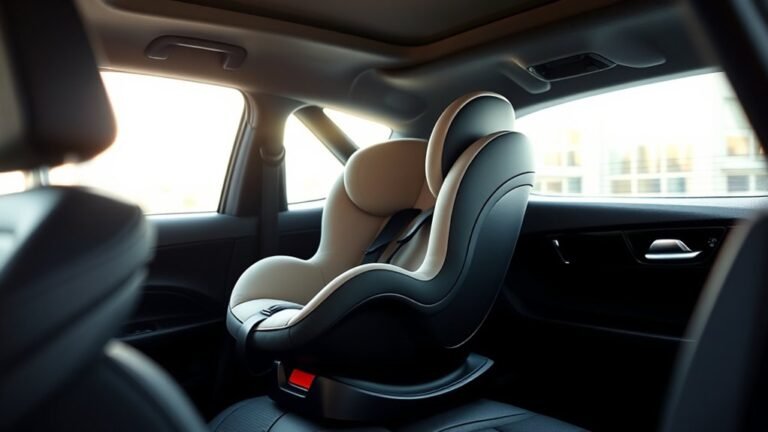
You can install a car seat in the middle if your vehicle supports secure anchoring and proper seat belt configurations. The middle seat is often the safest spot, placing your child away from side impacts and providing a protective buffer.
Ensure your car’s manual approves middle-seat use, check for LATCH anchors or a reliable three-point seat belt, and verify a snug, stable fit. Choosing the middle seat prioritizes safety, but it may affect space and comfort.
Explore factors to make the best decision for your child’s safety.
Why the Middle Seat Is the Safest Spot for Car Seats
Why is the middle seat considered the safest spot for car seats? Because it places your child furthest from potential impact zones in a crash, reducing injury risk.
When evaluating car seat safety, don’t fall for irrelevant comparisons or unrelated context, like choosing a seat based solely on convenience or aesthetics. Safety experts agree the middle seat offers the best protection by providing a buffer on both sides, minimizing side-impact forces.
This position also limits contact with side airbags, which can be dangerous for improperly installed seats. You need to prioritize crash dynamics and vehicle design over personal preferences.
How to Decide If the Middle Seat Is Right for Your Car Seat
You need to assess both safety factors and your vehicle’s design before placing a car seat in the middle. Not all cars have the proper anchors or enough space to secure a seat safely in the center.
Understanding these details ensures you choose the safest and most compatible position for your child.
Safety Considerations
How can you determine if the middle seat is the safest spot for your car seat? First, review your vehicle’s manual and car seat regulations to ensure the middle seat is approved for installation. Not all vehicles meet safety standards for car seats in the center position.
Next, assess the vehicle seat materials; firm, flat surfaces with proper anchorage points are critical for secure installation. Softer or contoured materials can compromise stability, increasing risk during a crash.
Also, verify that the middle seat has accessible LATCH anchors or a reliable seat belt system compatible with your car seat model. By carefully evaluating these safety factors, you can confidently decide whether the middle seat offers the optimal protection your child deserves.
Vehicle Compatibility
When considering the middle seat for your car seat, which factors should guide your decision? First, check your vehicle’s owner manual to confirm if the middle seat is designed for car seat installation. Some cars lack proper anchors or space, making the middle seat incompatible.
Evaluate the seat width and contour; a narrow or contoured middle seat might not secure the car seat firmly. Consider how car seat accessories, like bases or inserts, fit in the middle. Some may interfere with proper installation.
Trigger warnings: improper installation in an incompatible middle seat can compromise safety. Always ensure the seat belt or LATCH system works correctly in the middle position. By verifying these factors, you’ll determine if the middle seat truly offers a safe, secure spot for your car seat.
Key Vehicle Design Features That Affect Middle Seat Installation
You’ll need to consider your vehicle’s seat belt configuration, as it affects how securely the car seat can be installed in the middle.
Pay close attention to the seat cushion dimensions, since a narrow or contoured seat may limit space and stability.
Also, check the location of anchor points, because their placement is essential for safely securing the car seat.
Seat Belt Configuration
Why does seat belt configuration matter so much for installing a car seat in the middle? Because the type and arrangement of seat belts directly impact how securely you can install car seats there.
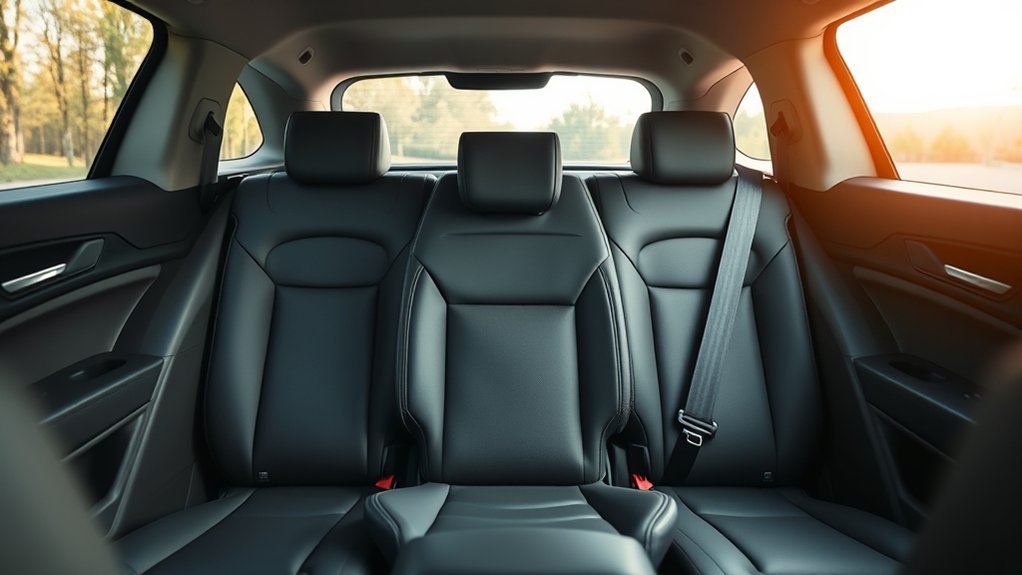
Unlike the outer seats, the middle seat often has a different belt setup, usually a lap belt or a three-point belt anchored higher. You need a proper three-point seat belt to ensure the car seat locks tightly and resists movement, much like how whip cream needs a firm base to hold its shape.
If the seat belt is only a lap belt, it may compromise the car seat’s stability and safety. Before placing a car seat in the middle, check that the seat belt configuration supports secure installation and meets safety standards.
Seat Cushion Dimensions
How much space does the middle seat cushion actually provide for a car seat? It’s essential to assess this because the cushion’s width, thickness, and contour directly affect installation safety and comfort. Don’t get sidetracked by irrelevant topics or random tangents about other car features; focus strictly on dimensions.
Consider these key factors:
- Width of the middle seat cushion compared to side seats
- Cushion thickness and firmness for secure car seat placement
- Contour shape, whether flat or bucket-seat style, affects stability
- Distance between seat edges and obstacles like center consoles
Understanding these elements ensures you evaluate if the middle seat can safely accommodate a car seat without compromising fit or security. This precision helps avoid installation errors linked to inadequate cushion design.
Anchor Point Locations
Where exactly are the anchor points located in your vehicle, and how do they impact installing a car seat in the middle? Anchor points, part of the LATCH system, are essential for securing car seats safely.
In many vehicles, these anchors are positioned on the outboard seats only, making middle seat installation challenging or impossible. Some cars provide a tether anchor behind the middle seat, but this varies widely by model.
Ignoring anchor point locations leads to confusion and unsafe installations. It’s an irrelevant topic to contemplate unrelated concepts like seat upholstery or door placement when focusing on safe car seat installation.
Always consult your vehicle’s manual to identify anchor points accurately. Understanding these locations guarantees you install the car seat correctly in the middle, maximizing safety for your child.
Seat Belt Types and Their Role in Middle Seat Car Seat Installation
What makes seat belt types essential for installing a car seat in the middle? Understanding the seat belt design directly impacts how securely you can install a car seat in the center position. Unlike unrelated topic pairs, the connection between seat belt types and installation safety is critical.
Here are key points to consider:
- Three-point belts provide the safest and most stable fit for middle seats.
- Lap belts alone often lack the necessary restraint for car seats.
- Automatic locking retractors help maintain tension, crucial for a snug fit.
- Non-locking belts require you to manually engage the locking mode for proper installation.
How the LATCH System Helps With Middle Seat Car Seat Installation
Wondering whether the LATCH system can simplify installing a car seat in the middle position? The LATCH system offers dedicated anchors that can make securing a car seat more straightforward, especially when seat belts might be less accessible or complicated to use in the middle.
However, not all vehicles provide middle seat LATCH anchors, so checking your manual is essential. When installing, focus on compatibility to avoid confusion with alternative topics like general seat belt use or unrelated considerations such as vehicle design.
| Advantage | Explanation |
|---|---|
| Dedicated anchors | Provides secure attachment points |
| Simplifies installation | Reduces guesswork compared to seat belts |
| Safety compliance | Meets federal safety standards |
Using LATCH can streamline the process but always verify your vehicle’s specific setup first.
How to Install a Car Seat in the Middle Seat
Installing a car seat in the middle seat requires careful attention to assure maximum safety and proper fit. Start by checking your vehicle’s manual for specific instructions regarding the middle seat, especially concerning side airbags.
Installing a car seat in the middle requires careful attention and consulting your vehicle’s manual for safety guidelines.
Follow these steps to install it correctly:
- Secure the car seat using the lap belts or the LATCH system if available.
- Ensure the seat is tightly fastened with minimal movement.
- Position the car seat away from side airbags to avoid potential injury during deployment.
- Double-check the angle and harness tightness to keep your child safe and comfortable.
Common Challenges With Middle Seat Car Seats and How to Solve Them
While securing a car seat in the middle seat can offer added protection, you may encounter specific challenges that require problem-solving. One common issue is limited space, which can make installation tricky. To address this, guarantee you use a car seat designed for narrow spaces and carefully follow the manufacturer’s instructions.
Another challenge is the potential interference with seat belts or LATCH anchors, which often differ in the middle. Avoid getting sidetracked by irrelevant topics like vehicle aesthetics or tangential concerns such as passenger comfort unrelated to safety. Focus strictly on proper installation and secure fitment to maximize protection.
Pros and Cons of Using the Middle Seat for a Car Seat
You’ll find that placing a car seat in the middle offers notable safety benefits by distancing your child from impact zones. However, installation can be more complex, requiring careful adjustment to guarantee a secure fit.
Additionally, using the middle seat may affect space and comfort for both your child and other passengers.
Safety Benefits Explained
Why is the middle seat often considered the safest spot for a car seat? It provides the most protection by distancing your child from potential impact zones, unlike side seats.
This safety advantage isn’t an irrelevant topic; it’s crucial and directly tied to crash dynamics, not an unrelated concept.
Here are key safety benefits of the middle seat:
- Enhanced crash protection: Surrounded by vehicle structure, reducing injury risk in side collisions.
- Reduced intrusion: Less likelihood of intrusion from other vehicles or objects.
- Better restraint positioning: Allows proper seatbelt and harness fit without interference.
- Minimal airbag risk: Typically avoids side airbag deployment zones, enhancing child safety.
Choosing the middle seat prioritizes your child’s safety, leveraging vehicle design for optimal protection.
Installation Challenges
How easy is it to install a car seat in the middle position? While it might seem straightforward, you’ll often face installation challenges unique to this spot. Middle seats may lack accessible lower anchors or a top tether, making proper attachment tricky.
Additionally, the seat’s contour and seat belt routing can complicate securing the car seat tightly. Some vehicles don’t have clear instructions for the middle seat, turning this into an irrelevant topic for those expecting universal ease.
You should avoid treating installation as an unrelated concept; improper setup jeopardizes safety. Before choosing the middle, verify your vehicle’s manual and test the fit. Installation challenges aren’t insurmountable but require careful attention to ensure the car seat is secure and compliant with safety standards.
Space and Comfort Impact
After addressing the installation challenges of placing a car seat in the middle, it’s important to contemplate how this position affects space and comfort for both the child and other passengers. While some may consider this an irrelevant topic or an off topic discussion, it directly impacts daily usability.
Here are key pros and cons to consider:
- Pro: Middle seats offer added protection by distancing the child from side impacts.
- Con: Limited width can make the car seat feel cramped, reducing comfort.
- Con: Other passengers may experience restricted legroom and shoulder space.
- Pro: The absence of door intrusion allows for a safer, less distracting environment.
Weigh these factors carefully to ensure both safety and comfort without veering into irrelevant or off topic considerations.
Essential Safety Tips for Installing Car Seats Anywhere
Where you place a car seat can considerably impact your child’s safety during travel. To install it securely, always follow the vehicle and car seat manufacturer instructions precisely.
Proper car seat placement is crucial for your child’s safety—always follow manufacturer instructions carefully.
Ensure the seat is tightly anchored using either the LATCH system or the seat belt, but never both simultaneously unless specified. Avoid unrelated concepts like aesthetics or convenience overshadowing safety priorities.
Check that the harness fits snugly and that the chest clip is at armpit level. Remember, some installation methods labeled non applicable for your car or seat model should be disregarded to prevent errors.
Finally, perform a firm shake test. If the seat moves more than an inch side to side or front to back, reposition and retighten. These steps guarantee optimal protection regardless of seating position.
Alternatives to the Middle Seat for Car Seat Placement
If the middle seat isn’t a viable option for your car seat, you have effective alternatives that still prioritize safety. While some may engage in irrelevant topic debates or unrelated discussion about seat placement, focus on what truly matters: secure installation.
Here are four reliable alternatives to consider:
- Use the rear passenger-side seat, often equipped with LATCH anchors and ample space.
- Install the car seat behind the driver for easier access and monitoring.
- Opt for a convertible car seat designed for flexible positioning.
- Check if your vehicle’s rear bench allows for a secure fit on either side.
Frequently Asked Questions
Can Adult Passengers Sit Comfortably With a Car Seat in the Middle?
You can sit comfortably with a car seat in the middle, but space might feel tight. Proper installation guarantees noise reduction from outside, helping you focus.
Avoid unrelated topics to maintain safety and attention during the ride.
Does Insurance Coverage Change With Middle Seat Car Seat Installation?
Insurance coverage typically doesn’t change with middle seat car seat installation. You should still notify your insurer about all car seats for safety verification, but placing one in the middle won’t affect your policy or claims eligibility.
Are There Legal Restrictions on Middle Seat Car Seat Use?
You must follow legal requirements for car seat installation, especially regarding seat belt placement in the middle. Ensure the seat belt fits properly to secure the car seat; otherwise, it may not meet safety regulations or be legally allowed.
How Do Car Seat Manufacturers Test Middle Seat Safety?
Think of your car seat as a fortress; manufacturers conduct rigorous car seat testing using crash simulations and impact sensors to ensure middle seat safety. They analyze forces, restraint effectiveness, and positioning to protect your child in real-world crashes.
Can Middle Seat Car Seats Affect Airbag Deployment?
Yes, middle seat car seats can affect airbag deployment, especially regarding mid seat impact. You’ll need to ensure the car seat’s design minimizes airbag interaction to maintain safety and comply with vehicle manufacturer guidelines.
Conclusion
Choosing the middle seat for your car seat often offers the safest ride, placing your child in the “eye of the storm” of protection. However, it’s essential to weigh your vehicle’s design, seat belt type, and LATCH system compatibility before making a decision.
Remember, the best spot is where the car seat fits securely and safely. Keep these factors in mind, and you’ll guarantee your little one rides as safe as houses every time.
In conclusion, when considering if a car seat can be in the middle, prioritize safety and proper installation to ensure the best protection for your child.