
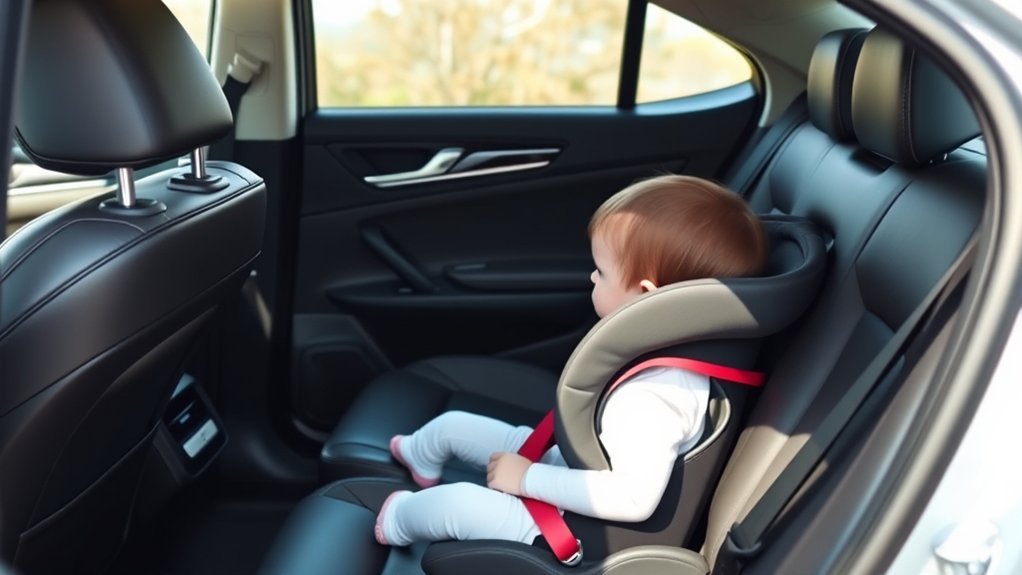
Can You Put a Car Seat in the Front Seat
You can put a car seat in the front seat only if your child is at least 4 years old, weighs over 40 pounds, and you disable the passenger airbag.
Front-seat placement poses risks, as airbags are designed for adults and can injure smaller children. Most safety experts and laws recommend keeping car seats in the back seat, away from airbags.
Knowing when front seating is allowed and how to install it properly can help keep your child safer in certain situations.
What Are the Dangers of Front-Seat Car Seats and Airbags?
Why should you avoid placing a car seat in the front seat? The main danger comes from front airbags. These airbags deploy with great force during a crash, which can seriously injure or even kill a child in a car seat.
Front seat airbags are designed to protect adult passengers, not infants or toddlers, whose smaller size makes them more vulnerable. When a front airbag inflates, it can strike the car seat directly or push it violently backward, increasing injury risk.
Additionally, the front seat’s proximity to the dashboard and windshield adds hazards during collisions. For these reasons, safety experts strongly advise keeping car seats in the back seat, where your child is better protected from the powerful impact of front airbags and other front-seat dangers.
When Is Front-Seat Car Seat Use Safe? Age and Weight Guidelines
While the risks of placing a car seat in the front seat are significant, there are specific age and weight guidelines that determine when it might be safe to do so. Generally, children under 13 should ride in the back seat, but if your vehicle lacks rear seating or you must use the front, ensure your child is at least 4 years old and weighs over 40 pounds.
Always turn off the passenger airbag when installing a car seat upfront. If you have multiple kids, arranging sibling car seats in the back helps keep the front seat clear and safer. Use toy storage in the back to prevent distractions and keep the front seat area uncluttered.
Prioritizing these guidelines enhances safety while accommodating your family’s needs.
What Do the Laws Say About Car Seats in the Front Seat?
How do laws regulate placing car seats in the front seat? Front seat legality varies by state and country, but most laws strongly discourage or prohibit putting rear-facing car seats in the front passenger seat due to airbag risk.
Airbags deploy with significant force, which can seriously injure or even kill a child in a car seat. Some jurisdictions allow forward-facing seats in the front only if the rear seats are occupied or unavailable, but this is less common.
You must check your local regulations because they define age, weight, and seating position rules that prioritize child safety. Ultimately, laws aim to minimize injury risks, especially from airbags, by recommending or mandating that children remain in the back seat as long as possible, using appropriate car seats or boosters.
Which Car Seats and Cars Let You Use the Front Seat?
You need to follow specific front seat safety guidelines to determine if your car seat and vehicle allow front seat use. Factors like the car seat’s size, installation method, and your vehicle’s airbag system play a crucial role.
Understanding these details helps ensure your child is secure when placed in the front seat.
Front Seat Safety Guidelines
When is it safe to place a car seat in the front seat? Generally, it’s safest to install car seats in the rear, as the rear seat benefits your child by reducing crash impact risks.
However, some front seat myths suggest it’s always unsafe. This isn’t always true if strict guidelines are followed. Before placing a car seat in the front, check:
- Your vehicle’s manual for airbag deactivation options and front seat restrictions
- The car seat manufacturer’s instructions for front seat compatibility
- That the seat is pushed as far back as possible to maximize distance from the dashboard
Always prioritize rear seating unless circumstances and guidelines explicitly allow front seat use. Remember, safety depends on correct installation and adherence to these rules.
Car Seat Compatibility Factors
Which car seats and vehicles allow front seat installation depends on specific compatibility factors that prioritize your child’s safety. First, check the car seat’s weight compatibility to ensure it matches your child’s size and the vehicle’s limits. Many manufacturers specify weight ranges suitable for front seat use.
Equally important are front seat airbags; these can pose serious risks to children if deployed. Only use a front seat if your car’s airbag system can be disabled or is designed to accommodate a car seat safely. Review both your vehicle’s and car seat’s manuals carefully to confirm compatibility.
Vehicle Features Affecting Placement
How do specific vehicle features influence whether you can safely install a car seat in the front? Understanding these factors is essential for safe placement. Many vehicles have front seat airbags designed to protect adults, but these can pose serious risks to children in car seats.
Additionally, weight limitations often dictate which car seats are allowed in front seats, as some seats are only suitable for heavier children. Here are key features to consider:
Front seat airbags: Confirm the airbags can be disabled or are designed to minimize injury risk to a child in a car seat.
Weight limitations: Check your vehicle’s manual for maximum allowed child weight in the front seat.
Seat belt and LATCH system compatibility: Verify the front seat has proper anchors and belts for secure installation.
Always prioritize your child’s safety by following these guidelines.
How Do You Properly Install a Front-Seat Car Seat?
Where should you start to guarantee a car seat is safely installed in the front seat? First, always check your vehicle’s manual for specific instructions and confirm if front seat installation is even allowed.
Understand front seat risks, especially the danger posed by active airbags. If your vehicle permits, ensure you disable the passenger airbag to protect your child from potential injury during a crash.
Next, position the car seat firmly using either the seat belt or LATCH system, making sure it doesn’t move more than an inch side-to-side or front-to-back. Adjust the seat recline angle as specified by the car seat manufacturer.
Finally, double-check every connection and buckle to confirm the seat is secure. Prioritize these steps to reduce hazards and maximize your child’s safety in the front seat.
Safer Alternatives to Front-Seat Car Seats
Why risk your child’s safety by placing a car seat in the front when there are safer options available? Front seat risks, including airbag deployment and reduced crash protection, make it clear that safer alternatives are essential.
You can protect your child better by choosing these options:
- Install the car seat in the back seat, ideally the middle position, to maximize distance from impact zones.
- Use a rear-facing car seat for infants and toddlers, which offers superior protection for their head and neck.
- Ensure the car seat is properly secured with either the vehicle’s seat belt or LATCH system to prevent movement during a crash.
Frequently Asked Questions
Can I Use a Booster Seat in the Front Seat?
You can use a booster seat in the front seat only if local booster seat legality allows it.
However, watch out for front seat airbag risks, which can seriously harm your child during a crash.
How Do Front-Seat Airbags Differ From Side Airbags?
Front airbags are like a protective shield unfolding straight ahead, cushioning your chest and face, while side airbags act like vigilant guardians, inflating beside you to protect your torso and head from side impacts. Stay safe!
What Are the Best Car Seat Brands for Front-Seat Use?
You’ll want innovative brands like Britax and Chicco that prioritize advanced safety features for front-seat use. These brands design car seats with enhanced side-impact protection and energy-absorbing materials to keep your child secure and comfortable.
Does Front-Seat Car Seat Placement Affect Insurance Coverage?
Think of front seat insurance as a delicate puzzle; placing a car seat there can create coverage implications. You’ll want to check your policy because some insurers might reduce or deny claims if safety guidelines aren’t strictly followed.
Can Front-Seat Car Seats Be Used During Long Road Trips?
You can use a front seat booster on long road trips, but you shouldn’t. For long road safety, rear seats reduce airbag risks and offer better protection. Keep your child in the back whenever possible.
Conclusion
When it comes to putting a car seat in the front seat, you need to weigh the risks carefully. Airbags can be a hidden danger, so it’s best to follow age and weight guidelines and check local laws before making a move.
Remember, safety doesn’t happen by accident—you want to avoid putting all your eggs in one basket. Whenever possible, stick to the back seat, where it’s proven to be the safest spot for your little one.
In conclusion, while it might be tempting, it’s important to understand the risks before you put a car seat in the front seat. Prioritizing safety ensures your child is protected on every journey.