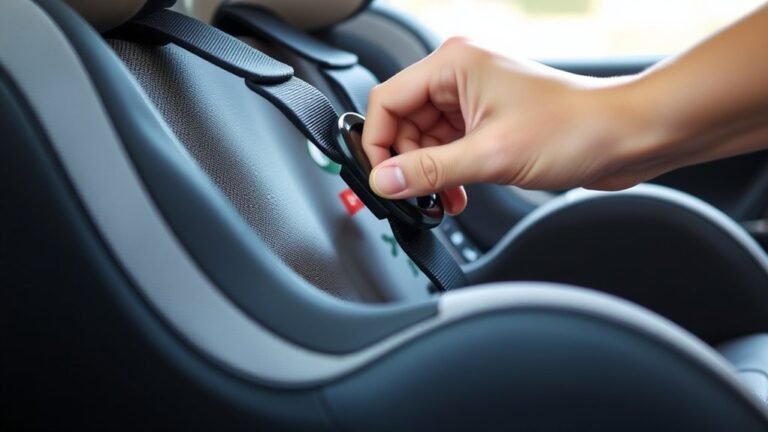

When to Move From Car Seat to Booster
You should move your child from a car seat to a booster when they outgrow the forward-facing harness, usually between 4 and 7 years old. This transition is an important step in ensuring your child’s safety while traveling in a vehicle.
Make certain the booster fits properly—the lap belt should lie snugly across the upper thighs, not the stomach. The shoulder belt should cross the chest and shoulder without touching the neck or face.
Timing matters to keep your child safe and comfortable. Identify how to spot the right moment and guarantee a secure fit.
When to Switch From a Car Seat to a Booster Seat?
When should you switch your child from a car seat to a booster seat? The transition timing depends primarily on your child’s age, weight, and height. Typically, kids move to a booster once they outgrow the forward-facing car seat with a harness, usually around 4 to 7 years old or when they exceed the seat’s height or weight limits.
Before making the switch, perform a booster fit check to ensure the seat belt fits properly: the lap belt should lie snugly across the upper thighs, not the stomach, and the shoulder belt should cross the chest and shoulder, not the neck or face. This fit check is crucial for your child’s safety and comfort, helping you determine the right moment for a safe transition.
Risks of Switching Too Early or Too Late
How can switching your child from a car seat to a booster seat at the wrong time impact their safety? The risks of early transition include inadequate support and poor seatbelt positioning, increasing injury risk during a crash.
On the other hand, risks of late transition can cause discomfort and improper restraint use, potentially compromising safety.
You should be aware of these dangers:
- Early transition may lead to insufficient head and neck protection.
- Seatbelts may not fit correctly if switched too soon.
- Staying too long in a car seat can cause restlessness and improper use.
- Late transition might reduce your child’s confidence in using booster seats.
- Incorrect timing can undermine overall crash protection.
Balancing timing is essential to keep your child secure.
How to Check if Your Child Fits a Booster Seat
Knowing the right moment to move your child into a booster seat depends largely on their size and physical development. When checking harness fit, ensure the straps lie flat and snug at or below your child’s shoulders.
Once your child outgrows the harness, it’s time to consider booster placement. A booster seat raises your child so the vehicle’s seat belt fits properly across the chest and lap, not the neck or stomach.
| Criteria | Car Seat Fit | Booster Seat Fit |
|---|---|---|
| Shoulder Strap | At or below shoulders | Not applicable |
| Harness Fit | Snug, flat straps | Not applicable |
| Seat Belt Position | N/A | Crosses shoulder & lap properly |
| Child’s Height | Less than 4 feet 9 inches | At least 4 feet 9 inches |
Check these regularly for safety.
Choosing the Right Booster Seat for Your Child’s Age and Size
Selecting the right booster seat involves matching your child’s age, weight, and height with the seat’s specifications to guarantee maximum safety. You’ll want to avoid booster seat noise concerns that distract your child or others, and address any discomfort with straps that might discourage proper use.
Consider these factors when choosing:
- Weight and height limits that fit your child’s current size
- Seat type: high-back for added support or backless for ease
- Padding and materials that reduce discomfort with straps
- Stability features to prevent unwanted movement and noise
- Ease of installation to keep the seat secure every time
Choosing carefully helps keep your child safe and comfortable during every ride, making the transition smoother and safer.
Helping Your Child Adjust to the Booster Seat Transition
Once you’ve chosen the right booster seat, the next step is helping your child get comfortable and confident using it. Start by explaining the importance of the transition timing. Making sure your child is physically ready ensures safety and smooth adjustment.
Encourage them to sit properly, with the seat belt positioned correctly across the shoulder and lap. Teach booster etiquette early: no fiddling with the belt or unbuckling during rides.
Practice short trips to build confidence and reinforce good habits. Consistency is key. Always use the booster seat to establish routine and safety expectations.
Frequently Asked Questions
Can Booster Seats Be Used in All Types of Vehicles?
You can use booster seats in most vehicles, but you’ll need to check booster seat compatibility and ensure the vehicle seat belt fit is proper.
Always confirm your car’s manual and booster guidelines for safe installation and effective protection.
How Long Do Booster Seats Typically Last Before Replacement?
Think of your booster seat like a well-traveled road; its replacement schedule depends on material durability, typically lasting 6 to 10 years.
Check for wear, cracks, or recalls to ensure it stays safe for your child’s ride.
Are There Legal Age or Height Requirements for Booster Seat Use?
Yes, you’ll find age guidelines and seating height requirements vary by state. Usually, kids must be at least 4 years old and 40 inches tall before using a booster seat.
Always check local laws first.
Can a Child Use a Booster Seat on an Airplane?
Think of a booster seat as a secure bridge for your child’s journey. You can’t always use it on planes due to air travel restrictions and airline safety rules, so check with your airline before flying.
What Are the Best Cleaning Methods for Booster Seats?
You should use mild cleaning supplies like gentle soap and warm water to clean booster seats. Remove fabric covers for washing, wipe plastic parts carefully, and follow storage tips by keeping seats dry and away from direct sunlight to maintain durability.
Conclusion
Moving from a car seat to a booster seat is a big step, but it’s not rocket science. You’ve got to make sure your child meets the height and weight requirements to keep them safe. Switching too early or too late can put them at serious risk.
Choose the right booster seat, and help your child adjust smoothly. Remember, their safety isn’t just important—it’s everything you’ve got on the line. Stay informed and confident every mile.
Knowing when to move from a car seat to a booster is crucial for your child’s protection on the road.