How to Clean a Car Seat
Start by identifying your car seat material—check tags or test discreetly—to choose the right cleaner for effective car seat cleaning. Thoroughly vacuum with a crevice tool and brush attachment to remove dirt and debris. Then, wipe seats with a damp microfiber cloth to lift surface grime.
Use fabric upholstery cleaner or leather cleaner accordingly, testing first on a hidden spot to avoid damage. Gently scrub stains and allow the seats to air dry completely to prevent mold growth.
Finish leather seats with conditioner and apply protectants to preserve their integrity. Follow these steps precisely to maintain and restore your seats effectively before exploring advanced care techniques.
Identifying Your Car Seat Material
How can you effectively clean your car seat if you don’t know what material it’s made from? Identifying material is the crucial first step in ensuring proper care. Start by examining the car seat tag or manufacturer’s manual to determine the fabric composition.
Common types include leather, vinyl, nylon, polyester, and microfiber, each requiring distinct cleaning methods. If documentation is unavailable, test a discreet area: leather feels smooth and supple, vinyl is plastic-like, while synthetic fabrics have a woven texture.
Understanding fabric composition allows you to select appropriate cleaning agents and avoid damage. Accurately identifying material helps prevent discoloration, shrinkage, or deterioration during cleaning.
Essential Supplies for Cleaning Car Seats
What tools and products do you need to clean your car seats effectively? Having the right essential supplies ensures thorough stain removal and prevents damage. Focus on items designed for automotive fabrics or leather, depending on your seat material.
- Microfiber cloths These are non-abrasive and trap dirt without scratching surfaces.
- Upholstery cleaner or leather cleaner Choose a formula compatible with your seat type for effective stain removal.
- Soft-bristle brush Use it to agitate cleaning solution gently, loosening embedded grime.
- Spray bottle with distilled water Helps rinse away residues without leaving mineral deposits.
Equipping yourself with these essential supplies prepares you for efficient, safe cleaning, maintaining your car seats’ appearance and longevity.
How to Vacuum and Prep Your Car Seats
Before applying any cleaners, start by thoroughly vacuuming your car seats to remove loose dirt, dust, and debris. Effective vacuum techniques include using a crevice tool for seams and a brush attachment for fabric surfaces. This ensures maximum dirt extraction without damaging materials.
After vacuuming, perform essential prep steps: wipe down seat surfaces with a microfiber cloth dampened with water to remove residual dust, and inspect for stains or damage.
| Vacuum Techniques | Prep Steps |
|---|---|
| Use crevice tool for seams | Wipe seats with damp microfiber |
| Brush attachment for fabric | Inspect for stains or damage |
| Move systematically | Allow seats to dry fully |
These steps optimize cleaning efficacy and prepare your seats for deeper treatment.
Cleaning Fabric Car Seats Safely
Although fabric car seats require gentle care, you can effectively remove stains and dirt by selecting the right cleaning solutions and techniques. Prioritize fabric maintenance to preserve seat integrity and appearance.
Here are four two word discussion ideas to guide your cleaning:
- Test Spot: Always test your cleaner on an inconspicuous area to prevent discoloration.
- Mild Detergent: Use a diluted, pH-balanced detergent designed for fabrics to avoid damage.
- Soft Brush: Gently agitate stains with a soft brush to loosen dirt without abrading fibers.
- Air Dry: Allow seats to air dry fully to prevent mold and mildew growth.
Following these steps ensures thorough, safe cleaning while maintaining the fabric’s texture and durability.
Cleaning Leather and Vinyl Car Seats
When cleaning leather and vinyl car seats, start by selecting a cleaner specifically formulated for these materials to avoid damage. Use gentle, non-abrasive techniques to remove dirt without compromising the surface’s integrity.
After cleaning, apply a conditioner to maintain flexibility and protect against cracking or fading.
Choosing The Right Cleaner
Selecting an appropriate cleaner for leather and vinyl car seats requires understanding the material’s sensitivity to harsh chemicals and moisture. When choosing cleaners, prioritize those specifically formulated for these materials to prevent damage or discoloration. You can also consider DIY alternatives that use gentle, natural ingredients.
Here’s what to focus on:
- pH-balanced formulas. Avoid acidic or alkaline cleaners that degrade leather or vinyl.
- Non-abrasive ingredients. Prevent scratching or surface wear during cleaning.
- Moisture control. Choose products that don’t saturate the material, reducing risk of mold or warping.
- Conditioning agents. Cleaners with built-in conditioners help maintain suppleness and prevent cracking.
Gentle Cleaning Techniques
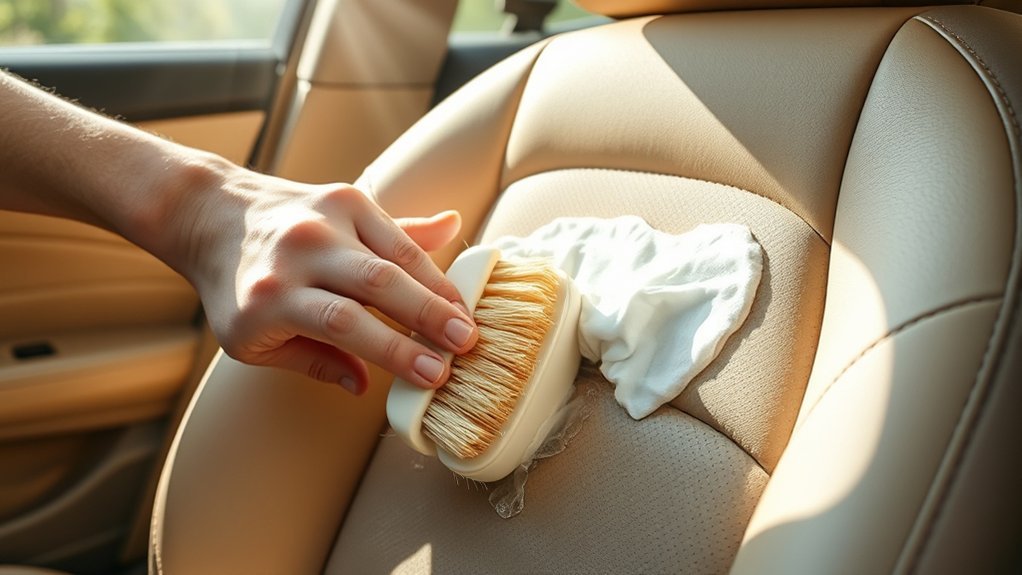
After choosing the right cleaner, apply it carefully to preserve the leather or vinyl’s integrity. Use gentle brushing with a soft-bristle brush to loosen dirt without damaging the surface. Follow by wiping with a damp cloth to remove residues.
Avoid saturating the material; moisture control is essential. Always test in an inconspicuous area first.
| Step | Description |
|---|---|
| 1. Apply Cleaner | Use a small amount, targeting stained spots |
| 2. Gentle Brushing | Soft-bristle brush, circular motions |
| 3. Wipe with Damp Cloth | Lightly moistened, remove loosened dirt |
| 4. Dry Thoroughly | Use a microfiber cloth to prevent moisture damage |
| 5. Inspect Surface | Check for missed spots or damage |
This method ensures effective cleaning while maintaining leather or vinyl quality.
Conditioning And Protection
Apply a high-quality conditioner specifically formulated for leather or vinyl to restore flexibility and prevent cracking. Conditioning protection is essential for maintaining the integrity of your car seats and preventing wear caused by daily use and exposure to sunlight.
Follow these steps for effective conditioning protection:
- Clean the surface thoroughly using a mild cleaner to remove dirt and oils.
- Apply the conditioner evenly with a soft cloth, ensuring complete coverage.
- Allow the conditioner to absorb for 10-15 minutes to penetrate the material deeply.
- Buff the surface gently with a clean cloth to remove excess product and enhance the finish.
Regularly conditioning your seats prolongs their lifespan by preventing dryness and cracking, keeping them supple and protected against wear.
Removing Tough Stains From Car Seats
To effectively remove tough stains from your car seats, start by accurately identifying the stain type, whether it’s oil-based, organic, or ink. Each stain requires a specific cleaning agent and method to avoid damage and ensure complete removal.
Understanding these distinctions helps you apply the right technique with maximum efficiency.
Identifying Stain Types
How can you effectively tackle tough stains on your car seats without wasting time or damaging the fabric? Start by identifying stain types through a systematic stain color assessment. This helps you choose the right cleaning approach.
- Organic Stains: Brown or yellow hues often indicate food, coffee, or sweat. These require enzymatic cleaners.
- Greasy Stains: Dark, oily marks suggest motor oil or food grease. Solvent-based cleaners work best here.
- Dye Stains: Bright colors like red or blue come from ink or cosmetics. These need targeted stain removers.
- Unknown Stains: If color isn’t clear, test a small area to avoid damage.
Accurate identifying stain types streamlines your cleaning process and protects your car seat fabric effectively.
Effective Stain Removal Methods
Where should you begin when confronting tough stains on your car seats? Start by identifying the stain type, as different common stain sources such as oil, ink, or food require specific treatments.
For oil-based stains, apply a solvent-based cleaner to break down grease molecules effectively. For ink stains, use isopropyl alcohol on a microfiber cloth, dabbing gently to avoid spreading.
Protein-based stains like food demand an enzymatic cleaner to dissolve organic matter. Always test your chosen cleaner on an inconspicuous area first. After applying the product, blot with a clean cloth rather than rubbing to prevent fabric damage.
These stain removal ideas ensure precise targeting of the stain’s chemical properties, maximizing removal efficiency while preserving your car seat’s material integrity.
Eliminating Odors From Car Seats
Why do car seats sometimes retain stubborn odors even after cleaning? Odors often penetrate deep into the fabric and padding, making surface cleaning insufficient. To eliminate these persistent smells, you need a systematic approach.
- Identify odor sources. Food spills, sweat, or pet dander can embed odors.
- Use odor neutralizers. Choose enzymatic cleaners that break down odor-causing molecules rather than just masking them.
- Apply odor masking agents. These provide a temporary fresh scent but don’t solve the root cause.
- Dry thoroughly. Moisture can trap odors, so ensure seats dry completely after cleaning.
Should You Hire a Pro to Clean Your Car Seats?
When considering the best method to clean your car seats, you might wonder if hiring a professional service is worth the investment. Hiring pros guarantees access to specialized equipment, industrial-grade cleaning agents, and expertise in fabric or leather care. This can remove deep-set stains and contaminants more effectively than DIY methods.
However, a cost comparison is essential. Professional cleaning typically runs between $50 and $150 per session, depending on your vehicle’s size and seat material. In contrast, DIY cleaning requires purchasing supplies like upholstery cleaners and tools, costing less upfront but demanding time and effort from you.
If your seats have severe stains or odors, hiring pros might save you time and achieve superior results. For routine maintenance, a cost comparison may favor cleaning your seats yourself.
Protecting Your Car Seats After Cleaning
After cleaning your car seats, maintaining their condition requires deliberate protection measures. Protecting upholstery ensures longevity and preserves the clean appearance you’ve worked hard to achieve.
Here’s how you can shield your seats effectively:
- Apply a Fabric or Leather Protector: Use a product appropriate for your seat material to create a barrier against stains and wear.
- Limit Sun Exposure: Park in shaded areas or use sunshades to prevent UV damage, which can cause fading and cracking.
- Use Seat Covers: Invest in high-quality covers to protect seats from spills, dirt, and abrasion without compromising comfort.
- Regular Maintenance: Vacuum and wipe down seats routinely to avoid dirt buildup, which can degrade upholstery fibers over time.
Frequently Asked Questions
Can Car Seat Cleaning Damage Airbags or Sensors?
You shouldn’t damage car seat airbags or car seat sensors if you avoid excessive moisture and harsh chemicals near them.
Always disconnect the battery before cleaning to prevent accidental deployment or sensor malfunction during the process.
How Often Should I Deep Clean My Car Seats?
Think of your car seats as a garden; deep clean frequency should be every six months to maintain carpet seating care. This prevents dirt buildup, preserves fabric integrity, and ensures sensors remain unobstructed, optimizing both comfort and safety.
Are Homemade Cleaning Solutions Safe for Car Seats?
Homemade cleaners can be safe for car seats if you test them first on a small, hidden area. Prioritize safety considerations by avoiding harsh chemicals that damage fabric or leather.
Ensure proper dilution to prevent discoloration or material breakdown.
Can Pet Hair Be Completely Removed From Car Seats?
Pet hair clings like a shadow, but you can’t always remove it completely. Using DIY removal tools like rubber gloves, vacuum attachments, and fabric softener sprays, you’ll considerably reduce pet hair embedded in your car seats.
Is It Safe to Use Steam Cleaners on All Car Seats?
You shouldn’t use steam cleaning on all car seats; steam cleaning safety depends on the material. While it’s chemical-free cleaning, delicate fabrics or leather might get damaged, so always check manufacturer guidelines before proceeding.
Conclusion
Now that you know how to clean your car seats effectively, remember: a clean seat isn’t just about looks—it’s about extending your car’s life and comfort. Like a well-tuned engine, regular care keeps everything running smoothly.
By identifying your seat material, using the right supplies, and tackling stains promptly, you guarantee lasting protection.
So, roll up your sleeves and give your seats the attention they deserve—it’s an investment that always pays off. Properly cleaning your car seat is key to maintaining its appearance and durability.