How to Get Car Seat Stains Out
To get car seat stains out, start by vacuuming debris from the seats and testing cleaners on a hidden spot to ensure they won’t cause damage. Blot liquid stains immediately to prevent them from setting in.
Treat stains based on their type using household solutions like vinegar or baking soda for light stains. For tougher stains, carefully apply specialized automotive cleaners, keeping in mind the fabric type to avoid damage.
Always avoid oversaturating the seats and dry them thoroughly to prevent mold growth. For deeper tips on stain types, materials, and advanced treatments, keep exploring effective methods.
Prepare Your Car Seats for Cleaning
Where should you begin when preparing your car seats for cleaning? Start by removing loose debris using a vacuum with a brush attachment, focusing on seams and crevices.
Begin car seat cleaning by vacuuming loose debris, especially from seams and crevices, using a brush attachment.
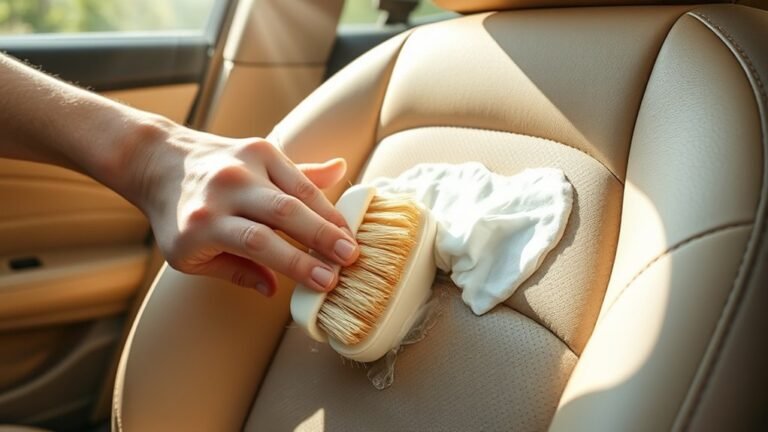
When preparing leather, avoid saturating it; instead, use a damp microfiber cloth to wipe the surface gently. For cleaning fabrics, test a small hidden area with your chosen cleaner to ensure colorfastness.
Next, detach any removable seat covers if applicable, following manufacturer instructions. Avoid direct sunlight during preparation to prevent material damage.
Finally, gather all cleaning tools and solutions within reach to streamline the process. This methodical preparation ensures you protect your car seats’ integrity while optimizing stain removal effectiveness.
Remove Common Car Seat Stains With Household Products
You can tackle most car seat stains using common household products that are both effective and safe. Start by identifying the stain type, then apply the appropriate cleaning solution, such as vinegar, baking soda, or dish soap.
These solutions break down stains without damaging your car’s upholstery when used correctly.
Effective Stain Removal
Although car seat stains can seem stubborn, many common types respond well to household products you likely already have. Effective stain removal requires understanding and debunking stain removal myths, such as “all stains need harsh chemicals.”
You can get excellent results with simple, targeted methods. To tackle stains and odors, focus on these practical techniques:
- Blot liquid stains immediately to prevent setting.
- Use gentle scrubbing with a soft brush to break up residues.
- Apply vinegar or baking soda for odor control techniques.
- Test any solution on a hidden area first to avoid damage.
- Rinse and dry thoroughly to prevent mold or mildew.
Household Cleaning Solutions
A variety of household cleaning solutions can effectively remove common car seat stains without the need for harsh chemicals. Understanding stain origins and fabric chemistry helps you select the right product.
For example, acidic stains from beverages respond well to baking soda’s mild abrasiveness, while oily stains require soap’s emulsifying properties.
| Stain Type | Household Solution | Reason (Fabric Chemistry) |
|---|---|---|
| Coffee | Vinegar + Water | Acidity breaks down tannins |
| Grease | Dish Soap + Warm Water | Surfactants dissolve oils |
| Ink | Rubbing Alcohol | Solvent properties dissolve dye molecules |
| Food | Baking Soda + Water Paste | Mild abrasion lifts particulate matter |
| Sweat | Lemon Juice + Salt | Acidic action neutralizes odor and stains |
Use these solutions promptly for best results, targeting stain origins precisely.
Tackle Tough Car Seat Stains Using Specialized Cleaners
When tackling tough car seat stains, select specialized cleaners designed for your seat material to ensure effectiveness without damage. Apply the product precisely according to the instructions, targeting the stain directly while avoiding oversaturation.
Using the right technique maximizes stain removal and protects your car seat’s integrity.
Choosing Effective Cleaning Products
How do you guarantee that stubborn car seat stains vanish effectively? Start by selecting cleaning products designed for automotive fabrics, ensuring they address stain prevention without damaging your seats. Keep fragrance considerations in mind, especially if you’re sensitive or prefer unscented solutions.
Choose cleaners with these features:
- Enzymatic formulas to break down organic stains
- pH-balanced to protect fabric integrity
- Fast-acting solvents for grease or oil removal
- Anti-residue agents to prevent re-soiling
- Hypoallergenic options to minimize irritation
Avoid generic household cleaners that may degrade upholstery fibers or leave unwanted odors. By prioritizing specialized products with these technical attributes, you’ll enhance stain removal efficiency while maintaining your car seat’s appearance and longevity.
Application Techniques for Stains
Where should you start applying specialized cleaners to maximize stain removal on your car seats? Begin by closely examining the stain patterns to identify the concentration and edges of the stain.
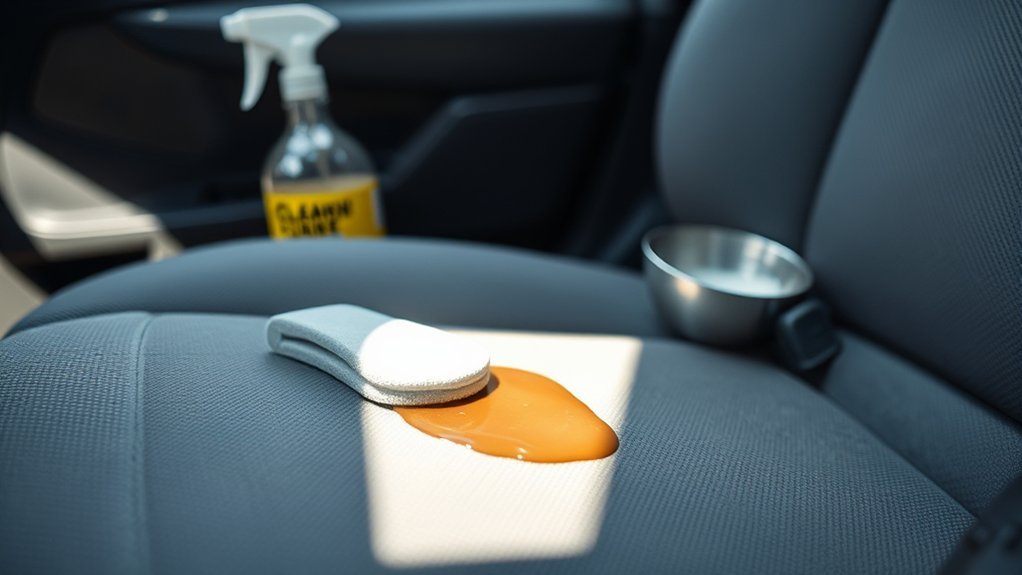
Target the most saturated areas first, applying the cleaner with a soft brush or microfiber cloth to avoid fabric damage. Always perform colorfast testing on an inconspicuous section before full application to prevent discoloration.
Dispense the cleaner sparingly, working from the stain’s center outward to prevent spreading. Let the solution dwell briefly, then blot gently rather than rubbing to lift the stain without embedding it deeper.
Repeat as necessary, reassessing stain patterns after each application. This systematic approach ensures efficient, safe removal of tough stains using specialized cleaners.
Identify Stain Types and Fabric Materials for Better Results
Why does identifying the specific stain type and fabric material matter? Because your cleaning approach hinges on these factors. Different stain types, such as oil-based, protein-based, tannin, dye, or ink, respond uniquely to cleaning agents.
Identifying stain type and fabric is crucial because each requires a unique cleaning method for best results.
Similarly, fabric material like leather, polyester, nylon, or cotton dictates which solvents or techniques you can safely use without damage.
To improve stain removal results, consider:
- Analyze the stain type for targeted treatment.
- Identify fabric material to avoid harmful cleaners.
- Match cleaning agents to stain and fabric compatibility.
- Test a small, inconspicuous area first.
- Adjust dwell time based on fabric sensitivity.
Protect Your Car Seats to Prevent Future Stains
Several effective measures can help you protect your car seats from future stains, preserving their appearance and longevity. Start by installing high-quality protective covers tailored to your seat type; these act as a barrier against spills and dirt, simplifying maintenance.
Opt for covers made from stain-resistant materials, which enhance stain prevention by repelling liquids and reducing absorption. Regularly clean your car interior, as accumulated debris can contribute to staining.
Avoid eating or drinking inside the vehicle when possible, minimizing exposure to potential staining agents. Additionally, apply fabric or leather protectants designed to create a hydrophobic layer, further reducing stain adherence.
Troubleshoot Persistent Car Seat Stains That Won’t Come Out
When standard cleaning methods fail to remove stubborn car seat stains, you need targeted troubleshooting techniques to address the issue effectively. Stain persistence often results from deep fabric penetration or chemical reactions with seat materials. To tackle this, follow these practical steps:
Identify the stain type to select an appropriate solvent. Use a soft-bristle brush to agitate the stain gently without damaging fibers. Apply enzymatic cleaners for organic stains that resist regular detergents.
Avoid odor concealment tactics like masking sprays; instead, extract odors using baking soda or activated charcoal. Consider professional steam cleaning for embedded stains and persistent odors.
Frequently Asked Questions
Can I Use Steam Cleaning on All Car Seat Fabrics?
You can’t use steam cleaning on all car seat fabrics because fabric compatibility varies; always check the manufacturer’s guidelines first.
Delicate materials like leather or suede may get damaged, while synthetic fabrics usually handle steam cleaning well.
How Long Should Car Seats Dry After Cleaning?
Car seat drying takes about 4-6 hours, but don’t rush. Think of it like letting a wound heal. Proper stain treatment timelines ensure complete dryness to prevent mold and odor, keeping your seats fresh and safe.
Are There Any Safe Cleaning Options for Leather Seats?
You can use safe leather cleaning products specifically designed for stain safety leather care. Choose pH-balanced cleaners and avoid harsh chemicals to protect your seats.
Always test in a small area first to ensure no damage occurs.
Can Food Stains Cause Permanent Damage if Untreated?
Can food stains act like silent saboteurs, causing permanent damage if untreated? Yes, they can penetrate fibers, weaken materials, and leave lasting discoloration.
You need to address them promptly with appropriate cleaning methods to prevent harm.
How Often Should I Deep Clean My Car Seats?
You should deep clean your car seats every six months, considering fabric compatibility before steam cleaning. Some materials tolerate steam better; always check manufacturer guidelines to prevent damage and maintain optimal cleanliness and longevity.
Conclusion
Think of your car seats as a battlefield where stains are the invading forces. By preparing your seats and choosing the right cleaning weapons—whether household products or specialized cleaners—you gain the upper hand. Understanding your fabric terrain is key to a successful cleaning mission.
Protecting your seats acts like a shield, preventing future attacks and keeping your interior looking fresh. When stubborn stains persist, troubleshoot methodically to find the best solution.
With these strategies, you’ll reclaim your car’s interior, restoring it to a clean, stain-free stronghold every time. Mastering how to get car seat stains out will ensure your vehicle stays spotless and inviting.