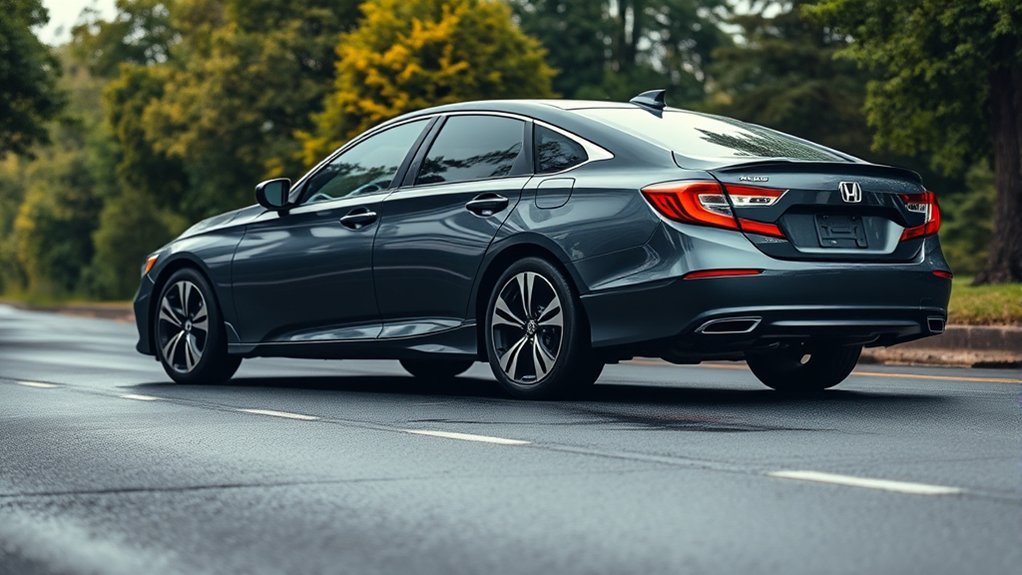
Is a Honda Accord All Wheel Drive
You won’t find all-wheel drive on any Honda Accord because it’s only built with front-wheel drive. This setup helps keep the car lighter, more fuel-efficient, and affordable. If you need AWD for traction in tough weather or slippery roads, the Accord won’t meet that need.
Instead, you might want to explore other Honda models like the CR-V or alternatives from different brands. Keep going to uncover why the Accord chooses front-wheel drive and what your best AWD options are.
Key Takeaways
- The Honda Accord is exclusively offered with front-wheel drive (FWD) and does not have an all-wheel drive (AWD) option.
- AWD is not available as a factory or standard feature on any Honda Accord model.
- Aftermarket AWD conversions for the Accord exist but are costly, complex, and may affect reliability and warranty.
- For AWD needs, consider Honda models like the CR-V, Insight, or SUVs such as the HR-V, Passport, and Pilot.
- Midsize AWD sedans from other brands, like the Subaru Legacy, are better suited if AWD is a priority.
Is the Honda Accord Available With All-Wheel Drive?
Wondering if you can get a Honda Accord with all-wheel drive? Unfortunately, the Accord isn’t offered with AWD. Honda has designed the Accord exclusively with front-wheel drive, focusing on efficiency, handling, and affordability.
If you’re looking for a sedan that provides AWD, you’ll need to consider other models, as the Accord doesn’t have that option in any trim or year. This means if you drive in snowy or slippery conditions, you might want to explore other vehicles or brands that specialize in AWD systems.
While the Accord excels in many areas, all-wheel drive isn’t one of them, so keep that in mind when shopping. You’ll have to decide if the Accord’s other strengths outweigh the lack of AWD.
Why Does Honda Use Front-Wheel Drive for the Accord?
You’ll find that front-wheel drive offers better drivetrain efficiency, which helps the Accord deliver impressive fuel economy. It also keeps the car lighter and more affordable compared to all-wheel drive options.
These factors are key reasons why Honda sticks with front-wheel drive for the Accord.
Drivetrain Efficiency Benefits
Why does Honda choose front-wheel drive for the Accord instead of all-wheel drive? You’ll find that front-wheel drive (FWD) offers better drivetrain efficiency, which means the car uses less energy to move forward. This efficiency comes from a simpler power transfer system that reduces energy losses.
As a result, you get improved fuel economy and fewer mechanical complexities to worry about.
Here’s a quick look at how drivetrain types compare in efficiency:
| Drivetrain Type | Energy Loss | Fuel Economy Impact |
|---|---|---|
| Front-Wheel Drive | Low | Higher MPG |
| All-Wheel Drive | Moderate | Moderate MPG |
| Rear-Wheel Drive | Moderate | Moderate MPG |
With FWD, you enjoy a more efficient, budget-friendly ride without sacrificing performance.
Cost and Weight Considerations
Beyond drivetrain efficiency, cost and weight play significant roles in Honda’s choice to equip the Accord with front-wheel drive. You’ll find that front-wheel-drive systems are simpler and lighter than all-wheel-drive setups, which means less material and lower manufacturing costs.
This simplicity not only helps keep the Accord’s price competitive but also improves fuel economy by reducing unnecessary weight. When you’re shopping for a reliable mid-size sedan, these factors matter because they directly affect your overall ownership experience. Lower upfront costs and better gas mileage add up.
While all-wheel drive offers traction benefits, Honda prioritizes balancing performance with affordability and efficiency for the Accord. So, if you want a cost-effective, lightweight car without sacrificing reliability, front-wheel drive is a smart choice.
How AWD Benefits the Honda Accord and Other Midsize Sedans
You’ll notice that AWD boosts traction and stability, especially on slippery roads. It helps you handle different weather conditions with more confidence.
Let’s explore how these benefits apply to the Honda Accord and similar midsize sedans.
Enhanced Traction and Stability
Frequently, all-wheel drive (AWD) enhances the traction and stability of midsize sedans like the Honda Accord, especially in challenging driving conditions. When you take control of an AWD vehicle, power distributes to all four wheels, which helps you maintain better grip on slippery or uneven surfaces.
This means you’ll experience less wheel spin during acceleration and more balanced handling through corners. As you drive, AWD systems adjust torque to wheels with the most traction, letting you stay more confident and in control.
While the Accord traditionally doesn’t offer AWD, understanding how it improves traction and stability highlights why some midsize sedans with AWD feel safer and more composed on the road. You’ll appreciate the enhanced stability during quick maneuvers or when driving over rough pavement.
Improved All-Weather Performance
How does all-wheel drive make a difference when weather conditions turn bad? AWD distributes power to all four wheels, helping you maintain better control on wet, icy, or snowy roads. Unlike front-wheel or rear-wheel drive, AWD adapts to changing traction needs instantly, reducing the risk of slipping.
This means you can navigate rainy streets or light snow with more confidence and less effort. For midsize sedans like the Honda Accord, AWD enhances everyday usability in diverse climates without sacrificing fuel efficiency drastically. It also improves acceleration on slippery surfaces, so you won’t get stuck as easily.
While the Accord doesn’t come standard with AWD, considering this feature in similar sedans can significantly improve your driving experience when the weather turns unpredictable.
Increased Driving Confidence
What makes all-wheel drive a game-changer for your driving confidence? AWD constantly distributes power to all four wheels, giving you better traction and control, especially on slippery or uneven roads. This means you can take corners with more assurance and handle sudden weather changes without second-guessing your grip.
Here’s how AWD benefits your driving experience in a midsize sedan like the Honda Accord:
| Benefit | How It Helps You |
|---|---|
| Enhanced Traction | Keeps you stable on wet or icy roads |
| Improved Handling | Boosts control during sharp turns |
| Better Acceleration | Reduces wheel slip on starts |
| Increased Safety Margin | Gives you more time to react |
With AWD, you’ll feel more confident behind the wheel, no matter the conditions.
How Front-Wheel Drive Affects the Accord’s Fuel Efficiency and Handling
Why does the Honda Accord stick with front-wheel drive instead of all-wheel drive? The answer lies in fuel efficiency and handling balance. With front-wheel drive, the Accord is lighter and has fewer mechanical components than an AWD system, which means you get better gas mileage.
When you’re driving daily, this efficiency saves you money at the pump and reduces emissions. Plus, front-wheel drive provides predictable handling. The weight over the front wheels helps with traction during acceleration and cornering, especially in wet conditions.
While AWD offers extra grip in slippery situations, front-wheel drive keeps the Accord nimble and responsive on dry roads. So, if you prioritize fuel economy and sharp handling, the front-wheel drive Accord serves you well without the extra complexity of AWD.
Which Honda Models Offer AWD Instead of the Accord?
Looking for a Honda with all-wheel drive? While the Accord doesn’t offer AWD, several other Honda models do. If you want AWD in a sedan, check out the Honda Insight, which pairs fuel efficiency with available AWD.
For SUVs, the CR-V and HR-V both offer AWD options that enhance traction and handling in various conditions. The Passport and Pilot also come standard or optional with AWD, providing more space and power for families or adventurous drivers.
Choosing these models means you get Honda’s reliable AWD system, designed to improve stability on slippery roads. So, if AWD is a priority, you’ll want to explore these alternatives rather than the Accord. They deliver the added confidence and control you’re after.
Comparing the Honda Accord With AWD Sedans From Other Brands
Since the Honda Accord doesn’t offer AWD, you might wonder how it stacks up against sedans from other brands that do. Models like the Subaru Legacy and the Audi A4 come standard with all-wheel drive, giving them an edge in traction and stability, especially in slippery conditions.
If you live somewhere with harsh winters or rough roads, these AWD sedans might feel safer and more confident behind the wheel. However, the Accord shines in fuel efficiency, interior space, and reliability, which are strong selling points if AWD isn’t a must for you.
Ultimately, if AWD is a priority, you’ll find more options outside the Accord, but if you value overall balance and comfort, the Accord remains a solid choice.
What to Consider When You Want AWD but Like the Accord
What options do you have if you like the Honda Accord but need all-wheel drive? Since the Accord doesn’t come with AWD, you’ll want to weigh your priorities carefully. Think about your driving conditions. Do you face snow, rain, or rough terrain often?
If AWD is essential for safety or confidence, you might consider similar midsize sedans that offer AWD as standard or optional. Also, factor in fuel efficiency, maintenance costs, and how much you value the Accord’s interior comfort and tech features.
Aftermarket Options to Add AWD to Your Honda Accord
If you’re set on keeping your Honda Accord but need all-wheel drive, exploring aftermarket solutions might be your next step. While Honda doesn’t offer AWD versions of the Accord, some specialized shops can install AWD systems, often by adapting components from compatible models or custom-building driveshafts and differentials.
However, these conversions are complex, costly, and may affect your car’s reliability and warranty. Another option is using all-season or winter tires to improve traction without mechanical changes. Before you dive in, consider the expense, time, and potential impact on your vehicle’s performance.
Consulting with a trusted mechanic experienced in drivetrain modifications will help you weigh whether adding AWD aftermarket aligns with your needs and budget.
Is the Honda Accord the Right Choice if AWD Is a Must-Have?
How effectively does the Honda Accord fit your needs when all-wheel drive is non-negotiable? Simply put, it doesn’t. The Accord has never come with an AWD option, so if you require reliable traction in snow, rain, or rough terrain, this sedan might leave you wanting.
You’ll face limitations in slippery conditions, which could affect safety and confidence behind the wheel. Instead, you should consider vehicles built with AWD from the ground up. Honda’s CR-V or Subaru’s Legacy are excellent alternatives that deliver AWD without compromise.
If AWD is essential for your daily drive, choosing a model designed for it saves you from aftermarket hassles and ensures peak performance. The Accord excels in many areas but isn’t the right pick when AWD is a must-have.
Frequently Asked Questions
What Engine Options Are Available for the Honda Accord?
You’ll find the Honda Accord offers a 1.5L turbocharged 4-cylinder, a 2.0L turbocharged 4-cylinder, and a hybrid option combining a 2.0L engine with electric motors for improved fuel efficiency and performance.
How Often Should the Honda Accord’s Transmission Fluid Be Changed?
You should change your Honda Accord’s transmission fluid every 60,000 to 90,000 miles, depending on driving conditions.
Check your owner’s manual for specific intervals, and don’t skip regular maintenance to keep your transmission running smoothly.
Does the Honda Accord Come With Advanced Safety Features?
You might think all cars have basic safety, but the Honda Accord comes loaded with advanced features like collision mitigation braking, adaptive cruise control, and lane-keeping assist.
You’re well protected on every drive.
What Are the Interior Dimensions of the Honda Accord?
You’ll find the Honda Accord offers about 105.6 inches of legroom up front and 40.4 inches of rear legroom.
It’s spacious, with 16.7 cubic feet of trunk space to comfortably fit your gear.
How Does the Honda Accord Compare in Price to Similar Sedans?
You’ll find the Honda Accord priced competitively against similar midsize sedans. It offers great value with its features and reliability, often costing less than luxury brands but slightly more than basic economy models.
This balance of cost and quality makes the Accord an attractive choice for many buyers.
Conclusion
If you’re dreaming of an Accord with all-wheel drive, you might find yourself on a little scenic detour. While the Accord sticks to front-wheel drive, it shines with efficiency and smooth handling.
If AWD is your heart’s desire, exploring other Honda models or brands could be your perfect match. Or, if you’re feeling adventurous, aftermarket options might just add that extra grip you crave.
Either way, your ideal ride is out there waiting. Just keep in mind that the Honda Accord all wheel drive option is not available from the factory.