What Is a Wheel Well on a Plane
A wheel well on a plane is the recessed compartment where the landing gear folds and locks during flight. It keeps the wheels secure, protects them from debris and wind, and helps reduce drag for better fuel efficiency and speed.
The well houses hydraulic lines and sensors that control gear movement, ensuring smooth operation and safety.
If you want to understand how wheel wells impact aircraft performance and maintenance, there’s plenty more to explore.
Key Takeaways
- A wheel well is the compartment inside an aircraft body that houses the landing gear when retracted during flight.
- It protects landing gear from wind, debris, and environmental extremes like cold and low pressure.
- Wheel wells help maintain aircraft balance by keeping heavy gear close to the airframe.
- Retracted gear in wheel wells reduces aerodynamic drag, improving speed and fuel efficiency.
- Wheel wells contain hydraulic lines, wiring, and braking components essential for landing gear operation.
What Are Wheel Wells and Why They Matter
Have you ever wondered where an airplane’s wheels go during flight? They don’t just hang out exposed; instead, they tuck neatly into spaces called wheel wells. You can think of wheel wells as compartments inside the aircraft’s body that safely house the landing gear when it’s not in use.
These spaces are crucial because they keep the wheels protected and secure during flight, preventing any damage from wind or debris. Without wheel wells, the landing gear would be vulnerable, and the plane’s structure could suffer.
Plus, wheel wells help maintain the plane’s balance by keeping the heavy landing gear close to the aircraft’s frame. So, wheel wells aren’t just storage; they’re essential for the plane’s safety and structural integrity.
How Wheel Wells Improve Aircraft Aerodynamics
How do wheel wells contribute to a plane’s smooth flight? They play a crucial role by housing the landing gear when it’s retracted, helping you reduce drag significantly. When the wheels tuck neatly inside these compartments, the plane’s exterior remains sleek and streamlined, allowing air to flow smoothly over the fuselage.
This design minimizes turbulence and resistance, so your aircraft can maintain speed and efficiency. Without wheel wells, exposed landing gear would create extra drag, making the plane less aerodynamic and increasing fuel consumption.
What Happens Inside Wheel Wells During Flight
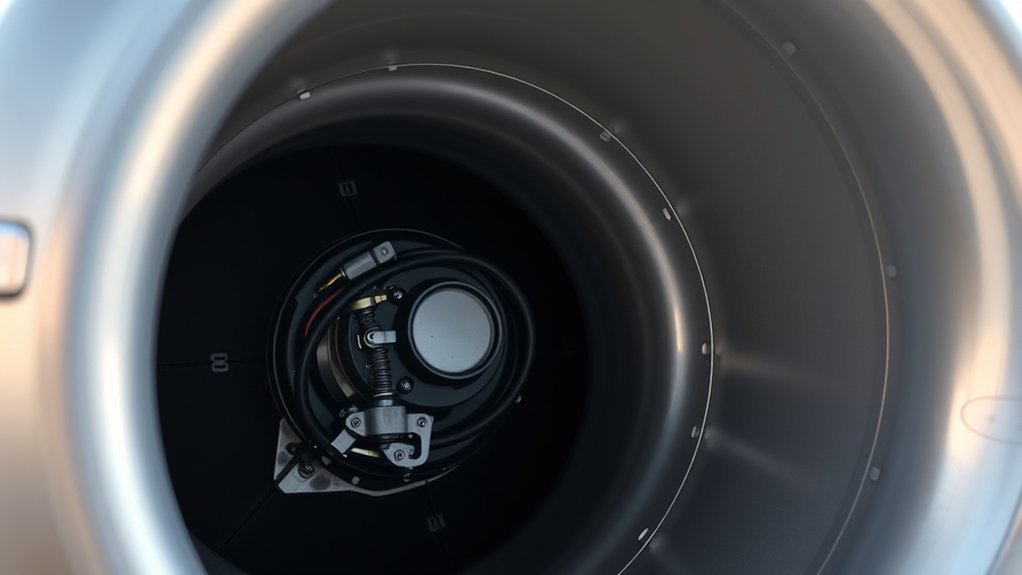
What goes on inside wheel wells during flight might surprise you. Although these cavities house the landing gear when retracted, they’re far from empty. Inside, you’ll find hydraulic lines, electrical wiring, and sometimes brakes tucked away safely.
The wheel wells endure extreme conditions. They face intense cold, low pressure, and high-speed airflow. To handle this, they’re designed with insulation and drainage systems to prevent ice buildup and water accumulation.
You might not realize that the wheel wells also help manage heat generated by brakes after landing. While the plane soars, the wheel wells remain sealed, maintaining the aircraft’s aerodynamic smoothness.
How Landing Gear Fits and Moves Within Wheel Wells
You’ll notice the landing gear fits snugly within the wheel well, thanks to careful space design and precise engineering. The hydraulic system powers the smooth extension and retraction of the gear through a reliable mechanism.
Understanding how these parts work together helps you appreciate the complexity behind every landing.
Landing Gear Retraction Mechanism
Ever wondered how the landing gear neatly tucks away during flight? The landing gear retraction mechanism makes this possible by using hydraulic or electric actuators to fold the gear into the wheel wells.
When you initiate gear retraction, these actuators push or pull the struts, causing the wheels to pivot and slide into their compartments. The mechanism includes locking systems that secure the gear in place when stowed, preventing unwanted movement.
Sensors monitor gear position to ensure proper operation, alerting you if something’s off. This system is designed for smooth, reliable motion, minimizing drag and protecting the gear from airflow.
Thanks to this precise mechanism, you can enjoy a sleek aerodynamic profile during flight while knowing the gear is safely tucked away until landing.
Wheel Well Space Design
How does the landing gear fit so snugly inside the plane without interfering with other systems? The wheel well space design plays a crucial role here. You’ll find that engineers meticulously shape and size the wheel wells to match the landing gear’s dimensions and movement path.
When the gear retracts, it folds into these cavities with minimal clearance, ensuring a tight fit. The well’s structure accommodates the wheels, struts, and shock absorbers while allowing smooth motion during retraction and extension.
It also includes doors that seal the well, maintaining aerodynamic efficiency. This design balances compactness and functionality, preventing the gear from obstructing fuel tanks, wiring, or control components.
Essentially, you get a perfectly tailored space that keeps the landing gear secure and the plane’s systems safe.
Hydraulic System Functionality
Why does the landing gear move so smoothly within the wheel wells? It’s all thanks to the hydraulic system, which controls the gear’s extension and retraction with precision and power. When you activate the landing gear, hydraulic fluid flows through lines, pushing pistons that move the gear.
This system fits perfectly in the confined wheel well space, allowing the gear to fold neatly.
Here’s how it works:
- Hydraulic fluid pressurizes pistons to move the landing gear.
- Actuators guide the gear into the wheel well’s tight space.
- Locking mechanisms secure the gear once retracted or extended.
- Sensors confirm gear position to ensure safe operation.
The hydraulic system’s design lets you rely on smooth, reliable gear movement every time.
Types of Wheel Wells and Landing Gear on Commercial Planes
When you look at a commercial airplane, you might wonder what types of wheel wells and landing gear it uses to safely touch down and taxi. Most planes feature tricycle landing gear, with a nose wheel and two main gears tucked into separate wheel wells. These wells are designed to house the wheels during flight, reducing drag.
Some larger aircraft have complex multi-wheel setups to distribute weight.
Here’s a quick overview:
| Landing Gear Type | Wheel Well Location |
|---|---|
| Nose Gear | Front fuselage |
| Main Gear | Under wing or fuselage sides |
| Multi-wheel Assemblies | Extended wing or body bays |
Knowing these helps you appreciate the engineering behind every smooth landing and takeoff.
How Wheel Wells Impact Aircraft Maintenance and Safety
You need to pay close attention to the wheel wells because their structural integrity is essential for safe flights. Regular inspections and thorough cleaning protocols help prevent damage and guarantee everything functions properly.
Let’s explore how these maintenance steps keep your aircraft safe and reliable.
Structural Integrity Considerations
How do wheel wells affect an aircraft’s structural integrity? They play an essential role in supporting the landing gear while maintaining the aircraft’s strength. When you consider their design, you’ll see how engineers balance weight and durability to avoid compromising safety.
Here’s how wheel wells impact structural integrity:
- Load Distribution They help evenly spread landing forces across the airframe.
- Material Stress Proper design reduces stress concentrations that could cause cracks.
- Flexibility Wheel wells accommodate gear movement without damaging the fuselage.
- Corrosion Prevention Well-sealed wells prevent moisture buildup, protecting metal components.
Inspection and Cleaning Protocols
Maintaining the structural integrity of wheel wells depends heavily on regular inspection and cleaning. When you routinely check these areas, you catch corrosion, cracks, or debris buildup early, preventing costly repairs and potential safety hazards.
You’ll want to use specialized tools and follow manufacturer guidelines to inspect every nook and cranny thoroughly. Cleaning protocols typically involve removing dirt, hydraulic fluid, and grease that accumulate during flights.
You must also ensure drainage holes aren’t blocked, as water retention can accelerate corrosion. By sticking to these protocols, you help keep the wheel wells in prime condition, directly supporting the aircraft’s overall safety and performance.
Skipping or rushing these steps could compromise landing gear function, so you should never underestimate their importance in your maintenance routine.
Common Problems That Occur in Wheel Wells
What causes wheel wells to often face issues during flight operations? You’ll find that wheel wells are exposed to harsh conditions, which lead to common problems that you need to watch out for. Here are four frequent issues:
- Corrosion: Moisture, salt, and debris build-up can cause rust, weakening structural components.
- Hydraulic leaks: Seals can fail, leading to fluid leaks that affect landing gear operation.
- Foreign object damage (FOD): Debris can get trapped, causing damage or obstruction when the gear retracts or extends.
- Tire damage: Improper tire inflation or wear can cause uneven stress on the wheel well area.
How Wheel Wells Are Evolving for Future Aircraft
Why are wheel wells becoming a key focus in aircraft design? As planes evolve, so do the demands on their components, including wheel wells. You’ll see engineers working to make wheel wells lighter without sacrificing strength, using advanced materials like composites.
This reduces overall weight, improving fuel efficiency. You’ll also notice designs that better manage heat and debris, protecting sensitive landing gear systems. Future wheel wells might integrate sensors to monitor conditions in real-time, helping maintenance teams catch issues before they become problems.
Plus, as electric and hybrid planes emerge, wheel wells will adapt to new landing gear configurations and battery placements. By understanding these innovations, you can appreciate how wheel wells contribute to safer, more efficient, and environmentally friendly aircraft.
Frequently Asked Questions
Can Wheel Wells Affect Passenger Comfort During Flight?
Yes, wheel wells can affect your comfort during flight by causing noise and vibrations, especially during landing and takeoff. Airlines work to minimize these effects, but you might still notice some sounds near those areas.
Are Wheel Wells Visible From Outside the Plane?
You might not notice right away, but yes, wheel wells are visible from outside the plane. When the landing gear is down, those openings reveal the wheel wells, hinting at the complex machinery tucked inside.
How Loud Are Wheel Wells During Landing Gear Deployment?
You’ll hear a noticeable clunk and some hydraulic noises during landing gear deployment, but wheel wells themselves aren’t loud.
Most of the noise comes from the gear’s mechanical movement and air rushing past the open wells.
Do Wheel Wells Have Heating Systems to Prevent Ice Buildup?
Imagine flying through icy clouds. Yes, wheel wells often have heating systems to stop ice buildup.
You’ll find heated air or electrical heaters preventing freezing, ensuring the landing gear deploys safely when you need it most.
Can Wheel Wells Be Customized for Different Aircraft Models?
Yes, you can customize wheel wells to fit different aircraft models. Manufacturers tailor their size, shape, and materials to match specific designs, ensuring proper fit, function, and protection based on the plane’s unique requirements and performance needs.
Conclusion
Now that you know what a wheel well is and why it’s essential, you can appreciate how this hidden compartment keeps your flight smooth and safe. Just like a knight’s armor protected warriors long ago, wheel wells shield landing gear during flight, improving aerodynamics and reliability.
As aircraft evolve, wheel wells will continue to advance, ensuring your journey stays efficient and secure. So next time you fly, you’ll see they’re much more than just a simple cavity—they are a crucial part of the wheel well on a plane.