Are Shocks and Struts the Same Thing
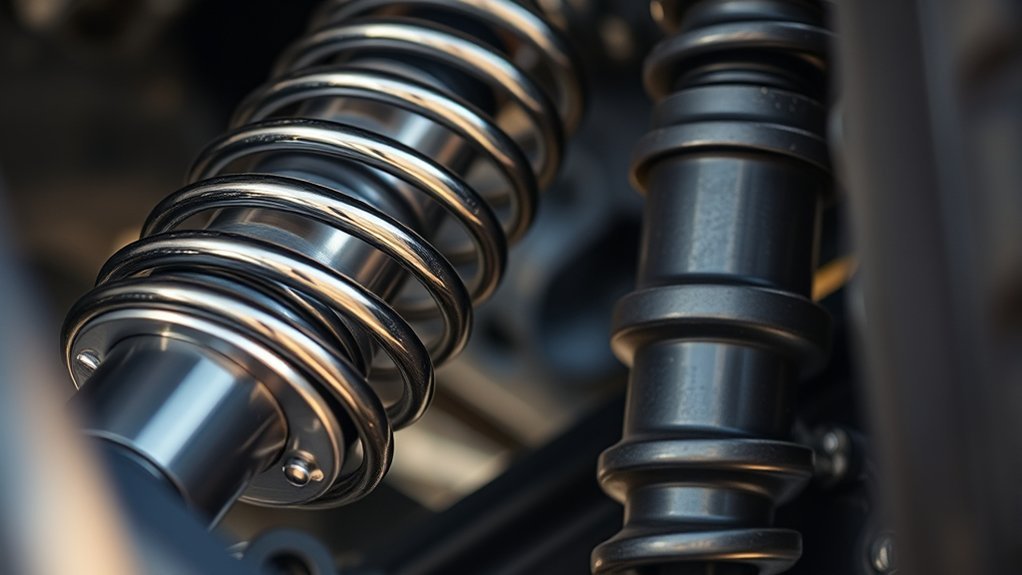
Shocks and struts aren’t the same, though both control suspension movement. Understanding the difference between shocks and struts is important for maintaining your vehicle’s performance.
Shocks primarily dampen vibrations and absorb road impacts, but they don’t support the vehicle’s weight or affect alignment.
Struts combine shock absorption with structural support, integrating a coil spring and influencing steering and ride height. Struts are bulkier and more complex, often requiring more labor to replace.
If you want to understand how these differences impact your ride and maintenance, keep exploring the details.
Key Takeaways
- Shocks primarily dampen suspension movement and control ride comfort, while struts combine damping with structural support and alignment functions.
- Struts integrate a coil spring around the shock absorber and mount directly to the steering knuckle, unlike standalone shocks.
- Shocks do not carry significant structural loads or affect alignment, whereas struts serve as load-bearing components influencing steering and ride height.
- Visually, struts appear bulkier with integrated springs behind the wheel, while shocks are simpler cylinders without springs.
- Replacement of struts typically involves more labor and cost due to their integrated design compared to shocks.
How Shocks Work and What They Do
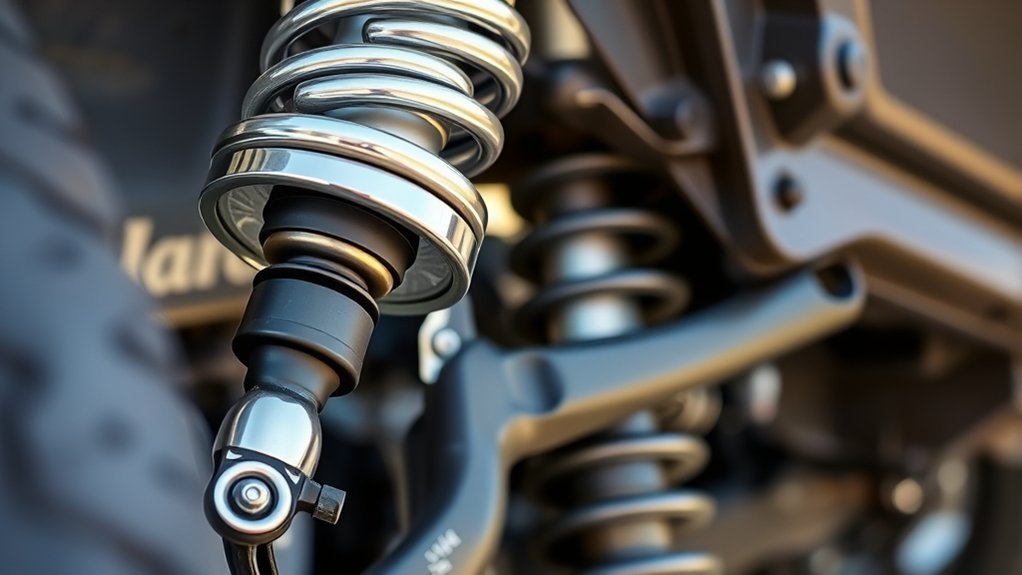
How exactly do shocks work, and why are they essential for your vehicle? Shocks control the impact and rebound movement of your car’s springs and suspension. Without proper shocks lubbing, the suspension components can wear out quickly, leading to poor handling and increased tire wear.
Shocks absorb and dissipate energy from road irregularities, maintaining tire contact with the road surface for better stability and control. Though you might come across struts painting as a cosmetic upgrade, it doesn’t influence shock performance.
Your focus should be on maintaining shock integrity through regular inspections and proper shocks lubbing to reduce friction. This ensures smooth vehicle operation, enhances safety, and prolongs suspension life, preventing harsh rides and potential damage to other suspension components.
How Struts Differ From Shocks
You’ll notice struts serve a structural purpose, supporting the vehicle’s weight and alignment, unlike shocks that primarily control suspension movement. Their design integrates springs and mounts, making them bulkier and more complex.
Understanding these differences helps you grasp why struts and shocks aren’t interchangeable.
Structural Role Differences
Struts and shocks serve distinct structural roles within a vehicle’s suspension system. When you examine struts, you’ll see they act as a key load-bearing component, supporting the vehicle’s weight and maintaining alignment.
Unlike shocks, which primarily dampen vibrations without carrying significant structural loads, struts integrate the spring and damper into one unit. This design means your struts influence steering and suspension geometry directly, a difference that’s fundamental rather than just a matter of strut fashion.
While the idea of a shocking romance might suggest similarity, in practice, shocks and struts perform separate tasks structurally. Understanding this distinction helps you appreciate why struts often require more precise installation and alignment adjustments compared to shocks, ensuring optimal vehicle handling and safety.
Functionality And Design
While shocks mainly focus on controlling spring and suspension movement, their design remains relatively simple. They consist of a piston inside a hydraulic cylinder that absorbs and dissipates energy from road impacts.
In contrast, struts integrate multiple suspension system basics into one unit, combining a shock absorber with structural support for the vehicle’s suspension and steering. When comparing shocks vs. struts, you’ll notice struts carry more load, often serving as a pivot point for the steering mechanism, which shocks do not.
This dual role means struts are more complex and heavier. Understanding this functionality and design distinction helps you grasp why struts affect alignment and ride height, whereas shocks mainly influence ride comfort and control. So, knowing these differences is crucial when diagnosing suspension issues or planning repairs.
Key Design Differences: Shocks vs. Struts
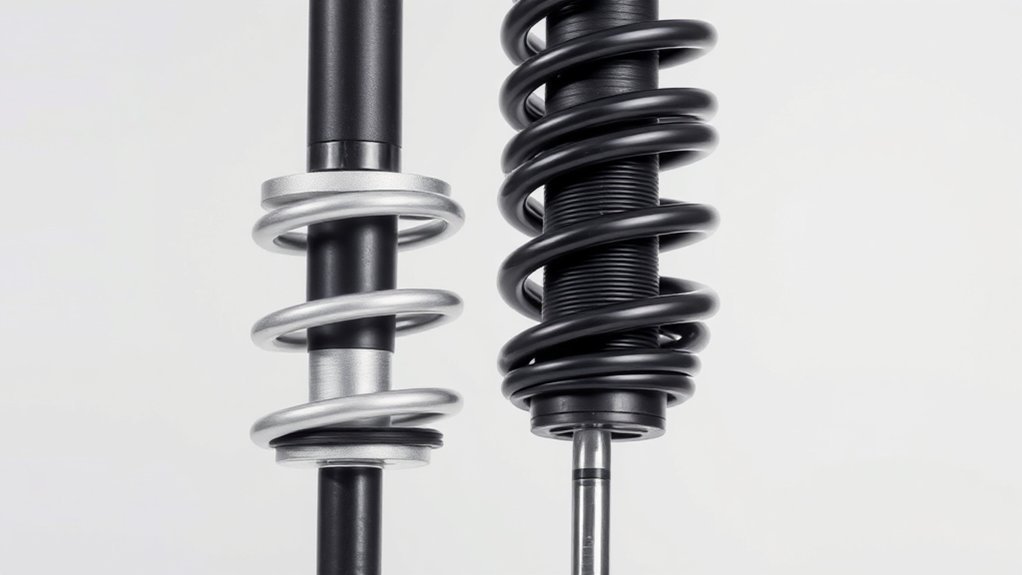
You’ll notice shocks and struts differ markedly in their structural components and functional roles within the suspension system. Understanding these design distinctions helps you see how each affects vehicle performance.
Let’s break down how these differences impact handling, stability, and ride quality.
Structural Components Comparison
Suspension components like shocks and struts play distinct roles in your vehicle’s performance and ride quality. Structurally, shocks are simpler, primarily focused on controlling surface finish and reducing noise levels.
Struts, however, integrate several parts, including a coil spring and steering knuckle, making them a major structural element.
| Feature | Shock Absorber | Strut |
|---|---|---|
| Structure | Single unit, piston-based | Integrated assembly |
| Surface Finish | Smooth operation focus | Supports chassis rigidity |
| Noise Levels | Dampens noise effectively | Slightly higher due to complexity |
| Load Bearing | Non-load bearing | Supports vehicle weight |
Understanding these differences helps you make informed maintenance decisions for optimal ride control.
Functional Roles Explained
How do shocks and struts differ in their functional roles within your vehicle’s suspension system? In a shocks vs. struts comparison, shocks primarily control the up-and-down motion of your wheels, absorbing impacts and preventing excessive bounce.
They don’t support the vehicle’s weight but focus solely on damping vibrations. Struts, on the other hand, serve a dual function: they not only dampen shocks but also act as a structural component, supporting the vehicle’s weight and maintaining alignment.
This means struts integrate the shock absorber with other suspension parts like the coil spring, directly affecting steering and stability. Understanding this distinction helps you identify why a strut replacement often involves more labor and parts than a shock replacement.
This clear functional difference is crucial in maintaining your vehicle’s handling and ride quality.
Design Impact On Performance
Why do the design differences between shocks and struts matter for your vehicle’s performance? Shocks primarily focus on controlling suspension movement, enhancing ride comfort and stability.
Their simpler design optimizes shocks performance by absorbing bumps and minimizing vibrations without directly affecting the vehicle’s structural integrity. Struts, however, combine shock absorption with a load-bearing function, supporting the vehicle’s weight and influencing alignment.
This integration not only improves handling precision but also impacts struts aesthetics due to their visible, structural presence in the wheel assembly. When you choose between shocks and struts, consider that struts offer a compact, space-efficient design enhancing both performance and visual appeal, while shocks deliver targeted damping for smoother rides.
Understanding these key differences helps you select the right component for your driving needs.
How Shocks and Struts Affect Suspension and Handling
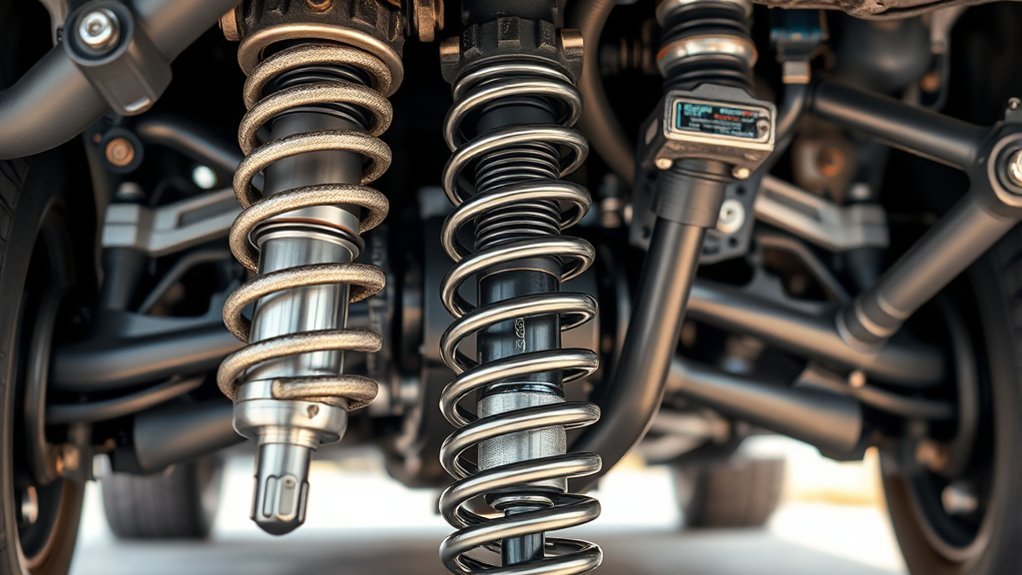
What role do shocks and struts play in your vehicle’s ride and control? They directly influence suspension performance and handling precision. Here’s how:
- Damping Control: Shocks and struts absorb and dissipate energy from road impacts, maintaining tire contact and preventing excessive body movement.
- Structural Support: Struts serve as a suspension’s structural component, integrating with steering and alignment systems to enhance stability and response.
- Adaptability: Advanced off road tuning and future tech improvements allow these components to adjust dynamically, optimizing ride comfort and handling across diverse terrains.
Signs Your Vehicle Needs New Shocks or Struts
When should you consider replacing your shocks or struts? If you notice excessive bouncing after hitting a bump, it’s a clear sign that your shocks’ damping function is failing. Using shocks terminology, this means the shock absorber no longer controls suspension movement effectively.
Also, uneven tire wear or a nose-diving sensation when braking indicates worn strut anatomy components, such as the coil spring or the strut mount. Steering instability or increased body roll in corners suggests the struts or shocks aren’t maintaining proper suspension alignment.
Additionally, visible fluid leaks on the shocks or corrosion on the strut assembly point to mechanical degradation. Diagnosing these symptoms early helps maintain vehicle stability and ride comfort, ensuring your suspension system functions as designed.
How to Tell If You Have Shocks or Struts on Your Car
Determining whether your vehicle has shocks or struts involves inspecting key suspension components and understanding your car’s design. The distinction in shocks vs. struts lies in their structure and function within suspension terminology.
To identify which you have, follow these steps:
- Visual Inspection: Look behind the wheel. Struts integrate a coil spring around the shock absorber and mount directly to the steering knuckle, while shocks are standalone cylinders connected between the frame and axle.
- Check Your Vehicle Manual: The suspension section specifies if your model uses struts or shocks, reflecting design differences by manufacturer.
- Feel the Ride: Struts typically provide structural support, affecting steering; shocks primarily dampen movement without bearing weight.
Using these technical cues, you can confidently distinguish shocks from struts on your car.
Maintenance Tips to Extend Shocks and Struts Life
How can you maximize the lifespan of your shocks and struts? First, regularly inspect them for leaks, dents, or worn mounts. Since shocks vs seats often cause confusion, remember shocks focus on dampening, while struts integrate suspension and steering components.
Maintaining struts and brakes together is crucial because worn struts can accelerate brake wear by reducing tire contact with the road. Keep tire pressure within specs to prevent uneven wear that stresses shocks and struts.
Avoid aggressive driving and heavy loads, which strain suspension components. Periodically clean the undercarriage to remove debris that can damage seals.
Lastly, schedule professional inspections every 12,000 miles or annually, whichever comes first. These steps help you protect your shocks and struts, ensuring safer handling and longer service life.
Costs and Tips for Replacing Shocks vs. Struts
Proper maintenance helps extend the life of your shocks and struts, but eventually, you’ll face replacement. Costs vary: shocks typically run cheaper, while struts can be pricier due to integrated components. Before replacing, check your car warranties; some cover suspension parts.
Here are key tips:
- Inspect both shocks and struts regularly to avoid uneven tire wear and maintain tire alignment.
- Replace in pairs (front or rear) to ensure balanced handling and vehicle stability.
- Choose OEM or high-quality aftermarket parts to preserve performance and avoid premature failure.
Labor costs may differ since struts require more disassembly. Factoring in tire alignment after replacement prevents further suspension stress. Staying proactive helps manage expenses and keeps your vehicle performing safely.
Why Picking the Right Suspension Parts Keeps You Safe
Why does selecting the right suspension parts matter for your safety? Your vehicle’s shocks and struts directly influence handling, braking, and stability. Using improper or worn components can lead to unpredictable responses. Shocking anecdotes of accidents caused by faulty suspension prove this.
Think of your suspension as a system of springs; if those springs don’t compress and rebound correctly, your tires won’t maintain proper road contact. This increases stopping distances and risks loss of control.
By choosing suspension parts designed specifically for your vehicle, ensure optimal damping and spring action. This precision preserves traction, absorbs road impacts, and maintains alignment.
Ultimately, picking the right parts prevents dangerous situations, keeps you firmly on the road, and protects you and your passengers from avoidable hazards.
Frequently Asked Questions
Can Shocks or Struts Be Upgraded for Off-Road Performance?
Yes, you can upgrade shocks and struts for off road compatibility by selecting models with advanced shock absorber tuning. This improves damping control, enhances traction, and increases durability, optimizing your vehicle’s performance on rough terrain.
Do Shocks or Struts Affect Fuel Efficiency?
Think of shocks vs struts as the legs of a runner; if they’re stiff or damaged, you’ll waste energy. Proper suspension terminology matters because well-maintained shocks or struts improve ride efficiency, slightly boosting your fuel economy.
Are Shocks and Struts Covered Under Typical Vehicle Warranties?
You’ll find shocks and struts usually covered under powertrain or suspension warranties, but coverage varies. Check your vehicle’s warranty details since shocks and struts aren’t identical, so terms may differ for each component.
Can You Replace Shocks or Struts Yourself Safely?
Like threading a needle in motion, replacing shocks vs struts demands precision. If you understand vehicle suspension basics and have proper tools, you can do it safely. Otherwise, professional help ensures safety and correct installation.
How Do Temperature Changes Impact Shocks and Struts?
You’ll notice temperature effects cause shocks and struts to stiffen in cold weather, increasing road harshness. Heat can soften their damping ability, reducing performance.
Regular checks help maintain optimal ride quality despite these changes.
Conclusion
Think of shocks and struts like the legs of a marathon runner—both absorb impact, but struts also provide essential support and alignment. While shocks control bounce, struts handle structure, affecting your ride’s safety and comfort. Ignoring worn components is like running on uneven legs; it compromises performance and risks injury.
By understanding their roles and maintaining them properly, you keep your vehicle steady and responsive. Ensuring every drive is as smooth as a finely tuned race depends on knowing the difference between shocks and struts. Proper care of shocks and struts is key to a safe and comfortable ride.