How to Test a Fan Clutch
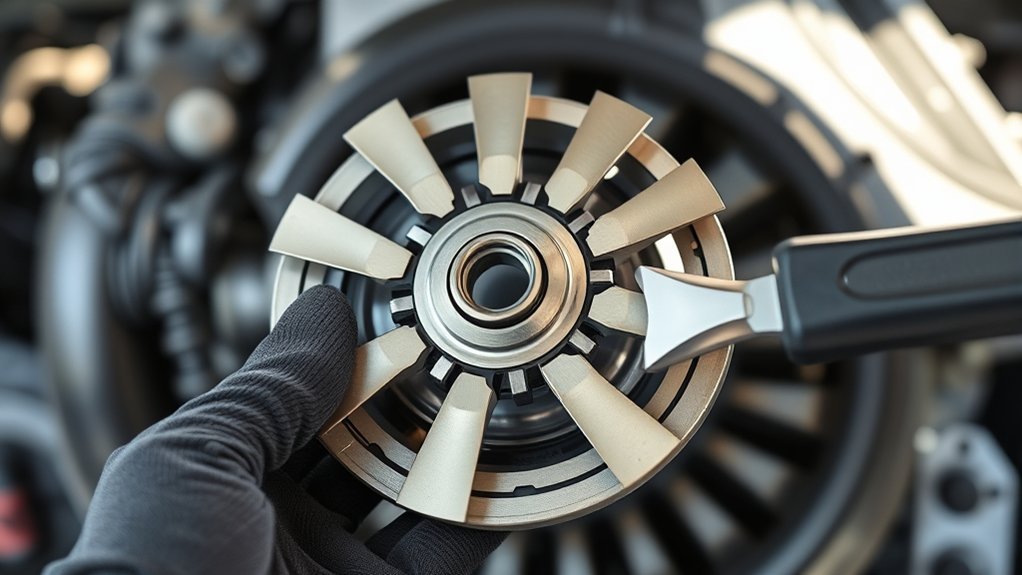
To test your fan clutch, start with the engine cool and manually spin the fan to check for smooth resistance—too loose or too hard signals wear.
Next, monitor fan engagement as the engine warms; it should engage steadily around operating temperature. Use a tachometer to compare fan speed against engine RPM, ensuring proper modulation without slipping.
Listen for bearing noise or wobble, as these indicate potential failure.
If you want to ensure reliable cooling performance, understanding these steps is essential.
Understanding the Fan Clutch and Its Importance
A fan clutch is a critical component in your vehicle’s cooling system that regulates the engine fan’s speed based on temperature. It engages or disengages the fan to optimize engine cooling, reducing unnecessary drag and improving fuel efficiency.
With new technology advancements, modern fan clutches offer enhanced responsiveness and durability, adapting more precisely to fluctuating engine temperatures and external climate impacts. This precision helps maintain optimal engine performance, especially under varying environmental conditions, reducing wear on the cooling system.
Understanding how a fan clutch functions enables you to appreciate its role in protecting your engine from overheating while minimizing energy loss. Proper operation of this component is vital for maintaining engine longevity and overall vehicle efficiency in today’s demanding driving environments.
How to Spot Signs of a Failing Fan Clutch
Knowing how a fan clutch operates helps you recognize when it’s not performing as it should. Understanding its design principles enables you to detect failure signs early, enhancing audience engagement through clear, actionable insights.
Here’s how to spot a failing fan clutch:
Key signs to identify a failing fan clutch and prevent engine cooling issues.
- Excessive fan noise, indicating the clutch is locked or slipping.
- Engine overheating, due to insufficient fan engagement.
- Reduced cooling efficiency at low speeds, showing delayed clutch response.
- Visible wobbling or play in the fan assembly, suggesting mechanical wear.
Best Times for Fan Clutch Testing
When should you test your fan clutch to guarantee optimal performance? The ideal times are during seasonal transitions and before intensive engine use to prevent overheating and premature wear. For instance, if your vehicle supports activities like drone photography or urban farming, where engine load can fluctuate, testing ensures consistent cooling efficiency.
Early spring and late fall offer moderate temperatures that highlight clutch engagement issues without extreme conditions masking faults. Additionally, after prolonged idling or stop-and-go driving common in urban farming environments, testing verifies that the fan clutch responds properly to temperature changes.
How to Prepare Your Vehicle for Fan Clutch Testing
Before testing your fan clutch, make sure the engine is completely cool to avoid burns and inaccurate readings. Gather all necessary tools, including a wrench and a tachometer, to streamline the process.
Finally, secure your vehicle on a flat surface with the parking brake engaged to ensure stability during testing.
Ensure Engine Is Cool
One essential step in preparing to test your fan clutch is ensuring the engine is completely cool. Testing on a hot engine risks burns and inaccurate diagnostics. Follow these steps to confirm your engine’s readiness:
- Turn off the vehicle and allow it to sit for at least 1-2 hours to dissipate heat.
- Verify the coolant level visually or via the reservoir to ensure proper system pressure.
- Carefully remove the radiator cap only after the engine has cooled to avoid pressure release injuries.
- Inspect the radiator and hoses for any residual heat or leaks that could indicate overheating.
Completing these steps ensures safety and accurate fan clutch testing by stabilizing engine temperature and system pressure before you begin.
Gather Necessary Tools
How do you ensure an efficient fan clutch test? First, gather the necessary tools to perform accurate diagnostics. You’ll need a wrench set to remove the fan clutch and accessory belts safely.
A torque wrench is essential for precise reassembly, preventing damage to components that could affect engine oil circulation and overall performance. Have a flashlight to inspect for wear or leaks around the fan clutch area.
Additionally, keep a temperature gauge handy to monitor engine heat, as improper fan clutch function can reduce fuel efficiency by causing overheating. Preparing these tools beforehand minimizes downtime and supports a thorough evaluation, ensuring your vehicle maintains optimal engine oil conditions and fuel efficiency during operation.
Secure Vehicle Stability
Why is securing your vehicle’s stability critical when testing the fan clutch? Ensuring stability prevents unintended movement, which could compromise accurate assessment of cooling system dynamics and risk injury. It also protects drivetrain maintenance integrity by avoiding strain from unexpected shifts.
To prepare your vehicle effectively:
- Park on a flat, level surface to minimize rolling risk.
- Engage the parking brake firmly to lock the rear wheels.
- Use wheel chocks on both front and rear tires for added security.
- Disconnect the battery to prevent accidental engine starts during testing.
Following these steps guarantees a stable testing environment, allowing precise evaluation of the fan clutch’s performance within the cooling system and safeguarding drivetrain components from undue stress.
How to Perform a Manual Spin Test on the Fan Clutch
When should you perform a manual spin test on the fan clutch? This test is essential during routine maintenance notes or when diagnosing potential clutch failures. It helps you assess the clutch’s internal resistance and freedom of movement without relying on unrelated tests like temperature checks or electrical diagnostics.
To perform the test, first ensure the engine is off and the fan is cool to the touch. Grasp the fan blades firmly and spin them by hand. The fan should rotate smoothly with moderate resistance; too loose indicates a worn clutch, while too stiff suggests internal seizing.
Compare your findings to manufacturer specifications in your maintenance notes to confirm clutch condition. This manual spin test provides a direct mechanical assessment critical for accurate fan clutch evaluation.
How to Check the Fan Clutch’s Temperature Response
After performing a manual spin test to evaluate the mechanical condition of the fan clutch, the next step involves assessing its temperature response. This ensures the clutch engages appropriately as engine heat rises, meeting your audience needs for accuracy in diagnosis. Follow this precise study design:
- Start the engine and let it idle until it reaches normal operating temperature.
- Carefully feel the fan blades near the clutch; initially, they should spin freely.
- As temperature increases, observe if the clutch progressively tightens, causing the fan to resist spinning.
- Confirm the fan clutch fully engages at high temperature, indicating proper thermal activation.
This method verifies the clutch responds correctly to temperature changes, crucial for optimal cooling system performance and preventing overheating.
How to Use a Tachometer to Test Fan Clutch Engagement
How exactly can you determine if the fan clutch is engaging correctly under varying engine speeds? Using a tachometer, you measure the fan blade’s rotational speed relative to the engine RPM.
First, start the engine and let it idle; note the engine’s RPM and the fan speed on the tachometer. At idle, the fan should rotate slower than the engine, indicating disengagement for fuel economy and reduced emissions.
Then, gradually increase engine speed and observe the fan speed. The fan clutch should progressively engage, causing the fan speed to approach a fixed ratio with engine RPM.
If the fan speed does not increase accordingly, the clutch may be failing to engage, risking overheating and inefficient operation that impacts fuel economy and emissions control.
Common Fan Clutch Problems During Testing
When testing a fan clutch, watch for overheating symptoms that indicate improper engagement. You should also listen for bearing noise, which can signal internal wear or failure.
Identifying these issues early helps prevent engine damage and ensures proper cooling system performance.
Overheating Symptoms
Why does your engine overheat even though the cooling fan seems to be running? During overheating diagnosis, you need to consider that a fan clutch may engage improperly, reducing cooling system performance despite visible fan activity.
Common overheating symptoms linked to fan clutch failure include:
- Engine temperature rising rapidly under load or idling
- Inconsistent fan speed unrelated to engine temperature
- Reduced airflow through the radiator, causing heat buildup
- Noticeable temperature fluctuations on the gauge during normal operation
If you observe these signs, the fan clutch might be slipping or stuck, preventing adequate cooling. Proper testing should focus on verifying clutch engagement relative to engine temperature to ensure it modulates fan speed correctly, maintaining optimal cooling system performance and preventing engine overheating.
Bearing Noise Issues
Overheating caused by a malfunctioning fan clutch often stems from internal mechanical issues, with bearing noise being a common indicator. When testing, listen carefully for grinding, whining, or squealing sounds, which suggest worn or damaged bearings.
Perform a thorough bearing inspection by manually rotating the clutch hub; roughness or resistance signals deterioration. If you detect abnormal noise or feel excessive play, the bearing likely needs replacement.
Additionally, check the lubrication schedule specified by the manufacturer, as insufficient or contaminated lubricant accelerates bearing wear. Proper adherence to the lubrication schedule helps maintain smooth operation and prevents premature failure.
Addressing bearing noise promptly during testing ensures the fan clutch functions efficiently, preventing engine overheating and costly damage.
When to Replace Your Fan Clutch After Testing Reveals Issues
How do you know if your fan clutch needs replacing after testing indicates a problem? Understanding the subtopic applicability and cross brand differences is crucial. Some symptoms clearly signal replacement, while others might be repairable depending on the make.
Here are four key indicators for replacement:
Four key indicators reveal when your fan clutch needs replacement for reliable engine cooling.
- Excessive bearing noise or roughness detected during testing.
- Failure to engage or disengage properly under temperature changes.
- Visible damage to the clutch or signs of oil leakage.
- Significant wear beyond manufacturer-specified tolerances, which vary across brands.
If any of these conditions are met, replacing the fan clutch is necessary to prevent engine overheating and maintain optimal cooling performance. Always refer to specific brand guidelines to ensure accurate assessment and appropriate action.
Frequently Asked Questions
What Tools Do I Need to Test a Fan Clutch Safely?
You’ll need a temperature gauge, wrench set, and a fan clutch tester. For discussion ideas, remember safety considerations like wearing gloves, securing the engine, and avoiding loose clothing to prevent injury during testing.
Can a Faulty Fan Clutch Affect Fuel Efficiency?
If you notice your fuel efficiency dropping by 10% after replacing the fan clutch, it highlights the issue scope. Testing ethics demand accurate diagnostics to avoid false faults impacting performance and economy in your vehicle’s cooling system.
How Long Does a Fan Clutch Usually Last?
A fan clutch typically lasts between 70,000 to 130,000 miles, depending on driving conditions and maintenance.
To maximize clutch life, you should regularly inspect it for wear and ensure proper engine cooling system performance.
Is It Possible to Test a Fan Clutch Without Removing It?
You can perform fan clutch diagnostics without removal; about 70% of failures reveal unusual resistance or free spin.
Keep in mind, winter driving effects may stiffen the clutch, so test temperature variations carefully for accurate results.
Can Extreme Weather Impact Fan Clutch Performance?
Yes, extreme weather can degrade fan clutch performance by affecting its viscosity and internal components, reducing fan reliability.
You should consider environmental conditions when diagnosing clutch issues to ensure accurate assessment and maintain optimal cooling system function.