How to Carry a Car Seat
To carry a car seat safely, secure your child snugly and lock the handle in an upright position for the best grip. Use both hands when lifting, keep the seat close to your body, and bend your knees to avoid strain.
Distribute weight evenly, especially when carrying extra bags, and protect the seat from dirt with covers or bags.
Knowing how to avoid common mistakes and when to use carriers or adapters can make transporting easier and safer.
How to Choose a Car Seat That’s Easy to Carry
How do you pick a car seat that’s simple to carry without sacrificing safety? Start by choosing lightweight models designed with portability in mind. Look for seats made from durable yet light materials, ensuring you won’t struggle when moving it.
Check for ergonomic designs that fit comfortably in your hand or over your shoulder. Car seat accessories, like padded carry straps or travel bags, can make a significant difference in ease of transport.
Consider travel hacks such as seats with built-in handles or quick-release mechanisms that simplify attachment and removal. Before buying, verify the seat meets all current safety standards.
How to Use Your Car Seat’s Handles and Straps Safely
You’ll want to position the car seat handle correctly to maintain balance and control while carrying. Always use the straps securely to prevent slipping or dropping the seat.
Distributing the weight evenly will help reduce strain and keep your grip steady.
Proper Handle Positioning
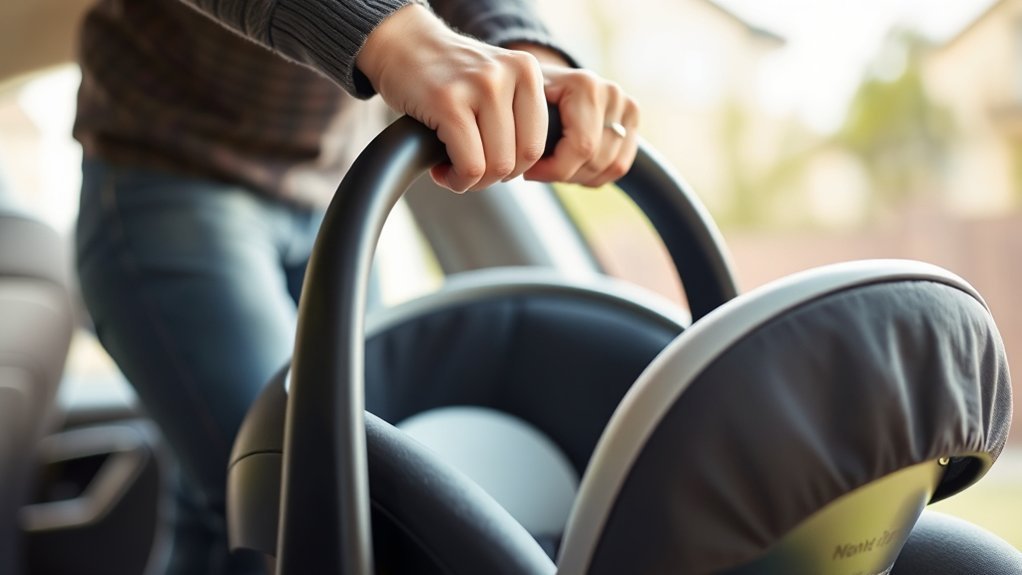
Where should you position the handles and straps to ensure maximum safety when carrying a car seat? Always keep the handle locked in the upright position to maintain an ergonomic grip, reducing strain and enhancing car safety by preventing accidental drops.
Ensure straps are tucked away to avoid tripping hazards or interference. Proper handle positioning balances weight evenly, making carrying safer and more comfortable.
| Handle Position | Purpose | Safety Tip |
|---|---|---|
| Upright | Ergonomic grip | Lock firmly in place |
| Downward | Transport mode | Avoid when carrying |
| Midpoint | Adjustment | Use only if specified |
| Angled | Temporary hold | Not recommended for carrying |
| Locked | Secure carry | Double-check lock status |
Position handles correctly to prioritize safety every time.
Secure Strap Usage
After positioning the handle correctly for a secure and comfortable grip, focus on managing the straps to prevent accidents and guarantee safety. Always check that your car seat’s straps are tightly fastened and free from twists to maintain universal handling standards.
Loose or tangled straps can cause imbalance and increase the risk of dropping the seat. If your model supports backpack carry, use the designated straps designed for that purpose, ensuring they’re properly secured before lifting.
Avoid improvising with non-approved straps, as this compromises safety. By consistently securing the straps and using handles as intended, you maintain control and minimize strain. Proper strap management ensures you carry the car seat confidently and securely, no matter the situation.
Weight Distribution Tips
How can you guarantee balanced weight distribution when carrying your car seat? Focus on careful lifting and using your car seat’s handles and straps to create an ergonomic grip. Always grasp the handle firmly with one hand, and use the strap for additional support in the other. This prevents strain and maintains control.
| Grip Type | Position | Tip |
|---|---|---|
| Handle Grip | Center of handle | Keep wrist straight |
| Strap Support | Opposite hand | Adjust strap length |
| Two-Handed | Handle & strap | Balance weight evenly |
How to Lift and Carry a Car Seat Without Straining
To lift and carry your car seat without straining, use the built-in handles and straps designed for easy grip. Keep your posture balanced by bending your knees and engaging your core as you lift.
This approach protects your back and assures safe, comfortable handling every time.
Proper Lifting Techniques
Proper lifting techniques matter when handling a car seat because they protect your back and prevent unnecessary strain. To maintain good caregiver ergonomics and indoor ergonomics, follow these steps:
- Position Yourself Close: Stand close to the car seat to avoid reaching or twisting, which can cause injury.
- Bend Your Knees: Use your legs, not your back, by bending at the knees and keeping your back straight as you lift.
- Engage Your Core: Tighten your abdominal muscles to support your spine and maintain balance throughout the lift.
Use Handles and Straps
Where you grip a car seat can make all the difference in avoiding strain and injury. Always use the built-in handles and straps designed for carrying. These are positioned to support the car seat’s weight evenly, reducing pressure on your arms and back.
Before lifting, check the strap length; adjust it if possible to ensure a comfortable hold that keeps the car seat close to your body. Avoid gripping awkward edges or fabric, which can increase the risk of dropping the seat or straining muscles.
Maintain Balanced Posture
How you position your body when lifting a car seat directly impacts your comfort and safety. To maintain balanced posture and prevent strain, focus on proper weight distribution and body alignment.
- Stand close to the car seat with your feet shoulder-width apart to create a stable base.
- Bend at your knees, not your waist, keeping your back straight to protect your spine.
- Hold the car seat close to your body, ensuring the weight is evenly distributed between both arms.
How to Carry a Car Seat When Your Child Is Inside
Carrying a car seat with your child inside requires careful attention to safety and comfort. To maintain car seat safety, ensure your child is securely buckled, then lift using proper weight distribution to avoid strain.
Hold the seat close to your body, balancing the weight evenly between your arms for stability. Avoid twisting your torso while carrying.
| Step | Action | Tip |
|---|---|---|
| 1 | Secure child | Buckle harness snugly |
| 2 | Position hands | Grip handle firmly |
| 3 | Lift carefully | Use legs, not back |
| 4 | Balance weight | Keep seat close to torso |
| 5 | Walk steadily | Avoid sudden movements |
Following these steps ensures both you and your child stay safe and comfortable.
How to Carry Infant vs. Convertible Car Seats Safely
Infant and convertible car seats differ substantially in size, weight, and design, so you’ll need to adjust your approach when carrying each. Understanding infant vs. convertible compatibility with your vehicle helps guarantee you handle them safely.
- For infant seats, use the integrated handle to carry the seat close to your body. This reduces strain and improves balance.
- Convertible seats are heavier and bulkier; grip the base firmly with both hands, keeping it close to your torso for better control.
- Always check the car seat’s weight before lifting to avoid injury, and use proper lifting techniques, bending at your knees.
Balancing a Car Seat While Carrying Bags or Other Items
When you carry a car seat along with bags or other items, maintaining balance is key to preventing strain and accidents. Use hands-free carrying methods, like backpacks or shoulder straps, to keep your hands available and weight evenly distributed.
Prioritize shifting heavier items to the opposite side of the car seat to maintain stability as you move.
Hands-Free Carrying Tips
How can you manage to keep your hands free while still securely carrying a car seat? Mastering hands-free techniques enhances safety and convenience. Here’s how to do it effectively:
- Use a sturdy shoulder strap or car seat carrier designed for hands-free use. This keeps the seat close to your body, improving control without occupying your hands.
- Secure smaller bags or items within the car seat’s handle or attach them to the strap. This prevents awkward balancing and aids even weight distribution.
- Adjust the car seat’s position so the weight rests comfortably on your shoulder or hip, reducing strain and maintaining stability.
Weight Distribution Strategies
Carrying a car seat hands-free can improve your mobility, but balancing extra bags or items alongside it requires careful weight distribution. To maintain proper car seat ergonomics and prevent strain, position heavier items on the opposite side of the car seat’s handle.
This counterbalance reduces uneven stress on your arms and shoulders. Use a backpack or crossbody bag to keep your hands free and distribute weight evenly across your body. Avoid overloading one side, which can cause discomfort and affect your posture.
If you must carry multiple items, consider using a wheeled bag to offload some weight. Prioritize stability and comfort by adjusting the grip and stance frequently, ensuring your body can accommodate the combined load without compromising safety or control.
How to Protect Your Car Seat From Dirt and Damage
Why should you prioritize protecting your car seat from dirt and damage? Maintaining your car seat’s integrity ensures safety and longevity. Here’s how you can effectively safeguard it:
- Use protective padding: Add a removable, washable cover or padding to shield the fabric from wear and spills. This acts as a barrier against dirt and minor impacts.
- Practice dirt prevention: Avoid placing your car seat on dirty or rough surfaces. Always carry it with clean hands and store it in a clean, dry place when not in use.
- Regular inspections: Check for any signs of damage or dirt buildup. Clean promptly with appropriate products to prevent stains and material degradation.
When to Use a Carrier or Stroller Adapter for Your Car Seat
When should you opt for a carrier or stroller adapter for your car seat? Use a carrier when you need a lightweight, secure way to transport your car seat by hand, ensuring carrier safety features like sturdy handles and proper weight distribution.
Choose a stroller adapter if you plan to move your baby seamlessly from car to stroller without disturbing them. Before attaching the car seat, verify stroller compatibility by checking manufacturer guidelines and ensuring the adapter fits both your stroller and car seat model.
Using the right adapter guarantees a secure connection and smooth maneuverability. Prioritize carrier safety and stroller compatibility to protect your child and make travel easier. This approach helps you carry your car seat confidently and efficiently.
How to Store Your Car Seat for Easy Carrying
Ensuring your car seat is stored properly makes carrying it much more manageable. Proper storage enhances car seat ergonomics, reducing strain and protecting infant safety. Here’s how to store it effectively:
- Remove unnecessary accessories Detach toys or covers that add bulk, making the seat lighter and easier to handle.
- Secure the harness and straps Fasten all belts tightly to prevent tangling or damage during transport.
- Use a dedicated storage bag or cover Protect the car seat from dirt and wear, ensuring it remains clean and safe for your infant.
Common Carrying Mistakes and How to Avoid Them
How can you prevent unnecessary strain and damage while carrying your car seat? One common mistake is ignoring car seat ergonomics. Holding the seat by awkward handles or edges increases your risk of injury and wear. Instead, use designated grips and keep the seat close to your body to optimize weight handling.
Another error is carrying the seat with one hand only, which strains your wrist and back. Always distribute the weight evenly by using both hands or a shoulder strap if available. Avoid twisting your torso while carrying the seat, as this compromises your balance and may cause drops.
Finally, don’t rush; moving deliberately helps maintain control and protects both you and the car seat. Following these tips ensures safe, ergonomic carrying every time.
Frequently Asked Questions
How Do Car Seat Weight Limits Affect Carrying Options?
Car seat weight limits directly impact your carrying options, since heavier seats require more support or assistance. You’ll need to choose methods that reduce strain and ensure safety, like using handles, straps, or getting help when necessary.
Can Weather Conditions Impact Carrying a Car Seat Safely?
Like a captain steering through a storm, you must adjust your weather adapted grip when carrying a car seat. Rain slick handling is essential to prevent slips, ensuring safety and control despite unpredictable weather conditions.
What Are the Best Materials for Car Seat Covers?
The best fabrics for car seat covers are polyester blends and neoprene, known for durability. After rigorous durability testing, you’ll find these materials resist wear, stains, and moisture, ensuring long-lasting protection and easy maintenance.
How Often Should You Inspect Your Car Seat for Damage?
You should inspect your car seat regularly, monthly, and after every accident. Consistent inspection intervals help you spot hidden damage early, ensuring safety and reliability.
Don’t skip these checks; they protect your child every time.
Are There Travel Restrictions for Carrying Car Seats on Airplanes?
Yes, you’ll face travel restrictions and airplane rules for carrying car seats. Most airlines allow them as carry-on or checked items but require FAA approval for use during flight.
Check specific airline policies before you travel.
Conclusion
Carrying a car seat with ease is like holding a precious bundle of safety and comfort. By choosing the right seat, using handles correctly, and lifting with care, you protect both your child and yourself.
Imagine the smooth, confident grip that keeps your little one secure through every step. Avoid common mistakes, shield your seat from dirt, and store it thoughtfully—so every journey begins with strength and peace of mind.
You’ve got this. Remember, mastering how to carry a car seat properly ensures safety and convenience every time you travel.