How Can You Tell if a Fuel Injector Is Bad
You can tell if your fuel injector is bad by noticing symptoms such as rough idling, engine misfires, or hesitation when accelerating. These signs often indicate that the fuel injector is not delivering fuel properly to the engine. Poor fuel economy and a strong fuel smell near the engine are additional indicators of injector issues.
Check your dashboard for a persistent check engine light, as it often signals fuel delivery problems related to a faulty injector. You can perform simple tests like inspecting for leaks around the injector or listening for clicking sounds while the engine is running.
If these symptoms continue, a deeper inspection is needed. Understanding these details can help you troubleshoot fuel injector problems effectively.
Key Takeaways
- Rough idling, engine misfires, or hesitation during acceleration are common signs of a bad fuel injector.
- A strong fuel smell near the engine or visible leaks around injectors indicate potential injector problems.
- Check engine light illumination often signals fuel injector-related issues requiring diagnostic scanning.
- Poor fuel economy and decreased engine performance suggest inefficient fuel delivery from faulty injectors.
- Electrical tests, resistance checks, and noid light pulses help confirm injector coil and signal faults.
What Does a Fuel Injector Do in Your Engine
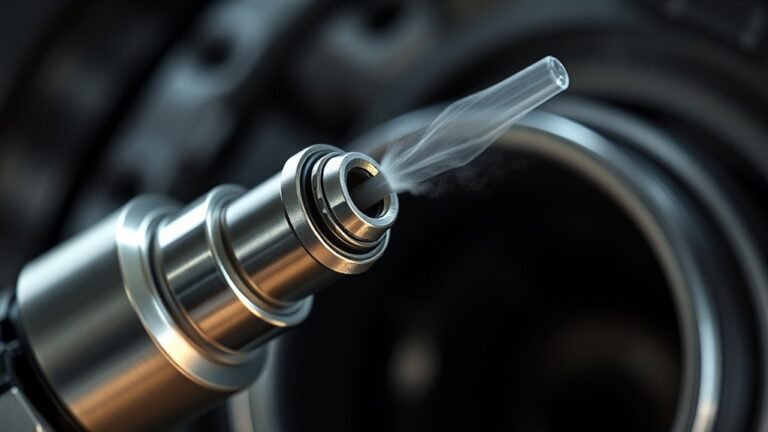
A fuel injector delivers the precise amount of fuel your engine needs at the right time. It sprays fuel directly into the combustion chamber or intake manifold, mixing it with air to create an ideal fuel-air mixture. This mixture ignites, powering your engine efficiently.
If the injector works well, your engine runs smoothly, burns fuel cleanly, and performs at its best. The injector’s role is essential because too much or too little fuel can cause engine problems like stalling or poor acceleration.
Your vehicle relies on these tiny devices to maintain fuel efficiency and reduce emissions. Understanding what a fuel injector does helps you appreciate its importance in keeping your engine running reliably and efficiently.
How to Tell If Your Fuel Injector Is Bad
You’ll notice common symptoms like rough idling, poor fuel economy, or engine misfires if your fuel injector is failing. Running diagnostic tests can help pinpoint the issue quickly.
Paying attention to these signs lets you address performance problems before they get worse.
Common Symptoms Observed
How can you recognize when a fuel injector is starting to fail? You’ll likely notice rough idling or engine misfires because the injector isn’t delivering fuel evenly.
Your car might hesitate or struggle to accelerate, indicating inconsistent fuel flow. Poor fuel economy is another red flag, as a faulty injector can cause your engine to burn more fuel than necessary.
You may also detect a strong fuel smell due to leaks or flooding. In some cases, your vehicle’s check engine light will come on, alerting you to fuel delivery issues.
These symptoms often appear together, signaling that it’s time to inspect your fuel injectors before they cause more serious engine damage. Pay close attention to these signs for timely maintenance.
Diagnostic Testing Methods
When should you start testing your fuel injectors to confirm they’re faulty? Begin testing if you notice symptoms like rough idling or poor acceleration. First, perform a visual inspection for leaks or damage.
Next, try a resistance test with a multimeter by measuring the injector’s coil; a reading outside the manufacturer’s range signals a problem. You can also use a noid light to check if the injector is receiving an electrical pulse from the ECU.
For a more thorough approach, a fuel pressure test can reveal blockages or leaks affecting injector performance. Another effective method is using a scan tool to spot misfire codes linked to injector issues.
These tests help you pinpoint faulty injectors accurately before considering replacement.
Performance Impact Signs
Noticeable drops in your vehicle’s performance often signal a bad fuel injector. When a fuel injector malfunctions, it disrupts the precise fuel delivery your engine needs. You might feel your car struggling to accelerate or notice unusual engine behavior.
Keep an eye out for these warning signs:
- Rough idling that makes your engine shake
- Sudden hesitation or stalling during acceleration
- Decreased fuel efficiency leaving you frustrated at the pump
- Engine misfires causing a jerky, uncomfortable ride
- Persistent check engine light that won’t go away
If you experience any of these, your fuel injector might be failing. Addressing the issue quickly helps restore smooth performance and protects your engine from further damage.
Common Symptoms of a Bad Fuel Injector
If your engine starts acting up, it could be a sign that your fuel injector is failing. You might notice rough idling or misfires as your engine struggles to get the right fuel-air mixture.
Your car could hesitate or stall when you accelerate, making driving unpredictable. Poor fuel efficiency is another common symptom, as a faulty injector can cause your engine to burn more fuel than necessary.
You may also detect a strong fuel smell, indicating fuel isn’t burning properly. In some cases, your check engine light might come on, alerting you to injector-related issues.
Paying attention to these symptoms early can help you address injector problems before they cause more serious engine damage or leave you stranded.
How to Check for Fuel Injector Leaks
To check for fuel injector leaks, start by visually inspecting the injector and surrounding areas for any wet spots or fuel drips. You’ll want to look closely at the seals and connections where leaks often occur.
Catching these signs early can prevent bigger engine problems down the line.
Visual Inspection Techniques
How can you quickly spot a leaking fuel injector before it causes bigger problems? Start with a careful visual inspection. Look closely where the injector meets the fuel rail and engine. Here’s what you should check:
- Fuel stains or wet spots around the injector body
- Strong fuel odor near the engine bay
- Cracked or brittle seals and O-rings
- Accumulation of dirt or grime stuck to oily patches
- Rust or corrosion on metal parts of the injector
Use a flashlight to get a better view in tight spaces. Catching leaks early helps you avoid costly repairs and unsafe driving conditions. If you notice any of these signs, it’s time to address the issue before it worsens.
Signs of Fuel Drips
After spotting visual clues like fuel stains or cracked seals, you should check for actual fuel drips to confirm a leaking injector. First, make sure the engine is off and cool to avoid injury. Use a flashlight to inspect around each injector for fresh fuel droplets or wetness.
You might also notice a strong smell of gasoline nearby. If you see persistent fuel drops, it indicates the injector’s seal or body is compromised. To be thorough, wipe the area clean, then run the engine briefly and watch for new drips.
Any fresh leaks mean the injector needs repair or replacement. Catching these drips early helps prevent fuel waste, poor engine performance, or potential fire hazards. Always take safety precautions when inspecting fuel components.
How to Test Your Fuel Injector’s Electrical Resistance
Wondering if your fuel injector’s electrical resistance is within the proper range? Testing it is straightforward and can save you from costly repairs. Here’s how you do it:
- Grab a digital multimeter and set it to the ohms (Ω) setting.
- Disconnect the fuel injector’s electrical connector carefully.
- Place the multimeter probes on the injector terminals.
- Check the reading against your vehicle’s service manual specifications.
- If the resistance is too high or too low, it indicates a faulty injector coil.
This quick test helps you pinpoint electrical issues inside the injector that might cause poor engine performance. Don’t skip this step. It’s key to diagnosing if your fuel injector needs replacement or repair.
How to Listen for Injector Clicking Sounds
Testing your fuel injector’s electrical resistance gives you a solid idea of its internal condition, but another simple method to check if it’s working properly is by listening for its clicking sound. When the injector pulses, it makes a rapid clicking noise as it opens and closes.
To hear this, you’ll need a mechanic’s stethoscope or a long screwdriver. Place the tool’s tip against the injector body and your ear on the other end.
Start the engine and listen carefully. A healthy injector produces a consistent, rhythmic clicking. If you hear silence or irregular clicks, the injector may be faulty or clogged.
This method helps you quickly identify which injector could be causing issues without removing any parts, making it a handy diagnostic step.
Using Fuel Injector Cleaners to Diagnose Problems
How can you quickly determine if your fuel injectors are clogged or underperforming? Using a fuel injector cleaner is an easy, cost-effective way to diagnose potential problems. Simply add the cleaner to your fuel tank and drive as usual. The cleaner helps dissolve deposits and improves spray patterns.
If your engine runs smoother or gains power, it’s a strong sign your injectors were dirty.
Look out for these signs after using the cleaner:
- Smoother acceleration that feels rewarding
- Noticeable improvement in fuel efficiency
- Reduced engine hesitation or stalling
- Quieter engine operation that relaxes you
- Fewer misfires that ease your worries
If you don’t see these improvements, your injectors may need further inspection or repair.
When to Visit a Mechanic for Fuel Injector Diagnosis
When should you take your vehicle to a mechanic for a fuel injector diagnosis? If you notice persistent engine misfires, rough idling, or a significant drop in fuel efficiency after trying basic fixes, it’s time to get professional help. Mechanics have specialized tools to pinpoint injector issues quickly and accurately.
Here’s when to visit a mechanic:
| Symptom | Why See a Mechanic? |
|---|---|
| Engine misfires or stalls | Could indicate clogged or leaking injectors |
| Persistent fuel smell | Possible injector leaks needing inspection |
| Check engine light stays on | Requires diagnostic scanning for injector faults |
Don’t delay; early diagnosis can prevent costly repairs and keep your engine running smoothly.
Preventing Fuel Injector Failure With Regular Maintenance
Ignoring early signs of fuel injector trouble can lead to costly repairs down the road, but you can keep your injectors in good shape with regular maintenance. Taking proactive steps helps you avoid breakdowns and maintain optimal engine performance.
Here’s what you can do:
- Use quality fuel to prevent clogging and deposits.
- Change your fuel filter regularly to keep contaminants out.
- Add fuel injector cleaner to your tank every few thousand miles.
- Schedule routine engine tune-ups to catch issues early.
- Inspect and replace worn spark plugs to ensure proper combustion.
Frequently Asked Questions
Can a Bad Fuel Injector Affect My Car’s Emissions?
Yes, a bad fuel injector can increase your car’s emissions by causing improper fuel delivery. This leads to incomplete combustion, raising pollutants and potentially triggering your check engine light.
You’ll want it fixed quickly.
How Much Does It Cost to Replace a Fuel Injector?
Replacing a fuel injector typically costs between $150 and $600, depending on your car model and labor rates. You’ll save by doing it yourself, but most people opt for a mechanic to ensure proper installation and performance.
Are Fuel Injectors the Same for All Car Models?
Fuel injectors aren’t one-size-fits-all keys; each car model needs a specific fit. You’ll want to match the injector to your engine’s design, ensuring it unlocks smooth performance without causing misfires or inefficiency.
Can Using the Wrong Fuel Damage Injectors?
Yes, using the wrong fuel can damage your injectors by causing buildup, corrosion, or improper spray patterns.
You should always use the recommended fuel type to keep injectors clean and functioning properly, avoiding costly repairs.
How Long Do Fuel Injectors Typically Last?
Imagine your fuel injectors as tiny engines themselves. They usually last around 50,000 to 100,000 miles.
If you keep them clean and use quality fuel, they’ll perform smoothly without hiccups for many years.
Conclusion
If you ignore the signs of a bad fuel injector, your engine won’t run smoothly—it’s like trying to dance with a missed beat. By recognizing symptoms early, checking for leaks, testing resistance, and listening closely, you can keep your car performing at its best.
Remember, prevention is better than repair, so treat your fuel injectors with regular care. When in doubt, don’t hesitate to visit a mechanic—your engine’s health depends on it. Knowing how to tell if a fuel injector is bad can save you from costly repairs and ensure your vehicle runs efficiently.