Does a Honda Odyssey Have All Wheel Drive
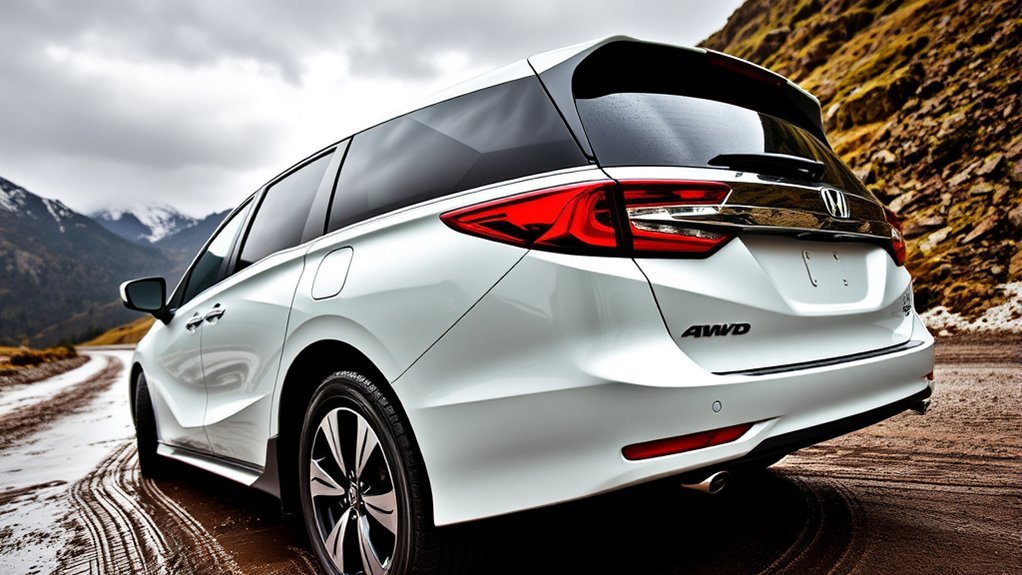
The Honda Odyssey doesn’t come with all-wheel drive (AWD); it’s only available with front-wheel drive (FWD). This setup boosts fuel efficiency, reduces weight, and gives you better interior space—perfect for everyday family use.
FWD offers good traction, especially in wet or slippery conditions, thanks to the engine’s weight over the front wheels and smart safety features like stability control.
If you want to understand how this impacts handling and when AWD might be worth considering, keep exploring the details.
Key Takeaways
- The Honda Odyssey is exclusively front-wheel drive (FWD) with no all-wheel drive (AWD) option available.
- Odyssey’s FWD design focuses on efficiency, fuel economy, and everyday family practicality.
- AWD minivans generally offer better traction, but Odyssey compensates with stability features like VSA and Traction Control.
- FWD Odyssey benefits from lighter drivetrain weight, enhanced interior space, and predictable handling in various conditions.
- For AWD alternatives, consider models like the Toyota Sienna or Chrysler Pacifica, which offer AWD configurations.
Does the Honda Odyssey Have All-Wheel Drive?
Wondering if the Honda Odyssey comes with all-wheel drive? You’ll find that it doesn’t. Honda has designed the Odyssey exclusively with front-wheel drive, so you won’t see an all-wheel-drive option in its lineup.
This means the power goes to the front wheels only, which can affect traction in certain conditions. If you’re looking for a minivan with AWD, the Odyssey won’t fit the bill.
Instead, you’ll want to explore other models or brands that offer all-wheel drive for better handling on slippery roads. However, the Odyssey’s front-wheel-drive system is optimized for efficiency and everyday driving.
Why Honda Uses Front-Wheel Drive for the Odyssey
You’ll find that Honda sticks with front-wheel drive for the Odyssey mainly to boost efficiency and fuel economy. This setup also improves the vehicle’s design and handling, making it easier to drive in everyday conditions.
Let’s explore how these factors come together to shape the Odyssey’s performance.
Efficiency And Fuel Economy
How does the Honda Odyssey balance power and fuel efficiency so effectively? By using front-wheel drive, it reduces the mechanical complexity and weight that comes with all-wheel drive systems. This means less energy is wasted moving power to all four wheels, allowing the engine to operate more efficiently.
When you’re driving, this translates to better gas mileage and lower fuel costs over time. The lighter drivetrain also helps the Odyssey achieve smoother acceleration without sacrificing the power you need for daily driving or road trips.
Design And Handling Benefits
Why does Honda stick with front-wheel drive for the Odyssey? It’s all about design and handling benefits that suit family driving. Front-wheel drive offers better traction during acceleration, especially in wet or slippery conditions, since the engine’s weight is over the driven wheels.
This setup also allows for more cabin space because the drivetrain components take up less room. You’ll notice the Odyssey handles predictably and smoothly, making it easier to maneuver through city streets or tight parking spots.
| Benefit | Explanation |
|---|---|
| Better Traction | Engine weight over front wheels improves grip |
| More Interior Space | Compact drivetrain frees up cabin room |
| Predictable Handling | Stable and smooth driving experience |
This design choice keeps the Odyssey practical and comfortable for everyday use.
How Front-Wheel Drive Affects Honda Odyssey’s Performance
What impact does front-wheel drive have on the Honda Odyssey’s performance? You’ll find that front-wheel drive (FWD) provides efficient power delivery directly to the front wheels, which improves fuel economy and reduces drivetrain complexity.
This setup makes the Odyssey lighter and easier to maneuver, especially in city driving or tight parking situations. Since the engine’s weight rests over the drive wheels, you get better traction during acceleration on dry pavement.
However, because only the front wheels handle power and steering, you might notice understeer during aggressive cornering. Overall, FWD offers a balanced mix of efficiency and everyday practicality, making the Odyssey reliable for family trips and daily commutes without the added weight or cost of all-wheel drive.
How the Odyssey Handles Snow and Slippery Roads
You’ll want to know how the Odyssey performs when the roads get snowy or slippery. While it doesn’t have all-wheel drive, its front-wheel drive system combined with stability features helps maintain traction.
Let’s look at how these elements work together to keep you safe.
Traction Performance Overview
Although the Honda Odyssey doesn’t come with all-wheel drive, it still offers reliable traction for most snowy and slippery road conditions. You can count on its front-wheel-drive system, combined with smart engineering, to keep you steady.
Here’s how it manages traction effectively:
- Front-Wheel Drive Advantage: By powering the front wheels, it pulls you through snow rather than pushing, which helps maintain better control.
- Tire Grip: The Odyssey supports a wide range of winter tires, which you can use to enhance grip significantly.
- Weight Distribution: Its balanced weight over the front axle improves traction, reducing the chances of wheel slip on slick surfaces.
While it’s not AWD, the Odyssey’s design ensures confidence in most winter driving scenarios.
Stability Features Explained
How does the Honda Odyssey maintain stability on snowy and slippery roads without all-wheel drive? It relies on advanced stability features like Vehicle Stability Assist (VSA) with Traction Control.
When you encounter slippery surfaces, VSA monitors your steering and braking, adjusting engine power and applying brake force to individual wheels to keep you on track. The Odyssey also uses an Anti-lock Braking System (ABS) to prevent wheel lockup during sudden stops, helping you maintain control.
Additionally, its front-wheel-drive layout offers predictable handling by sending power directly to the front wheels, which improves traction in slick conditions. While it lacks all-wheel drive, these systems work together to help you navigate snow and ice confidently, enhancing safety and stability without the added weight or complexity of AWD.
Safety Features That Compensate for No AWD in the Odyssey
What keeps the Honda Odyssey confident on the road despite lacking all-wheel drive? It’s the smart safety features designed to help you maintain control in tricky situations. You get technology that steps in when traction isn’t perfect.
Here are three key safety features that compensate for no AWD:
- Vehicle Stability Assist (VSA): This system detects oversteer or understeer and applies brake pressure to specific wheels, helping you stay on your intended path.
- Traction Control System (TCS): It reduces wheel spin during acceleration, improving grip on slippery surfaces.
- Anti-lock Braking System (ABS): ABS prevents wheel lockup during sudden stops, ensuring you can steer while braking hard.
Together, these features boost your Odyssey’s stability and keep you safer when road conditions get challenging.
Tips to Improve Traction and Control Without AWD
You can boost your Odyssey’s traction by choosing the right tires and balancing the weight inside your vehicle. Adjusting your driving style also plays a big role in maintaining control, especially in tricky conditions.
Let’s explore how these simple changes can make a noticeable difference without AWD.
Tire Selection Strategies
Where you choose your tires can make a huge difference in traction and control, especially since the Honda Odyssey doesn’t come with all-wheel drive. To maximize grip and safety, you want tires that suit your driving conditions and vehicle needs.
Here are three key tire selection strategies:
- Opt for all-season tires if you face varied weather; they balance performance in wet, dry, and light snow conditions.
- Consider winter tires if you live somewhere with heavy snow or ice; their specialized rubber compounds and tread patterns improve grip.
- Check tire tread depth regularly and replace tires before they become too worn to maintain optimal traction.
Choosing the right tires ensures you get the best control possible without AWD on your Odyssey.
Weight Distribution Tips
How can adjusting weight distribution enhance your Honda Odyssey’s traction and control without all-wheel drive? By properly balancing the load inside your vehicle, you can improve tire grip and stability, especially on slippery surfaces.
Start by placing heavier items low and near the center of the van to lower the center of gravity and prevent uneven weight shifts. Avoid crowding the rear, which can lighten the front tires and reduce steering traction.
If you’re carrying cargo or passengers, distribute the weight evenly across both sides to maintain balance during turns. Removing unnecessary items to reduce overall weight also helps.
These simple adjustments let you maximize your Odyssey’s existing traction capabilities, making your drive safer and more controlled without the need for AWD.
Driving Techniques Adjustment
What driving habits can help you maintain control and traction in your Honda Odyssey without all-wheel drive? Adjusting your driving techniques is key to tackling slippery or uneven roads. Here are three essential tips:
- Smooth Acceleration and Braking: Avoid sudden starts or stops. Gradual pressure helps prevent wheel spin and maintains better grip.
- Reduced Speed in Poor Conditions: Slowing down gives you more time to react and reduces the risk of losing control on wet or icy surfaces.
- Gentle Steering Inputs: Sharp turns can cause skidding. Make slow, deliberate steering adjustments to keep the vehicle stable.
When You Really Need AWD for Your Family Minivan
Why might you need all-wheel drive in your family minivan? If you live in an area with frequent rain, snow, or icy roads, AWD can provide better traction and stability, helping you stay safe during your daily drives.
When you’re hauling kids and gear, maintaining control is essential, especially on slippery or uneven surfaces. AWD also helps if you often drive on gravel roads or steep hills, where extra grip prevents slipping.
While AWD isn’t necessary for every family, it becomes valuable when weather conditions or terrain increase risks. If you want peace of mind and enhanced handling in challenging conditions, choosing a minivan with AWD might be the smart move for your family’s safety and convenience.
Odyssey vs. AWD Minivan Competitors
When comparing the Honda Odyssey to other family minivans with all-wheel drive, you’ll quickly notice a key difference: the Odyssey doesn’t offer AWD at all. If you’re weighing your options, consider these points about the Odyssey versus AWD competitors:
- Traction and Handling: AWD minivans provide better grip in slippery conditions, while the Odyssey relies on front-wheel drive, which may struggle on snow or loose terrain.
- Fuel Efficiency: Without AWD, the Odyssey often delivers better gas mileage, making it more economical for everyday driving.
- Price and Availability: AWD minivans usually come at a higher price and fewer trim options, whereas the Odyssey offers a wider range of configurations and features.
Understanding these differences helps you decide if the Odyssey’s advantages fit your family’s needs despite lacking AWD.
Best All-Wheel Drive Alternatives to the Honda Odyssey
Looking for a family minivan with all-wheel drive means you’ll need to explore options beyond the Honda Odyssey. The Toyota Sienna stands out as a top choice, offering standard AWD on all trims and a fuel-efficient hybrid powertrain.
If you want something a bit more rugged, the Chrysler Pacifica AWD delivers solid performance and a user-friendly infotainment system. Subaru’s upcoming minivan concept hints at future AWD options, but for now, your best bets are the Sienna and Pacifica.
Both provide the traction and control you need for slippery roads or challenging weather. When choosing, focus on features like cargo space, safety tech, and comfort to find the perfect fit for your family’s needs.
Choosing Between AWD and Front-Wheel Drive Minivans
How do you decide between all-wheel drive (AWD) and front-wheel drive (FWD) minivans? Consider your driving needs carefully.
- Weather Conditions: If you often face rain, snow, or slippery roads, AWD offers better traction and stability. FWD handles well in dry conditions but can struggle in poor weather.
- Fuel Efficiency: FWD minivans generally consume less fuel than AWD models, saving you money over time.
- Cost and Maintenance: AWD vehicles tend to be pricier upfront and may incur higher maintenance costs due to their complex drivetrain.
Choosing between AWD and FWD boils down to balancing your budget, driving environment, and safety priorities. If you need extra grip in challenging conditions, AWD is worth considering. Otherwise, FWD often provides adequate performance for everyday family use.
Frequently Asked Questions
What Is the Fuel Economy Difference Between AWD and FWD Minivans?
You’ll usually see AWD minivans get about 1-3 MPG less than FWD models because AWD adds weight and drivetrain drag.
Does the Honda Odyssey Have a Hybrid or Electric Version?
Coincidentally, you won’t find a hybrid or electric Honda Odyssey yet. Honda focuses on traditional gas engines for this model, but keep an eye out. Hybrid versions might appear as eco-demand grows in family vehicles.
How Much Cargo Space Does the Honda Odyssey Offer?
You’ll get up to 144.9 cubic feet of cargo space in the Honda Odyssey with the rear seats folded down.
It offers plenty of room for gear, groceries, or anything else you need to haul.
What Are the Maintenance Costs for a Honda Odyssey?
You’ll find Honda Odyssey maintenance costs reasonable, averaging around $400 to $600 annually. Regular oil changes, tire rotations, and brake service keep it running smoothly without breaking your budget over time.
Are There Towing Options Available for the Honda Odyssey?
Yes, you can tow with the Honda Odyssey, but remember, it’s designed for light towing. You’ll tow small trailers or bikes safely, but don’t expect it to haul heavy loads like a truck or SUV can.
Conclusion
Think of the Honda Odyssey as a trusty sailboat—it navigates smoothly with front-wheel drive, cutting through most waters with ease. But when the seas turn rough and slippery, all-wheel drive is like having extra sails catching the wind from every direction, giving you that added grip.
If your family’s journey often faces stormy roads, consider AWD alternatives. Otherwise, the Odyssey’s design will keep you steady and safe on most everyday adventures.
In conclusion, the Honda Odyssey does not have all-wheel drive, so if AWD is a priority for your family, you may want to explore other options.