Can You Drive With a Bad Wheel Bearing
You shouldn’t drive with a bad wheel bearing because it can seriously compromise your safety. A worn bearing may cause wheel wobble, grinding noises, vibration, or even wheel detachment, risking loss of control.
While short, slow trips are possible, it’s best to stop driving once symptoms appear and get it inspected promptly. Ignoring it can lead to costly damage and dangerous situations.
Keep going, and you’ll find out how to spot, fix, and prevent these issues.
Key Takeaways
- Driving with a bad wheel bearing risks wheel wobble, seizure, and loss of vehicle control, creating a serious safety hazard.
- Grinding noises, vibrations, or steering looseness are key signs indicating you should stop driving immediately.
- Short, low-speed trips may be possible but increase risk and should be avoided when symptoms worsen.
- Prompt inspection and repair by a mechanic are critical to prevent sudden bearing failure or wheel detachment.
- Prioritize safety over convenience by scheduling repairs as soon as any bad bearing symptoms appear.
What Is a Wheel Bearing and Why Does It Matter
What exactly is a wheel bearing, and why should you care about it? A wheel bearing is a crucial component that allows your vehicle’s wheels to spin smoothly with minimal friction. It sits between the wheel and the axle, supporting the wheel’s weight and enabling steady rotation.
Without a properly functioning wheel bearing, your wheels wouldn’t turn efficiently, compromising your vehicle’s handling and safety. You rely on these bearings every time you drive, even if you don’t realize it.
They’re designed to withstand heavy loads and harsh conditions, but when they start to fail, it can lead to serious problems. Understanding what a wheel bearing does helps you appreciate why keeping it in good shape matters for your car’s performance and your safety on the road.
How to Spot Signs of a Bad Wheel Bearing
Listen closely to your car, and you might catch early signs of a bad wheel bearing. One common clue is a humming or grinding noise that changes with your speed. You may notice it gets louder when turning.
Listen for humming or grinding noises that change with speed and get louder when turning—early signs of a bad wheel bearing.
Another sign is uneven tire wear, which suggests the bearing isn’t holding the wheel properly. Pay attention to any vibrations or wobbling in the steering wheel, especially at higher speeds.
If you feel your vehicle pulling to one side or experience looseness when you shake the wheel, these are red flags too. Checking for these symptoms regularly helps you catch problems early before they worsen.
Trust your senses—sight, sound, and touch—to spot a failing wheel bearing before it causes bigger issues.
Risks of Driving With a Bad Wheel Bearing
How long can you safely drive with a bad wheel bearing before it becomes dangerous? The truth is, even short drives carry risks. A worn bearing can cause your wheel to wobble or seize, leading to loss of control.
You might experience uneven tire wear or decreased braking performance, making your vehicle unpredictable. Worse, the bearing could fail suddenly, causing the wheel to lock up or detach, which can result in a serious accident.
Additionally, damaged bearings put extra strain on suspension and drivetrain components, increasing repair costs. Ignoring the problem puts you, your passengers, and others on the road at risk.
Can You Drive Safely With a Bad Wheel Bearing? When to Stop
When should you stop driving with a bad wheel bearing? If you hear grinding noises, feel vibrations, or notice uneven tire wear, it’s time to pull over and get it checked. While you might manage short trips at low speeds, continuing to drive risks sudden wheel failure.
Don’t ignore warning signs like pulling to one side or a loose steering feel. Prioritize safety over convenience. If the symptoms worsen or you’re unsure, stop driving immediately.
Driving with a compromised wheel bearing can lead to dangerous situations, including loss of control. Schedule repairs as soon as possible and avoid long trips until the issue is fixed. Your safety and that of others on the road depends on timely action.
How a Bad Wheel Bearing Impacts Vehicle Performance
When a wheel bearing goes bad, you’ll notice noise and vibrations that affect your ride comfort. Your handling and steering may feel less responsive, making it harder to control the vehicle.
Plus, uneven tire wear can happen faster, costing you more in the long run.
Noise and Vibration Effects
Why does your car start making unusual noises or shaking while driving? When a wheel bearing goes bad, its internal components wear down, causing rough rotation. This wear creates a grinding or humming noise that grows louder with speed.
You might notice a rhythmic thumping or clicking sound, especially when turning. Besides noise, a failing wheel bearing causes vibrations that you can feel through the steering wheel or floor. These vibrations result from the uneven movement of the wheel as the bearing loses its smoothness.
Ignoring these signs can lead to more severe damage and unsafe driving conditions. If you detect unusual noises or vibrations, have your wheel bearings inspected and replaced promptly to maintain your vehicle’s performance and safety.
Handling and Steering Issues
Unusual noises and vibrations don’t just affect comfort; they also signal that your vehicle’s handling and steering might be compromised. When a wheel bearing wears out, it can cause your steering to feel loose or less responsive.
You might notice the car pulling to one side or difficulty maintaining a straight line. This happens because the bearing no longer holds the wheel firmly in place, allowing slight but dangerous movement.
As a result, your control over the vehicle decreases, especially during turns or at higher speeds. Ignoring these signs can lead to unpredictable handling, making driving unsafe.
If you detect any unusual steering behavior, have your wheel bearings inspected immediately to keep your vehicle performing safely and reliably.
Increased Tire Wear
How does a bad wheel bearing affect your tires? When a wheel bearing is worn or damaged, it causes the wheel to wobble or misalign, leading to uneven tire wear. This not only shortens the lifespan of your tires but also compromises your vehicle’s safety and performance.
You might notice vibrations or noises that indicate the bearing isn’t holding the wheel firmly in place, causing your tires to wear out faster in specific areas.
Here’s how a bad wheel bearing impacts tire wear:
- Causes uneven tread wear due to wheel misalignment
- Increases friction, leading to faster tire degradation
- Creates vibrations that affect tire contact with the road
- Can lead to premature tire replacement and added costs
Addressing a bad wheel bearing promptly protects your tires and driving safety.
How Mechanics Check and Fix Bad Wheel Bearings
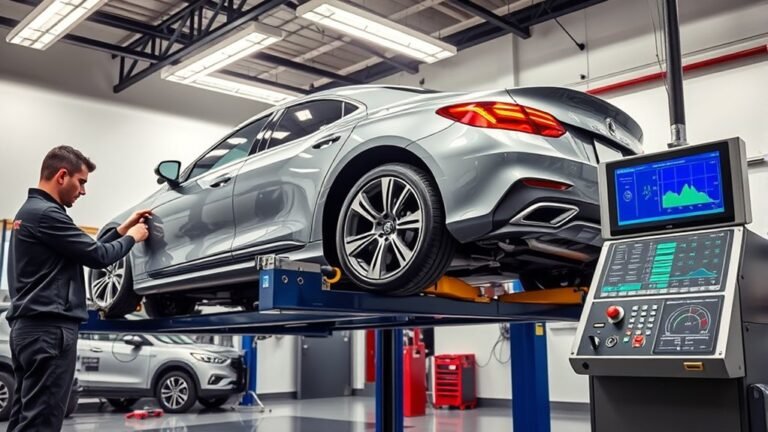
When you suspect a bad wheel bearing, mechanics start by listening for unusual noises during a test drive and physically inspecting the wheel for play or roughness. They’ll jack up the car, then wiggle the wheel to check for looseness, which signals bearing wear.
Next, they spin the wheel to feel for any grinding or resistance. If the bearing is faulty, they’ll remove the wheel, brake caliper, and rotor to access the bearing assembly. Depending on your car, they either press out the old bearing and press in a new one or replace the entire hub assembly.
After installation, they reassemble everything and test drive your car to ensure the noise and play are gone, confirming the repair was successful.
What Does It Cost to Fix a Wheel Bearing?
You’re probably wondering how much it’ll cost to fix a wheel bearing. Repair prices usually range depending on your vehicle type and labor rates.
Let’s look at the average costs and what factors can affect the final bill.
Average Repair Costs
Repairing a bad wheel bearing involves costs that vary depending on your vehicle and location. On average, you can expect to pay between $150 and $400 for parts and labor. If you’re handy, replacing just the bearing might cost as little as $50 for parts, but professional service adds labor fees.
Here’s a quick look at typical costs:
- Parts: $50 to $150
- Labor: $100 to $250
- Total average: $150 to $400
- High-end or luxury vehicles: $400+
Keep in mind, these prices cover standard wheel bearing replacements. If you delay repairs, you might face more expensive damage later. Knowing these average costs helps you prepare and decide when it’s time to get that wheel bearing fixed.
Factors Affecting Price
How much you’ll pay to fix a wheel bearing depends on several key factors. First, the make and model of your vehicle greatly influence the cost since some bearings are pricier or harder to access.
Labor rates vary by location and shop, so where you get the repair done matters. If the damage is severe, you might need additional parts or repairs, which will increase the price.
Also, whether the wheel bearing is integrated with the hub assembly or separate affects costs. Integrated units usually cost more to replace. Lastly, if you choose an aftermarket or OEM part, prices can differ significantly.
Knowing these factors helps you prepare for the repair cost and avoid surprises when fixing your wheel bearing.
Tips to Extend Your Wheel Bearing’s Life
When should you start caring for your wheel bearings to keep them in good shape? Ideally, you want to begin right after installation and continue regularly. Proper care helps avoid premature wear and costly repairs.
Start caring for your wheel bearings immediately after installation and maintain regular upkeep to prevent wear and repairs.
Here are some practical tips to extend your wheel bearing’s life:
- Avoid driving through deep water or mud, which can cause contamination.
- Steer clear of rough terrain or potholes that stress the bearings.
- Keep your vehicle’s suspension and alignment in check to reduce uneven load.
- Listen for unusual noises early and address them promptly.
Preventing Wheel Bearing Problems: Maintenance Essentials
Taking steps to extend your wheel bearing’s life sets a strong foundation, but regular maintenance is what keeps problems at bay. You should inspect bearings regularly, keep them clean, and ensure proper lubrication. Ignoring these basics can result in premature wear or failure.
| Maintenance Task | Frequency | Why It Matters |
|---|---|---|
| Inspect bearings | Every 12,000 miles | Catch wear or damage early |
| Clean components | During inspections | Prevent dirt buildup |
| Lubricate bearings | Annually | Reduce friction and heat buildup |
| Check wheel alignment | Every oil change | Avoid uneven bearing stress |
Frequently Asked Questions
Are Wheel Bearings Covered by Car Warranties?
Wheel bearings are sometimes covered under your car’s warranty, especially if it’s a bumper to bumper or powertrain warranty. You should check your specific warranty details to see if wheel bearing repairs or replacements are included.
Can Weather Affect Wheel Bearing Lifespan?
Yes, weather can affect your wheel bearing’s lifespan. Moisture, salt, and extreme temperatures cause corrosion and wear.
You’ll want to inspect and maintain them regularly to prevent damage and keep your wheels spinning smoothly.
Do Electric Vehicles Have Different Wheel Bearing Issues?
Yes, electric vehicles have different wheel bearing issues because they often experience higher torque and regenerative braking forces.
You’ll want to monitor wear closely and choose bearings designed to handle these unique stresses for optimal performance.
How Do Wheel Bearings Differ Between Front and Rear Wheels?
When it comes to wheel bearings, front ones handle steering loads, while rear ones mostly support weight. You’ll notice front bearings wear faster because they bear the brunt, but both need regular checks to keep things rolling smoothly.
Can Bad Wheel Bearings Cause Uneven Tire Wear?
Yes, bad wheel bearings can cause uneven tire wear because they make your wheels wobble or misalign.
If you don’t fix them quickly, you’ll risk damaging tires and compromising your vehicle’s safety and performance.
Conclusion
You might not realize it, but a faulty wheel bearing can increase your accident risk by up to 20%. Driving with a bad wheel bearing isn’t worth the danger—it’s best to get it checked as soon as you notice signs like noise or vibration.
Taking care of your wheel bearings through regular maintenance can save you money and keep you safe on the road. Don’t wait—address those warning signs before they turn into bigger problems.
Ultimately, knowing whether you can drive with a bad wheel bearing is crucial. Prioritize your safety and have any issues inspected promptly to avoid serious accidents.