How to Change Fuel Filter Diesel
To change your diesel fuel filter, first gather compatible replacement parts, wrenches, and safety gear. Ensuring you have the correct filter is crucial for the process. Before starting, make sure the engine is cool and relieve fuel system pressure to avoid accidents.
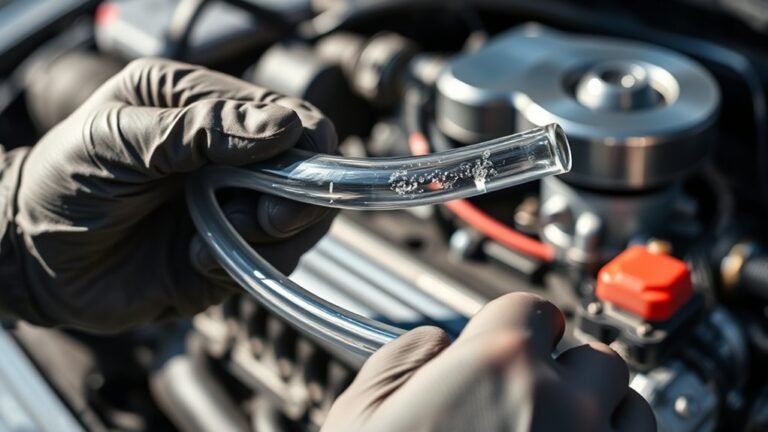
Locate the fuel filter, which is often found near the fuel lines, and remove it carefully to prevent spillage. Take note of the filter’s orientation and connections. Install the new filter with the correct alignment and lubricated seals.
Secure all fittings according to the manufacturer’s torque specifications. After installation, prime the fuel system to remove any air pockets. Finally, check thoroughly for leaks to ensure the system is sealed properly.
Following these steps prepares you to handle the full process safely and efficiently.
Gather Tools and Materials for Diesel Fuel Filter Replacement
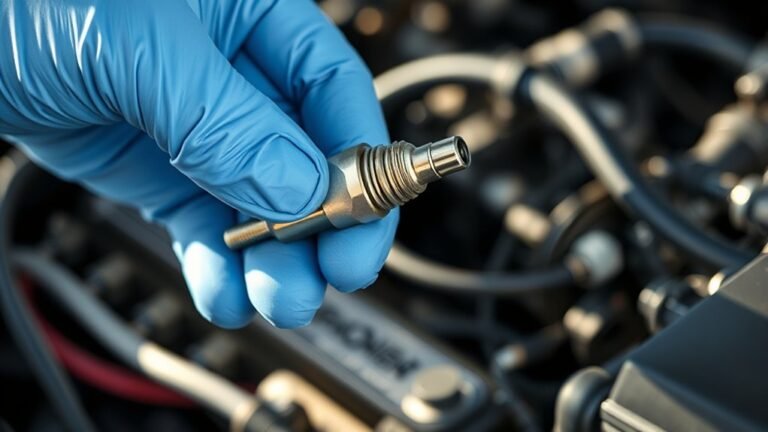
Before starting the diesel fuel filter replacement, you’ll need to gather specific tools and materials to guarantee the process goes smoothly. Essential items include a new diesel fuel filter compatible with your engine, replacement gaskets or O-rings to ensure proper gasket maintenance, and a wrench set appropriate for loosening fuel line fittings.
Additionally, have a container ready to catch any fuel spillage and clean rags for wiping connections. Understanding fuel line routing is critical; familiarize yourself with the path of the fuel lines to avoid kinks or improper reconnections during reassembly.
You might also want a torque wrench to tighten fittings to manufacturer specifications, preventing leaks. Having these tools and materials at hand will streamline the replacement, maintaining system integrity and safety.
Locate and Access the Diesel Fuel Filter
With your tools and materials ready, you’ll need to identify the exact location of the diesel fuel filter on your vehicle. Locating filter positions varies by make and model; consult your manual to avoid ignoring safety precautions.
Usually, the filter is near the fuel tank, engine bay, or under the vehicle. Accessing housing requires clearing obstructions and sometimes removing protective covers.
| Vehicle Type | Common Filter Location |
|---|---|
| Light Trucks | Engine bay, near fuel lines |
| Heavy-Duty Trucks | Under chassis, near tank |
| SUVs | Behind wheel well or engine |
Always ensure the engine is cool and pressure is relieved before accessing housing to prevent accidents. Avoid ignoring safety to maintain a secure working environment.
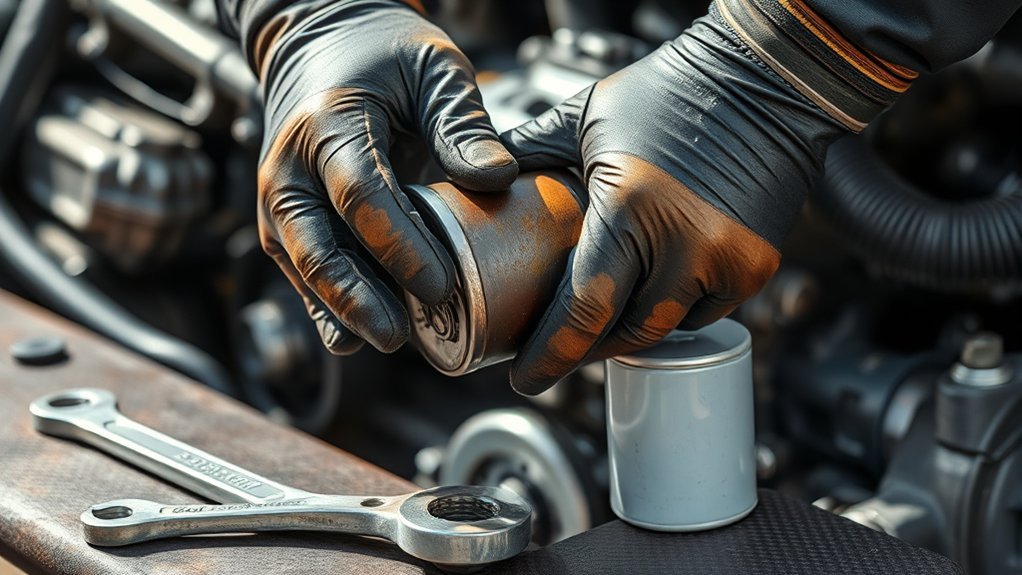
Remove the Old Diesel Fuel Filter Safely
How do you guarantee safety when removing the old diesel fuel filter? First, ensure the engine is off and cool to prevent burns or ignition of fuel vapors. Avoid any unrelated topic or irrelevant discussion that might distract you during this critical step.
Follow these key precautions:
- Depressurize the fuel system by loosening the fuel cap and using the vehicle’s designated pressure relief valve if available.
- Wear protective gloves and eye protection to guard against fuel spills and fumes.
- Contain fuel leakage with a drip pan and absorbent cloths to prevent environmental hazards and slipping.
Maintaining focus on safety protocols ensures you remove the old diesel fuel filter without incident or contamination, avoiding unrelated topic diversions.
Install the New Diesel Fuel Filter Correctly
Where should you begin when installing the new diesel fuel filter to ensure optimal performance? Start by verifying the replacement filter matches your engine’s specifications precisely.
Avoid any irrelevant topic or off topic discussion that might distract you from aligning the filter’s inlet and outlet ports correctly. Secure the filter housing firmly but don’t overtighten to prevent damage to the seals.
Make sure the O-ring is properly seated and lubricated to maintain a tight seal, preventing leaks. Double-check that all connections are clean and free from debris before final assembly.
This precise, methodical approach guarantees the new filter functions efficiently, preventing contaminants from entering your fuel system and ensuring engine reliability. Avoid mixing up steps or introducing irrelevant topic details during installation to maintain focus and accuracy.
Prime the Diesel Fuel System and Check for Leaks
Begin priming the diesel fuel system immediately after installing the new filter to remove any trapped air and restore proper fuel flow. This step is essential to avoid engine hesitation or failure. Follow these steps precisely:
- Use the manual primer pump or ignition cycles to push fuel through the system until you feel resistance, indicating air removal.
- Inspect all connections carefully for leaks, paying close attention to tightened fittings; leaks can cause performance issues and safety hazards.
- Avoid incompatible topics like using gasoline primers or non-approved tools, which can damage the system or compromise safety.
Frequently Asked Questions
How Often Should I Change My Diesel Fuel Filter?
You should change your diesel fuel filter every 10,000 to 25,000 miles, depending on usage. For effective diesel maintenance, schedule regular two word discussion ideas like “filter inspection” and “fuel quality” to prevent clogging and engine issues.
What Are the Signs of a Clogged Diesel Fuel Filter?
You’ll notice clog indicators like engine misfires, reduced power, and difficulty starting. Low fuel contamination might cause black smoke or rough idling.
These signs suggest your diesel fuel filter’s clogged and needs immediate attention.
Can I Use a Gasoline Filter for a Diesel Engine?
You can’t use a gasoline filter for a diesel engine. It’s like fitting a spaceship tire on a bicycle. Gasoline diesel filter compatibility is vital; diesel filters handle different contaminants and flow rates, so mismatching causes serious engine damage.
What Happens if I Don’T Change My Diesel Fuel Filter?
If you don’t change your diesel fuel filter, contaminants’ll clog it, reducing fuel flow and risking injector damage. This compromises fuel system safety and drivetrain maintenance, leading to poor engine performance, increased wear, and costly repairs over time.
Are There Any Environmental Concerns When Disposing of Old Filters?
You shouldn’t overlook environmental disposal; 70% of diesel filters contain hazardous waste. Proper filter recycling prevents soil contamination and water pollution, ensuring compliance with regulations and protecting ecosystems from toxic residues found in used fuel filters.