
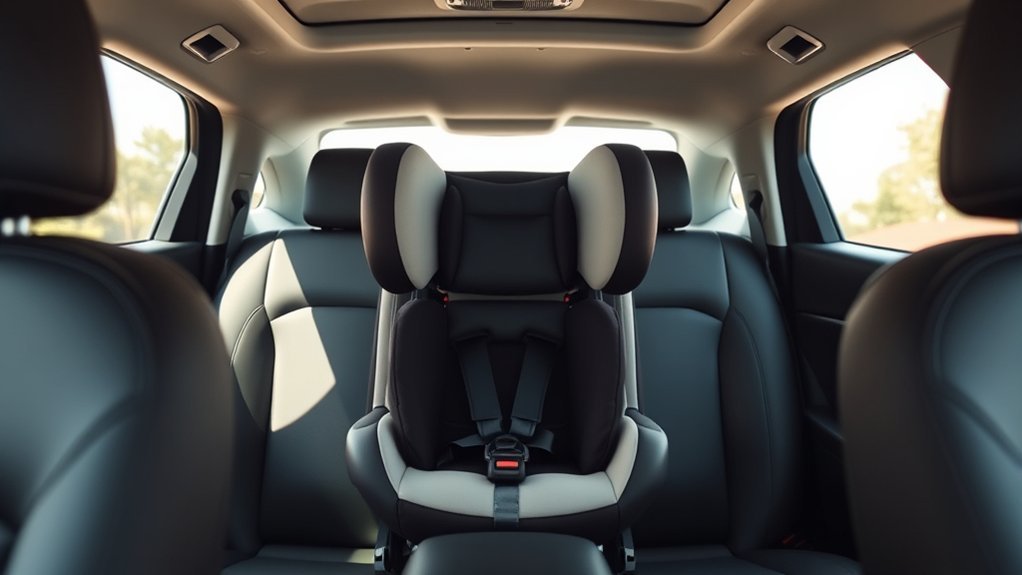
Where Should Infant Car Seat Be Placed
You should always place your infant car seat in the back seat, ideally in the center position, as it offers the best protection from side impacts and keeps baby away from airbags and doors.
Rear-facing seats are safest, protecting your baby’s neck and spine during sudden stops.
If the center isn’t available, securely install the seat on the side and remove any loose objects.
Following these guidelines helps keep your little one safe—and there’s more to know about installation and laws to keep in mind.
Where To Place Your Infant Car Seat For Maximum Safety
Where should you place your infant car seat to ensure maximum safety? You need to position it where it offers the best protection during travel. While many factors influence this decision, always prioritize secure installation and adherence to your vehicle’s guidelines.
Keeping your baby safe also means considering disaster preparedness. Your car seat should be firmly anchored to withstand sudden stops or accidents. Proper placement reduces injury risks in emergencies.
Additionally, when planning trips, integrating travel budgeting with safety ensures you invest in high-quality, certified car seats without overspending. You can find reliable models that fit your budget while meeting safety standards.
Why The Back Seat Is Your Baby’s Safest Spot
Why does placing your baby in the back seat offer the greatest protection? It’s simple. This spot minimizes risk during crashes and avoids potential side effects from airbag deployment. Here’s why you should choose the back seat:
- It’s farther from the impact zones, reducing injury risk.
- It keeps your baby away from front airbags, which can cause severe harm.
- It aligns with parental preferences and safety guidelines worldwide.
You might worry about convenience, but prioritizing your baby’s safety outweighs any short-term discomfort. The back seat remains the safest spot, providing a protective buffer zone that significantly lowers injury chances. Trust this choice. It’s backed by experts and designed to give you peace of mind while keeping your infant secure during every ride.
Best Spot In The Back Seat For Infant Car Seat Safety
You’ll want to place your infant car seat in the back seat’s center position whenever possible, as it offers the best protection from side impacts.
However, if the center seat isn’t an option, the side seats can still be safe with proper installation and restraint. Understanding these spots helps you make the safest choice for your baby every time.
Center Seat Advantage
How can you maximize your infant’s safety during every car ride? Choosing the center seat in the back is often the safest option. Here’s why the center seat holds a clear advantage seat for your infant car seat:
- It’s the farthest from impact zones in side collisions, reducing injury risk.
- It offers a balanced position, minimizing movement if sudden braking occurs.
- It keeps your infant away from airbags and the doors, which can be hazardous.
Side Seat Considerations
Where should you place an infant car seat if the center spot isn’t an option? The side seats become your next best choice. When placing the seat on either side, prioritize safety over nonessential aesthetics or unrelated travel gear that might clutter the space.
Ensure the seat is securely installed and free from loose items that could become projectiles during sudden stops.
| Factor | Side Seat Considerations |
|---|---|
| Safety | Good protection if properly installed |
| Accessibility | Easier to buckle/unbuckle infant |
| Distractions | Minimize unrelated travel gear |
| Vehicle Type | Check compatibility with side seats |
| Passenger Impact | Avoid crowding other passengers |
Choosing a side seat carefully balances safety and practicality when the center isn’t an option.
Why Rear-Facing Seats Keep Babies Safer
You want to protect your baby’s delicate neck and spine during every car ride, and rear-facing seats are designed to do just that. By absorbing impact forces more effectively, these seats reduce the risk of serious injury in a crash.
Understanding how rear-facing seats offer this essential protection helps you make the safest choice for your little one.
Impact Protection Benefits
The design of rear-facing car seats offers unmatched impact protection that substantially reduces the risk of injury for infants during a collision. When you choose a rear-facing seat, you’re prioritizing your baby’s safety in these key ways:
- Force Distribution: Rear-facing seats spread crash forces across the baby’s entire back, minimizing concentrated stress on vulnerable areas.
- Head and Body Support: These seats cradle your infant’s head and body, preventing sudden jerks that can cause injury.
- Legal Considerations: Many regions mandate rear-facing use for infants, reflecting their proven safety benefits.
Celebrity endorsements further highlight rear-facing seats as the safest choice, influencing public awareness. By placing your infant in a rear-facing car seat, you’re making a well-informed, protective decision that significantly safeguards your child during travel.
Neck And Spine Safety
How does a rear-facing car seat protect your baby’s delicate neck and spine better than other options? When your infant faces backward, the seat cradles their head, neck, and spine during sudden stops or impacts.
This positioning distributes crash forces evenly across the back of the car seat, reducing stress on your baby’s fragile neck and spine. Forward-facing seats don’t provide this level of support, leaving the neck vulnerable to severe injury.
Prioritizing neck safety and spine safety means choosing a rear-facing seat as long as possible. Experts recommend keeping your child rear-facing until at least age two.
Risks Of Putting Infant Car Seats In The Front Seat
Although it might seem convenient to place an infant car seat in the front seat, doing so poses significant safety risks. You need to prioritize your baby’s protection over convenience or distractions from careers guidance or fashion trends.
Placing an infant car seat in the front seat may seem easy but seriously compromises your baby’s safety.
Here are the top reasons why the front seat is unsafe for infants:
- Airbags deploy with great force, which can seriously injure or even kill your infant.
- The front seat exposes your baby to greater impact during collisions, increasing injury risk.
- Distractions from front-seat placement can divert your attention while driving, risking accidents.
Installation Tips To Secure Your Infant Car Seat
Keeping your infant safe means not only choosing the right seat but also installing it correctly. Start by reading the car seat manual and your vehicle’s instructions carefully. Use the LATCH system or seat belt, ensuring the seat doesn’t move more than an inch side to side.
Position the seat at the proper recline angle to prevent your baby’s head from falling forward. Secure the harness snugly against your infant’s body without slack. Double-check every strap and latch before hitting the road.
Incorporate installation checks into your nursery organization routine to keep the seat ready and safe. When planning road trip routines, always inspect the seat’s installation to maintain your baby’s protection.
Proper installation is essential for peace of mind and your infant’s safety.
Adjusting Your Infant Car Seat For Baby’s Comfort
Where can you make small adjustments that greatly enhance your baby’s comfort during every ride? Focus on these three key areas to ensure both safety and coziness:
1. Harness Tightness
Adjust the straps so they’re snug but not too tight, preventing discomfort without compromising risk awareness.
2. Head Support
Use infant inserts or pillows that follow safety guidelines to support your baby’s head, especially for newborns.
3. Clothing Layers
Dress your baby in breathable layers; avoid bulky clothes that interfere with harness fit and consider current fashion trends that blend comfort with safety.
Understanding State Laws And When To Change Car Seat Position
How do you know when it’s time to change your infant car seat’s position? First, check your state laws. They vary and often dictate when you must switch from rear-facing to forward-facing or to a booster seat.
These regulations are designed with your baby’s safety in mind, so it’s vital to follow them closely. Besides legal requirements, consider your child’s size and weight; most seats have clear limits that signal when changing positions is necessary.
Keep in mind that rear-facing remains the safest position for infants and toddlers, so avoid switching too early. Staying informed about state laws and the manufacturer’s guidelines helps you make the best decisions for your child’s protection and comfort during every ride.
Frequently Asked Questions
How Long Can an Infant Safely Stay in a Car Seat Continuously?
You shouldn’t let your infant sleep in a car seat for more than two hours continuously.
Prolonged seating duration risks breathing issues, so always limit infant sleep in car seats and take regular breaks for safety and comfort.
Can Car Seat Placement Affect Airbag Deployment Safety?
Car seat placement can either protect or endanger your child during airbag deployment. Properly positioning the car seat guarantees airbag safety, reducing injury risk.
You’ve got to prioritize placement to keep your infant truly safe.
What Are the Best Car Seat Brands for Infant Safety?
You should choose infant car seat brands like Chicco, Graco, and Britax, as they consistently meet safety guidelines. These brands prioritize crash protection and ease of use, helping you keep your baby safe and secure every ride.
How Do Temperature Extremes Impact Infant Car Seat Materials?
You’ll find temperature effects can accelerate material aging in infant car seats, weakening harness integrity. Always monitor devices regularly, especially after exposure to extreme heat or cold, to guarantee your baby’s safety isn’t compromised.
Are There Travel Restrictions for Infants in Car Seats on Airplanes?
Think of airplane passengers like a well-choreographed dance; travel restrictions ensure safety. You’ll find most airlines allow infant car seats if approved, but always check specific rules to avoid surprises and keep your little one secure.
Conclusion
You want nothing more than to keep your baby safe on every trip. Placing the infant car seat in the back seat, ideally the middle spot, is essential for their protection. Rear-facing seats dramatically reduce injury risk, while front-seat placement invites danger.
Don’t rush—take the time to install and adjust the seat properly. Remember, your vigilance today can prevent heartbreak tomorrow. Are you ready to make the safest choice for your little one?
Always prioritize where should infant car seat be placed to ensure your baby’s safety on the road.