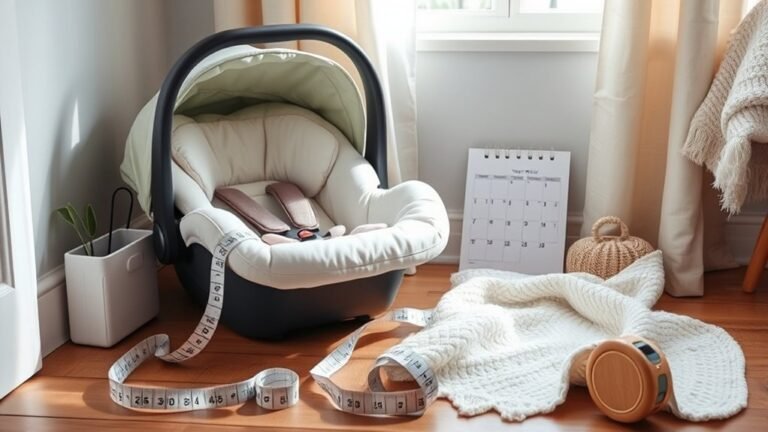

When to Remove Newborn Insert From Car Seat
You should remove the newborn insert from the car seat once your baby’s shoulders reach the top harness slots or their head no longer fits comfortably within it. This is an important step to ensure your baby’s safety and comfort during travel.
If your baby’s movements feel restricted, the harness isn’t snug, or you notice red pressure marks on their skin, it’s time to switch. Removing the insert helps maintain proper posture, airway safety, and harness effectiveness.
After removing the insert, be sure to adjust the harness height and tension for a secure fit. Keep exploring to understand how to manage fit and growth safely as your baby develops.
When to Remove the Newborn Insert From Your Car Seat
How do you know when it’s time to remove the newborn insert from your car seat? Pay close attention to how your baby fits within the newborn upholstery and car seat padding.
The insert provides essential support and comfort for smaller infants, ensuring proper positioning and safety. Once your baby’s shoulders rise above the designated slots in the insert or they no longer sit snugly against the car seat padding, it’s time to remove it.
You should also check that the baby’s head isn’t excessively tilted forward due to the extra padding. Removing the insert at the right time prevents improper harness fit and potential safety risks.
Always follow the car seat manufacturer’s guidelines to maintain optimal protection as your child grows.
How to Tell If Your Baby Has Outgrown the Newborn Insert
Keeping a close eye on your baby’s growth helps you recognize when the newborn insert no longer fits properly. For newborn safety, it’s crucial to remove the insert once your baby outgrows it to maintain proper support and protection.
Monitoring your baby’s growth ensures timely removal of the newborn insert for continued safety and support.
Don’t fall for car seat myths suggesting the insert can be used indefinitely. To determine if your baby has outgrown the insert, check:
- Their head or body extends beyond the insert edges.
- The harness straps no longer sit at or below shoulder level.
- Your baby’s movements feel restricted or the insert seems too tight.
When any of these occur, it’s time to remove the insert to ensure your car seat continues to provide optimal safety and comfort for your growing infant.
Signs Your Baby Is Uncomfortable With the Newborn Insert
Why might your baby fuss or seem restless in their car seat? It could be a sign they’re uncomfortable with the newborn insert. Pay close attention to cues like frequent squirming or arching their back, which often indicate the insert no longer fits properly.
These signs aren’t an unrelated topic or off topic. They’re key indicators your baby needs a change. Use the table below to quickly identify discomfort signals and their meanings:
| Sign | What It Means | Action to Take |
|---|---|---|
| Frequent Fussing | Insert too tight or small | Check fit, consider removal |
| Restlessness | Baby can’t move freely | Adjust or remove insert |
| Arching Back | Discomfort or pressure | Assess positioning |
| Red Marks | Pressure points forming | Remove insert |
| Rapid Breathing | Stress or discomfort | Monitor closely |
Why It’s Important to Remove the Newborn Insert at the Right Time
You need to remove the newborn insert at the right time to prevent safety risks associated with prolonged use. Keeping it in too long can compromise your baby’s proper fit and comfort in the car seat.
Ensuring a snug, secure fit helps protect your child during every ride.
Safety Risks of Prolonged Use
How long should your newborn use the car seat insert before it becomes a safety concern? Extended use of the insert can lead to serious safety concerns.
The long term placement of the insert may restrict your baby’s natural movement, increasing the risk of improper positioning. Over time, this can compromise airway safety and lead to discomfort.
Consider these risks of prolonged use:
- Restricted airflow due to limited head and neck movement
- Increased chance of slumping, which can obstruct breathing
- Reduced effectiveness of the car seat’s safety harness
Removing the insert at the right time ensures your newborn maintains proper posture and safety during travel. Don’t let long term placement put your baby at unnecessary risk. Monitor their growth and adjust accordingly.
Proper Fit and Comfort
When should you remove the newborn insert to ensure your baby stays comfortable and secure? Removing the insert at the right time is crucial for proper fit and comfort. As your baby grows, the insert can restrict movement and cause discomfort, potentially leading to fussiness or improper positioning.
You want the car seat harness to fit snugly against your baby’s body without extra padding interfering. Addressing audience questions about timing helps you set clear stretch goals for your child’s development milestones.
Monitor your baby’s size and how they fit in the seat. Once their shoulders reach the top harness slots or they no longer fit comfortably with the insert, it’s time to remove it. This ensures both safety and comfort during every ride.
Key Newborn Insert Guidelines From Your Car Seat Manual
You’ll want to check your car seat manual for specific guidelines on when to remove the newborn insert based on your baby’s age, weight, and height. Each model has unique limits that guarantee your child’s safety and comfort.
Following these instructions helps you know exactly when it’s time to switch out of the insert.
Insert Removal Age
At what point should you remove the newborn insert from your car seat? Typically, you’ll want to take it out once your baby no longer fits securely or comfortably within the insert’s ergonomic design.
These inserts provide crucial support for smaller infants, but as your baby grows, they can restrict natural movement and proper positioning.
Keep these adjustment tips in mind:
- Remove the insert when your baby’s head rises above the insert’s head support.
- If your infant’s body feels cramped or the harness straps can’t be tightened properly, it’s time to remove the insert.
- Always follow your car seat manual’s specific age or developmental guidelines before removal.
Removing the insert at the right time ensures safety, comfort, and proper harness function for your growing baby.
Weight And Height Limits
Knowing when to remove the newborn insert is just one part of ensuring your baby’s safety in the car seat. You must also follow the weight guidelines and height limits specified by your car seat manual. Inserts are designed to provide proper support for smaller infants, but once your baby grows beyond these limits, removing the insert is essential for a secure fit.
Refer to the table below for typical weight guidelines and height limits:
| Car Seat Model | Weight Guidelines (lbs) | Height Limits (inches) |
|---|---|---|
| Model A | 4 – 11 | Up to 24 |
| Model B | 5 – 12 | Up to 25 |
| Model C | 4 – 10 | Up to 23 |
| Model D | 5 – 13 | Up to 26 |
Always check your specific car seat manual for exact limits before removing the insert.
How Removing the Newborn Insert Affects Harness Fit and Positioning
How does removing the newborn insert impact the harness fit and positioning in your car seat? When you take out the insert, the harness no longer has the extra padding that helped position your baby snugly. This change affects newborn safety and car seat basics because the fit may become looser, and the straps might sit differently on your child’s shoulders.
Key effects include:
- Harness straps may shift lower or wider, affecting secure positioning
- Less padding means your baby might move more within the seat
- Proper harness tightness becomes essential to maintain safety
Understanding these changes helps you guarantee the harness still fits correctly, keeping your baby safely restrained as they grow beyond the newborn stage. Always check harness fit frequently after removing the insert to maintain peak protection.
How to Adjust Your Car Seat After Removing the Newborn Insert
After removing the newborn insert, you’ll need to adjust the seat harness to guarantee a secure fit as your baby grows. Check the harness height and tension carefully, making certain it sits at or just above your child’s shoulders.
You should also modify the car seat’s recline angle to maintain proper posture and safety during travel.
Seat Harness Adjustment
When should you adjust your car seat harness once the newborn insert is removed? You need to modify the harness to maintain proper newborn positioning and ensure safety without the extra car seat padding. The harness straps should be at or just below your child’s shoulders, snug enough to prevent slack but comfortable for movement.
Here’s how to adjust your harness after removing the insert:
- Reposition shoulder straps to the next appropriate slot to accommodate your baby’s growth.
- Tighten the harness so you can’t pinch any slack between your fingers.
- Check that the chest clip sits at armpit level for optimal restraint.
Proper harness adjustment ensures your child remains secure and supported as they grow beyond the newborn stage.
Recline Angle Modification
Adjusting the harness is just one part of preparing your car seat as your baby grows. Once you remove the newborn insert, you’ll need to modify the recline angle to guarantee proper support and safety.
Most infant car seats are designed with a specific rear facing recline angle to keep your baby’s airway open and maintain comfort. Without the insert, the seat may sit more upright than before, so check the recline indicator and adjust accordingly.
Use the car seat’s built-in recline mechanism or add a base adjustment to achieve the correct rear facing recline angle recommended by the manufacturer. Always confirm the seat remains stable and the recline angle complies with safety guidelines after any modification.
Common Mistakes to Avoid When Removing the Newborn Insert
How can you guarantee a smooth and safe shift when removing the newborn insert from your car seat? Avoiding common mistakes is key to maintaining both newborn fit and car seat safety.
First, don’t rush the process. Removing the insert too early can compromise fit and safety. Second, avoid neglecting to adjust harness straps accordingly; failing to do so can lead to an unsafe fit. Third, don’t forget to check the car seat manufacturer’s guidelines, as ignoring them risks improper use.
Keep these points in mind:
- Removing the insert only when your baby outgrows it ensures proper newborn fit.
- Always re-tighten harness straps after removal.
- Follow the car seat manual to preserve car seat safety standards.
Alternatives to Newborn Inserts for Smaller Babies
Why consider alternatives to newborn inserts for smaller babies? Sometimes, standard inserts may not provide the best fit or support for your infant’s unique size. To maintain newborn safety and ensure infant comfort, you might explore options like adjustable car seat straps, specialized padding, or infant positioning pillows designed specifically for smaller babies.
These alternatives help secure your baby properly without compromising safety standards required by the car seat manufacturer. Additionally, some parents use wearable swaddles or car seat covers that support proper posture and warmth without interfering with harness function.
Always choose products tested for safety and compatible with your car seat model to avoid risks. By considering these alternatives, you can enhance your smaller baby’s comfort and protection during travel.
When to Upgrade From a Newborn Insert to a Convertible Car Seat
While newborn inserts and their alternatives provide necessary support for smaller infants, they are designed for a limited growth stage. You’ll know it’s time to upgrade from a newborn insert to a convertible car seat when your baby outgrows the insert’s size or weight limits.
Newborn inserts support tiny infants but need upgrading as your baby quickly outgrows their size and weight limits.
Convertible car seats accommodate your child’s growth, offering enhanced safety and comfort.
Keep an eye on:
- Your baby’s head reaching the top edge of the insert
- Restrictions on weight or height specified by the manufacturer
- Signs that the insert no longer fits snugly, affecting car seat aesthetics
Upgrading also allows you to explore options that align with your newborn fashion preferences and maintain stylish car seat aesthetics while prioritizing safety. Transitioning at the right time ensures your baby rides securely and comfortably.
Frequently Asked Questions
Can Newborn Inserts Be Used in Stroller Seats?
You can use newborn inserts in stroller seats if the stroller supports them. Always check stroller compatibility to ensure safety and proper fit, as not all inserts are designed for stroller use or provide adequate support.
Are Newborn Inserts Machine Washable?
You’ll want to keep your newborn inserts fresh and clean, so yes, most are machine washable. Always check the label to assure car seat safety isn’t compromised, keeping your little one secure and comfortable at all times.
Do Newborn Inserts Affect Car Seat Expiration Dates?
Newborn inserts don’t affect car seat expiration dates, but always check your brand’s guidelines.
For stroller compatibility, ensure inserts fit securely. Follow brand recommendations to maintain safety and avoid compromising your car seat’s lifespan.
Can Using a Newborn Insert Prevent Flat Head Syndrome?
You can reduce the risk of flat head syndrome by using a newborn insert, which supports your baby’s head and neck properly.
Studies show up to 20% of infants develop flat spots without proper support.
Are There Specific Brands Recommended for Newborn Inserts?
You’ll find specific brands like Summer Infant and Boppy offer newborn inserts with great car seat compatibility. Always check the insert fits your car seat model to ensure safety and comfort for your baby during travel.
Conclusion
Remember, “a stitch in time saves nine.” Removing the newborn insert at the right moment guarantees your baby’s comfort and safety during every ride.
Keep an eye on your baby’s size and comfort, follow your car seat manual’s guidelines, and adjust the seat properly after removal. By doing this, you’ll avoid common mistakes and keep your little one secure.
Whether you continue with the current seat or upgrade when the time comes, knowing when to remove the newborn insert from the car seat is essential for your baby’s safety and comfort.