When to Change to Front Facing Car Seat
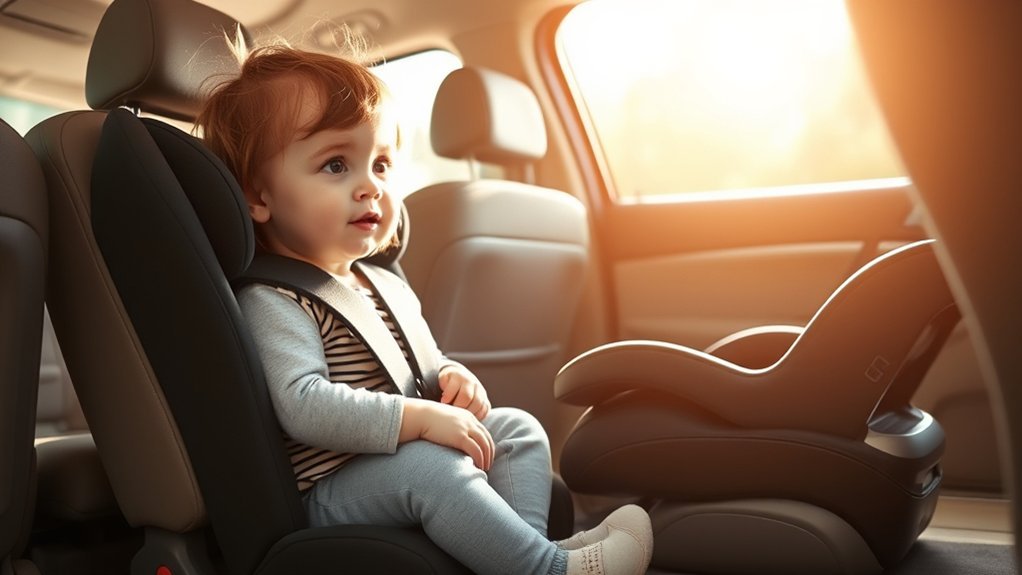
You should switch to a front-facing car seat only after your child is at least 2 years old and meets key milestones like holding their head steady and sitting up unassisted. Check the seat’s height and weight limits carefully to ensure proper fit and safety. Your child also needs to sit still and cooperate during rides.
Staying rear-facing longer offers better protection during crashes. To make a safe transition, understanding the right signs and proper installation is essential. Always follow the car seat manufacturer’s guidelines for the best safety results.
Safety Guidelines for Switching to a Front-Facing Car Seat
When should you switch your child to a front-facing car seat? The key factor is age appropriateness, but it’s not just about age alone. You must ensure your child meets the minimum age and developmental milestones recommended by safety experts, usually around 2 years old or older.
As part of your parenting responsibilities, prioritize your child’s safety by following manufacturer guidelines and verified safety standards. Always lock the harness snugly and secure the seat firmly in the vehicle.
Pay close attention to your child’s comfort and posture to avoid improper positioning that could compromise protection. Remember, switching too early can increase injury risk, so balance age appropriateness with your child’s physical readiness.
Your vigilance in this transition directly impacts your child’s travel safety.
Checking Height and Weight Limits for Front-Facing Seats
Ensuring your child fits properly in a front-facing car seat goes beyond just age and developmental milestones. You need to carefully check the manufacturer’s height and weight limits to guarantee a secure fit.
Start by reading height measurements on the car seat label or manual. Your child must not exceed these to ensure proper harness placement and protection. Weight limits are equally critical; exceeding them compromises safety and could lead to liability issues if an accident occurs.
Always verify that your child’s current size stays within these limits before making the switch. Ignoring these guidelines not only risks your child’s safety but may also affect insurance claims in case of a crash. Stay informed and prioritize these measurements for optimal protection.
Physical and Behavioral Signs Your Child Is Ready for a Front-Facing Car Seat
How can you tell if your child is physically and behaviorally ready to transition to a front-facing car seat? Start by assessing key growth milestones, such as the ability to sit up unassisted and hold their head steady for extended periods. These physical signs indicate your child has the necessary neck and back strength for front-facing travel.
Behaviorally, your child should be able to sit still and cooperate during car rides, reducing accessibility concerns like reaching for the door or buckles. If your child constantly tries to unbuckle or turn around, they might not be ready yet. Pay close attention to these cues alongside height and weight requirements to ensure a safe and smooth transition to a front-facing car seat.
Key Safety Differences Affecting the Switch to Front-Facing Car Seats
You need to understand the key safety differences before switching to a front-facing car seat.
Rear-facing seats offer superior protection by distributing crash forces more evenly across your child’s body.
As your child grows and develops, these factors play a vital role in determining the safest transition time.
Safety Benefits Of Rear-Facing
Why does keeping your child rear-facing for as long as possible matter? The rear-facing benefits are significant when it comes to safety. In a collision, a rear-facing car seat cradles your child’s head, neck, and spine, distributing the crash forces evenly across the body.
This reduces the risk of severe injury compared to front-facing seats, which expose the child’s head and neck to more direct impact. Safety guidance from experts, including the American Academy of Pediatrics, recommends keeping children rear-facing until they reach the maximum height or weight limit allowed by the car seat manufacturer.
Following this guidance ensures your child receives optimal protection during travel. By prioritizing rear-facing as long as possible, you’re making a crucial choice to enhance your child’s safety on every ride.
Child Growth And Development
When should you consider switching your child to a front-facing car seat? The decision largely depends on your child’s growth and social milestones. As your child grows, their muscles develop, and they gain better head and neck control, which are essential for safely riding front-facing.
Additionally, reaching social milestones like increased curiosity and interaction often means your child wants to face forward to engage more with their surroundings. However, size matters too. Most safety experts recommend waiting until your child is at least two years old and has outgrown the rear-facing seat’s height or weight limits.
Impact Of Crash Forces
How do crash forces differ between rear-facing and front-facing car seats, and why does it matter for your child’s safety? Rear-facing seats better distribute impact forces across your child’s entire body during a collision, especially the head, neck, and spine.
This orientation aligns with crash dynamics by allowing the seat to absorb and dissipate energy more effectively. In contrast, front-facing seats expose your child’s head and neck to greater stress because the harness must restrain forward motion directly.
This increased strain raises the risk of serious injury in a crash. Understanding these differences helps you decide when to switch your child safely. You should keep your child rear-facing as long as possible to minimize harmful impact forces and better protect their vulnerable anatomy against crash dynamics.
Tips for Installing and Adjusting a Front-Facing Car Seat
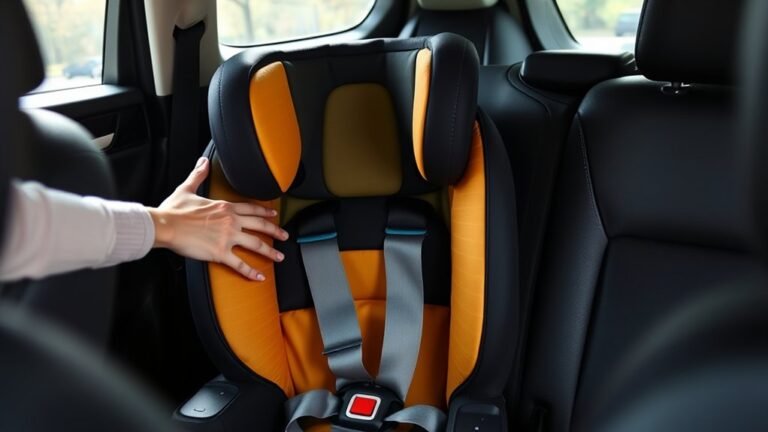
What makes a front-facing car seat safe and secure? Proper installation and adjustment are key. Follow these tips installation steps to ensure your child’s safety:
- Secure the seat tightly: Use either the vehicle’s seat belt or LATCH system, making sure the seat doesn’t move more than an inch side-to-side or front-to-back.
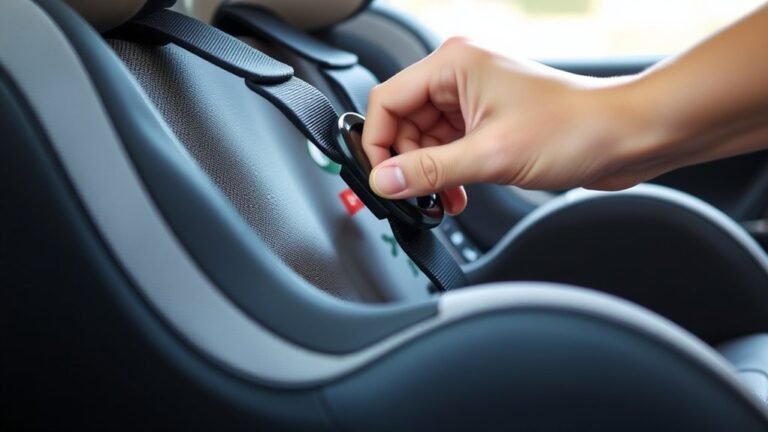
- Adjust straps correctly: Position the harness straps at or just above your child’s shoulders. Tighten until you can’t pinch any slack.
- Check the recline angle: Make sure the seat is upright enough to support your child’s head and neck comfortably.
Common Mistakes to Avoid When Switching to a Front-Facing Car Seat
Properly installing and adjusting a front-facing car seat lays the groundwork for your child’s safety. It’s just as important to avoid common errors that can compromise protection.
Many parents switch too early, ignoring their child’s growth and development milestones. Others fail to tighten the harness properly or neglect seatbelt routing, reducing crash effectiveness.
| Mistake | Impact |
|---|---|
| Switching before milestones | Limits optimal safety |
| Loose harness straps | Increases injury risk |
| Incorrect seatbelt positioning | Reduces restraint effectiveness |
Frequently Asked Questions
Can I Use a Secondhand Front-Facing Car Seat Safely?
You can use a secondhand front-facing car seat safely if you check its history and ensure it hasn’t been in an accident. Confirm it meets current safety standards, and consider branding for reliable quality and secondhand safety.
How Long Can My Child Stay in a Front-Facing Car Seat?
You keep your child safe, you follow guidelines, and you prioritize child passenger safety.
Your child can stay in a front-facing car seat until they reach the seat’s height or weight limit after converting from rear facing.
Are There Specific Car Seat Brands Recommended for Front-Facing Seats?
You’ll find brands like Graco, Britax, and Chicco excel in front facing safety, offering strong rear impact protection. Always check crash test ratings and features to ensure your child’s security in their front-facing car seat.
Can My Child Face Forward During Long Road Trips?
Of course, you’d love your kid facing forward for long road trips because comfort always beats safety, right? Actually, forward facing considerations require ensuring your child meets height, weight, and age limits to keep them protected and secure throughout the journey.
How Do Front-Facing Seats Affect Airbag Safety?
You should know front facing risks include dangerous airbag interaction if your child is too close. Always ensure the seat’s properly installed and your child meets height and weight requirements to keep airbags from causing injury during a crash.
Conclusion
When it comes to switching your child to a front-facing car seat, think of it as turning a new page in their safety story. You’ll want to check their height, weight, and readiness carefully to keep them secure.
Remember, proper installation and avoiding common mistakes are your best tools. By staying informed and attentive, you ensure your little one’s journey is as safe as it is smooth—because their protection is your top priority when deciding when to change to a front-facing car seat.