
When Can Stop Using Car Seat
You can stop using a car seat only when your child exceeds the height or weight limits set by the manufacturer—not based on age alone.
Rear-facing seats offer the best protection, so keep your child rear-facing as long as possible within those limits.
Once outgrown, guarantee the next seat fits properly with harness straps aligned to shoulders.
Following these guidelines prioritizes safety and legal compliance.
Learn more about when and how to make the transition smoothly and safely.
When To Stop Using a Rear-Facing Car Seat
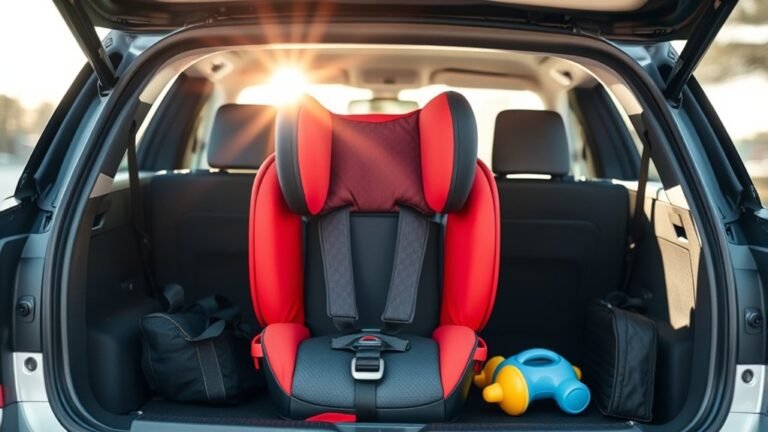
When should you stop using a rear-facing car seat? You should only transition your child out of a rear-facing seat when they exceed the manufacturer’s height or weight limits.
Many car seat myths suggest switching to forward-facing early, but this compromises child safety. Rear-facing seats provide superior protection for your child’s head, neck, and spine during a crash.
Safety experts recommend keeping your child rear-facing as long as the seat allows. Don’t rush this decision based on age alone. Focus on your specific car seat guidelines and your child’s size.
Ensuring your child remains rear-facing until the limits are reached maximizes safety, debunking myths that forward-facing seats are just as safe for younger children. Always prioritize the seat’s specifications over common misconceptions.
How To Tell If Your Child Has Outgrown Their Current Car Seat
You’ll know your child has outgrown their current car seat when they exceed the height or weight limits specified by the manufacturer. Check the harness strap position; it should align with your child’s shoulders to ensure proper safety.
If the straps no longer fit correctly or your child is too tall or heavy, it’s time to upgrade.
Height And Weight Limits
Understanding your child’s current height and weight is essential for determining if they have outgrown their car seat. Each car seat comes with specific height guidelines and weight guidelines designed to ensure optimal protection.
You need to check the manufacturer’s instructions, which provide exact limits for your model. If your child exceeds these limits, it’s time to transition to the next stage of car seat or booster seat.
Ignoring these guidelines can compromise safety, as the seat might not fit properly, reducing its effectiveness in a crash. Regularly measuring your child and comparing these measurements against the height and weight guidelines helps you make informed decisions.
Always prioritize these standards to maintain your child’s safety during every ride.
Harness Strap Position
How can you tell if your child has outgrown their current car seat? One key indicator is the harness strap position. The straps should be at or just below your child’s shoulders when the seat is rear-facing, and at or just above when forward-facing.
If the harness strap is too low or too high, it compromises safety. Also, check the seat orientation as your child grows; transitioning too soon can be dangerous. Here’s what to watch for:
- Harness straps no longer align with your child’s shoulder level.
- You need to use the highest harness slot to fit your child.
- Your child’s head is above the top of the car seat.
- The seat orientation no longer matches your child’s height and weight.
Always follow manufacturer guidelines for harness strap and seat orientation adjustments.
Legal Height and Weight Limits for Car Seat Use by Age
When should you transition your child out of a car seat based on legal height and weight limits? Laws vary by state, but generally, children must remain in a car seat until they reach the maximum height or weight specified by the manufacturer.
Most forward-facing car seats support children up to 65 pounds and 49 inches tall. Beware of transition myths suggesting you should switch as soon as your child hits a certain age rather than considering size.
Similarly, booster myths claim a child can move into a booster seat too early, which can compromise safety. Always follow the car seat’s legal height and weight limits first.
This approach ensures you’re abiding by the law and prioritizing your child’s protection until they’re physically ready to move on.
Signs Your Child Is Ready to Switch to a Booster Car Seat
You’ll know your child is ready to switch to a booster seat when they meet specific height and weight requirements set by safety guidelines. Check that the seat belt fits properly across their shoulder and lap without slipping.
Also, consider their age and maturity to ensure they can sit correctly and stay safely buckled throughout the ride.
Height And Weight Requirements
Several key height and weight benchmarks indicate that your child is ready to shift from a car seat to a booster seat. Meeting these requirements ensures safety without compromising comfort or your budget.
Booster seats often feature intuitive design, making transitions simpler while also reflecting cost considerations. Here’s what to look for:
- Your child weighs at least 40 pounds, but check the car seat’s specific limit.
- They’ve reached a height of about 40 to 50 inches.
- The top of their ears are below the top of the car seat.
- Your child can sit properly for the whole ride without slouching.
Proper Seat Belt Fit
How do you know if your child’s seat belt fits properly enough to substitute to a booster seat? Proper seat belt fit is a critical sign that your child is ready to move on from a car seat.
According to car seat safety experts and booster guidelines, the lap belt should lie flat across your child’s upper thighs, not the stomach. The shoulder belt must cross the chest and rest snugly on the shoulder without touching the neck or slipping off.
If the seat belt doesn’t fit this way while your child sits all the way back against the vehicle seat, it’s not yet time to substitute. Ensuring a proper seat belt fit protects your child effectively and aligns with booster guidelines designed to maximize car seat safety during the transition.
Age And Maturity Levels
Proper seat belt fit is a key factor in deciding when your child can move on from a car seat, but physical readiness isn’t the only consideration. Age eligibility guidelines provide a baseline, but your child’s maturity and seating comfort play critical roles too.
You want to ensure they understand the importance of sitting properly and using the booster correctly every trip.
Look for these signs that your child is ready to switch to a booster car seat:
- Can sit still and upright for the entire car ride
- Understands how to fasten the seat belt properly
- Demonstrates responsibility by not leaning forward or slouching
- Expresses comfort with the booster and seat belt position
Monitoring age eligibility alongside these maturity factors ensures your child’s safety and comfort on the road.
Why Switching Car Seats Too Soon Isn’t Safe
Why should you avoid switching car seats too soon? Prematurely changing your child’s car seat can compromise their safety. Many safety myths suggest that moving to the next seat stage early offers more comfort or convenience, but these misconceptions can put your child at risk in a crash.
Each car seat type is designed to protect children within specific size and weight limits. By adhering to these guidelines, you fulfill your parental responsibilities to ensure maximum protection. Switching too soon may leave your child insufficiently supported during impact, increasing injury risk.
Trust manufacturer recommendations and safety standards rather than convenience or outdated advice. Staying informed and patient helps you prioritize your child’s safety over myths or external pressures, making responsible choices that protect them effectively.
Comparing Rear-Facing, Forward-Facing, and Booster Car Seats
What distinguishes rear-facing, forward-facing, and booster car seats lies in their design, purpose, and the age or size of the child they accommodate. To guarantee safety, you should understand these key differences using randomization strategies to decide the right timing without overcomplicating the process. Keep discussion brevity in mind when evaluating options:
- Rear-facing seats protect infants and toddlers by supporting the head and neck during crashes.
- Forward-facing seats suit older toddlers with harnesses that secure them upright.
- Booster seats elevate children to fit standard seat belts correctly.
- Each seat matches specific height and weight limits, which you must follow strictly.
Tips for a Smooth Car Seat Transition
Understanding the differences between rear-facing, forward-facing, and booster seats sets the stage for managing each stage smoothly. Transitioning your child requires consistent discipline routines and patience, much like establishing bedtime rituals.
Prepare your child by explaining the changes and involving them in choosing the new seat.
| Stage | Key Tip | Common Challenge |
|---|---|---|
| Rear-Facing | Ensure proper harness | Child resistance |
| Forward-Facing | Adjust harness height | Discomfort complaints |
| Booster Seat | Teach seatbelt fit | Impatience to switch |
| All Stages | Maintain consistent rules | Reluctance to change |
| Transition Help | Positive reinforcement | Anxiety over change |
How To Install and Adjust Booster Car Seats Correctly
How do you guarantee your booster seat offers maximum safety and comfort? Proper installation and adjustment are essential. Start by reviewing the manufacturer’s manual and engaging in discussion with certified safety technicians if needed. Here are key ideas to ensure correct setup:
- Position the booster seat firmly on the vehicle seat without gaps.
- Align the seat belt so the lap portion rests low on your child’s hips, not the stomach.
- Ensure the shoulder belt crosses the middle of your child’s chest and shoulder.
- Adjust the booster’s backrest and headrest to fit your child’s height comfortably.
Following these steps helps you avoid common mistakes and enhances protection. Always double-check your installation periodically to maintain safety as your child grows.
Car Seat Options for Children Outside Standard Size Ranges
When your child doesn’t fit the standard size ranges for typical car seats, you need tailored options to guarantee safety and comfort. Choosing the right car seat depends on your child’s unique measurements and your vehicle’s car design.
Specialized seats ensure optimal child safety by accommodating size variations without compromising fit or restraint.
| Seat Type | Ideal For |
|---|---|
| Extended Rear-Facing | Taller/heavier toddlers |
| High-Back Booster | Children needing extra support |
| Harness-2-Booster | Transition from harness to belt |
| Custom Fit Seats | Children with special needs |
Evaluate your child’s size against these options and consult your vehicle’s manual to ensure compatibility. Prioritize seats designed for non-standard sizes to maintain maximum protection on every journey.
Frequently Asked Questions
How Do Car Seat Expiration Dates Affect When to Stop Using Them?
You should stop using a car seat once the expired labeling appears to guarantee safety. Don’t risk it; instead, explore recycling options to dispose of old seats responsibly and keep your child protected.
Can a Child Use a Car Seat on an Airplane?
You can absolutely use a car seat on an airplane to safeguard your child’s health and boost travel comfort. Just ensure the seat is FAA-approved, properly installed, and fits the airplane seat securely for a smooth flight.
What Are the Best Car Seat Brands for Safety Ratings?
You’ll find the best brands to watch for safety ratings include Britax, Chicco, and Graco. These brands consistently earn top marks, offering reliable protection and innovative features to keep your child secure during every ride.
How to Clean and Maintain a Car Seat Properly?
You’ll want to treat car seat maintenance like a gentle dance: vacuum crumbs, spot-clean stains with mild soap, and air dry thoroughly.
Follow manufacturer’s cleaning tips to keep your seat safe, fresh, and ready for every ride.
Are There Special Car Seats for Children With Medical Conditions?
Yes, you’ll find special needs seats designed with medical adaptations to support children with specific conditions. These seats offer customized support, enhanced safety, and comfort, ensuring your child’s unique requirements are properly addressed during travel.
Conclusion
You’ll know when to stop using a rear-facing car seat by checking height, weight, and age limits. You’ll recognize when your child has outgrown their seat by monitoring fit and comfort.
You’ll guarantee safety by switching to booster seats only at the right time and installing them correctly. You’ll stay informed, stay vigilant, and stay safe—because every step in your child’s car seat journey matters for their protection on the road.
Knowing when can stop using car seat ensures your child remains safe and secure every time you travel.