What Side Should the Car Seat Go on
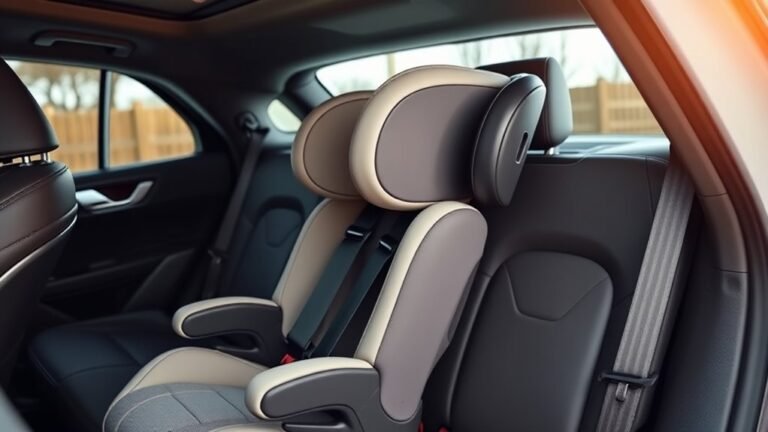
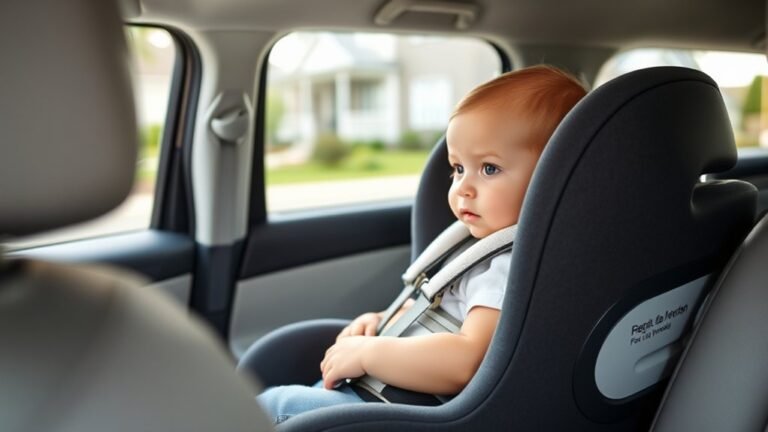
You should place your car seat on the passenger side whenever possible because it offers extra protection from traffic and reduces injury risk in side-impact crashes. This side gives you safer curbside access, minimizing exposure during loading and unloading.
Always check your vehicle’s layout and guarantee proper, secure installation. In some cases, the rear middle seat is even safer. Understanding these options helps you make the best choice for your child’s safety and your daily routine.
Why the Passenger Side Is the Safest Spot for Your Car Seat
Why should you place your car seat on the passenger side? It’s a question surrounded by safety myths that often confuse parents. The passenger side is generally considered the safest spot because it offers an extra buffer from traffic, reducing the risk of injury in side-impact collisions.
Industry standards and crash tests consistently support this placement, emphasizing protection from the curbside rather than the driver’s side. While some believe the driver’s side is more convenient, safety experts recommend prioritizing your child’s protection.
Understanding Your Vehicle’s Layout for Car Seat Placement
How does your vehicle’s interior design affect the best spot for your car seat? Understanding vehicle layouts is essential to guarantee seat orientation safety. Each car differs, so you need to assess your space carefully.
Your vehicle’s interior design plays a crucial role in determining the safest car seat placement.
Consider these four key factors:
- Seat Configuration: Check if your vehicle has bucket seats or a bench, as this influences car seat fit.
- Anchor Points: Locate LATCH anchors or seat belts to secure the car seat properly.
- Airbag Placement: Avoid placing rear-facing seats where front passenger airbags could deploy.
- Access and Visibility: Choose a spot where you can easily reach and monitor your child during travel.
Why the Rear Middle Seat Is the Safest Option (And When to Use It)
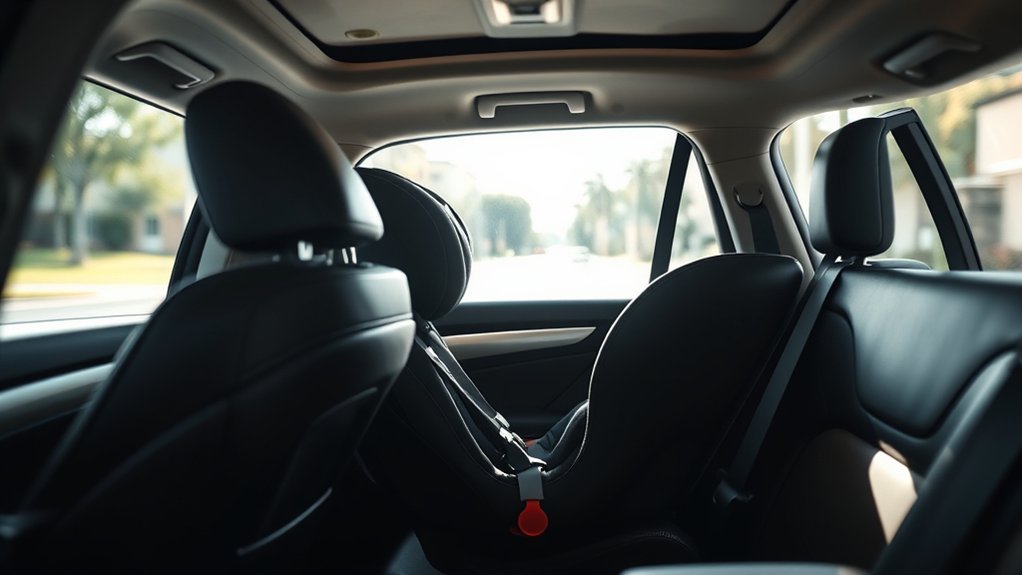
Where should you place your child’s car seat for maximum safety? The rear middle seat is widely recognized as the safest spot due to its distance from potential side impacts. Rear middle safety minimizes injury risk by placing your child away from doors and direct collision points.
However, you must ensure your vehicle’s rear middle seat has proper anchors and space for secure installation. Think of it like cabinet door installation—you need the right hardware and space to guarantee stability and safety.
Use the rear middle seat whenever possible, especially if you have one child, to maximize protection. If your vehicle lacks proper fittings or space, consider alternative rear seats but always prioritize rear seating over the front for child safety.
Driver’s Side Car Seat Placement: When It Makes Sense
When should you consider placing a car seat on the driver’s side? Sometimes, it’s the best option based on your specific situation. Before deciding, always check car seat legality and regional guidelines to ensure compliance.
Here are four scenarios when the driver’s side placement makes sense:
- Your vehicle lacks a rear middle seat or the middle seat isn’t suitable for a car seat.
- You frequently drive alone and want quick access to your child without crossing traffic.
- The passenger side has airbags that may pose risks to the car seat.
- Regional guidelines or laws specifically permit or recommend driver’s side installation due to vehicle design.
Installing Car Seats Safely on Different Vehicle Sides
You want to choose the safest side for your car seat based on your vehicle and daily routines. Each side of your car has unique features that affect how securely you can install the seat.
Let’s go over key tips to ensure a proper, safe fit no matter which side you pick.
Choosing The Safest Side
Why does the side you choose for your child’s car seat matter? Choosing placement impacts your child’s safety during every drive. You’ll want to contemplate several safety considerations to guarantee the best protection.
- Opt for the side farthest from traffic, usually the passenger side, to reduce risk during street-side entry and exit.
- Verify your vehicle’s airbags don’t interfere with the car seat on either side.
- Ensure the seat fits securely and can be installed tightly on the chosen side.
- Consider your daily routine, placing the seat where you can easily reach your child safely without stepping into traffic.
Installation Tips By Side
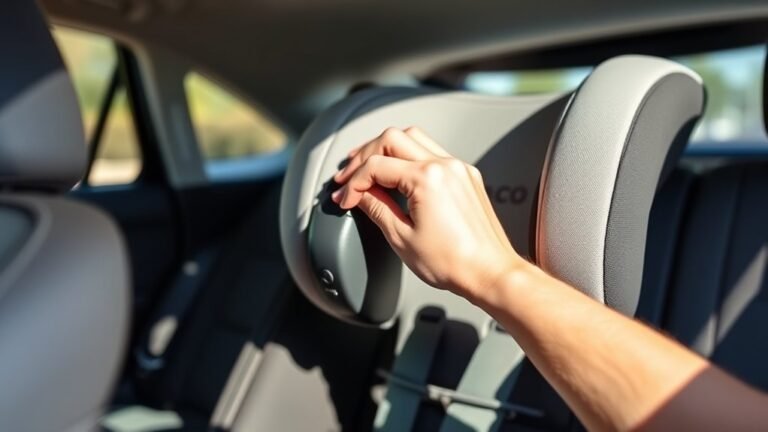
How can you guarantee a secure and correct installation of your child’s car seat on either side of your vehicle? Start by carefully reading both your car seat and vehicle manuals, as they provide side-specific instructions.
When installing side by side, ensure each seat’s harness fits snugly and the base is firmly latched. Pay close attention to weight distribution; improper balance can affect vehicle stability and safety.
If the car seat is on the passenger side, double-check that airbags won’t interfere. On the driver’s side, ensure the seat doesn’t hinder pedal access or door operation.
Always test for minimal movement—less than an inch side to side—and verify the seat’s angle is correct. Following these tips ensures you install your child’s car seat safely, no matter the side.
Common Car Seat Placement Mistakes to Avoid
Where should your car seat go to keep your child safest? The rear seating area is the best spot, but even here, common mistakes can reduce safety. Avoid these four pitfalls:
The rear seat is safest for car seats, but beware of common installation mistakes that can compromise child safety.
- Placing the car seat in the front passenger seat, exposing your child to airbags.
- Installing the seat loosely; always ensure it’s tightly secured with minimal movement.
- Ignoring your vehicle’s manual for specific rear seating recommendations.
- Positioning the seat where it obstructs the driver’s view or access, which can cause distractions.
Adjusting Car Seat Placement for Your Daily Routine
Think about your daily travel patterns to decide the best spot for your car seat. You want a setup that balances convenience with first-rate safety for every trip.
Also, consider how easy it is for passengers to get in and out when choosing the side.
Assessing Daily Travel Patterns
Why does your daily travel routine matter when deciding where to place your car seat? Understanding your daily routines and travel patterns helps ensure the car seat fits seamlessly into your life. Consider these four key points:
- Identify who usually assists with loading and unloading your child. This influences which side is most accessible.
- Note the typical parking spots you use. Curbside placement enhances safety during entry and exit.
- Assess the flow of your daily stops. Frequent quick trips may require easier access.
- Factor in traffic conditions and road layouts to anticipate safer side placement.
Prioritizing Convenience And Safety
How can you balance convenience and safety when deciding where to place your car seat? You want convenience focused placement to fit your daily routine, but never at the expense of safety first considerations. Think about where your child is easiest to load and unload while ensuring they’re protected from potential impact zones.
| Convenience Focused Placement | Safety First Considerations |
|---|---|
| Passenger side for curb access | Rear middle seat for max protection |
| Near door with least traffic | Avoid front passenger seat if airbags |
| Easy reach for caregiver | Secure installation with LATCH system |
Considering Passenger Accessibility
Balancing convenience and safety naturally leads you to contemplate passenger accessibility when choosing where to place your car seat. Your daily routine and vehicle layout influence these choices, making location key. Consider these points to optimize accessibility:
- Assess which side of the car you park on regularly to ease loading and unloading.
- Factor in door space and surrounding obstacles that could hinder access.
- Think about who assists with securing the child. Placing the seat where they can comfortably reach matters.
- Evaluate your vehicle’s interior layout; some models offer more room on one side.
Loading and Unloading a Car Seat Safely: Why Side Choice Matters
Where you position your car seat can make a big difference when loading and unloading your child. Choosing the right side affects safety and convenience, especially in busy parking lots.
Positioning your car seat wisely enhances safety and ease during busy parking lot drop-offs and pick-ups.
Placing the seat on the curbside reduces exposure to traffic, letting you focus on securing your child without rushing.
When installing, understanding side vs. seatbelt installation matters; both methods are safe if done correctly, but latch vs. belt also plays a role. The LATCH system simplifies securing the seat, while the seatbelt method demands careful threading.
Whichever you use, ensure the seat is tight and stable to prevent movement during loading. By thoughtfully selecting the side and installation method, you protect your child and ease your daily routine.
Frequently Asked Questions
How Do Car Seat Laws Vary by State or Country?
You’ll find state-specific mandates and country variance affect car seat laws substantially. Always check local rules since age, weight, and placement requirements differ.
Staying informed keeps your child safe and guarantees you’re compliant everywhere.
What Are the Best Car Seat Brands for Safety?
You’ll find two-word discussion ideas like “Britax Marathon” and “Chicco Keyfit” popping up when exploring car seat brands. These trusted names combine safety and comfort, so you’ll feel confident protecting your little one every ride.
When Should a Child Transition From Rear-Facing to Forward-Facing?
You should transition your child from rear-facing to forward-facing when they reach the maximum height or weight limit allowed by the car seat’s manufacturer.
Prioritize keeping them rear-facing as long as possible for optimal safety.
How Often Should a Car Seat Be Replaced?
You should replace your car seat every 6 to 10 years, depending on the manufacturer’s guidelines.
Regular car maintenance includes checking expiration dates to ensure your child’s safety and avoid using a seat compromised by wear or past accidents.
Can Car Seats Be Used Safely in Ride-Sharing Vehicles?
Think of your car seat as a fortress for your child; you can use it safely in ride-sharing vehicles if you ensure proper car seat placement and ride sharing safety.
This means checking the vehicle’s compatibility and securing it tightly every time.
Conclusion
Choosing the right side for your car seat isn’t just about convenience—it’s about your child’s safety. While the passenger side often offers easier access and protection, the rear middle seat is statistically the safest when installed correctly.
Don’t let assumptions guide you; understand your vehicle and routine to make the best choice. Your child’s well-being deserves that thoughtful attention every time you buckle up.
Remember, when deciding what side should the car seat go on, safety should always be your top priority.