How to Install Car Seat on Airplane
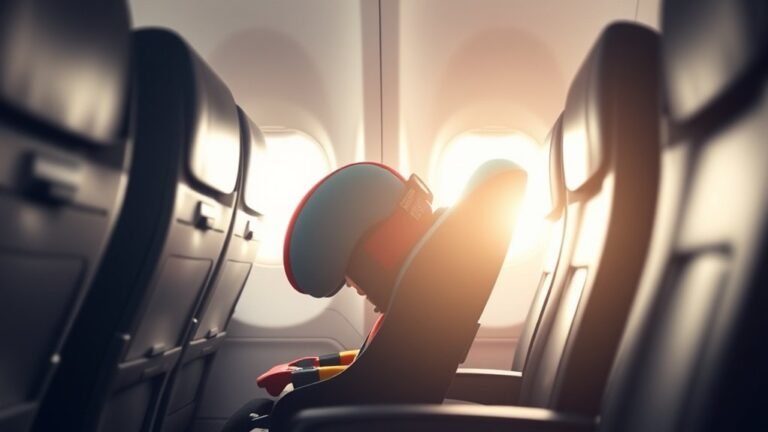
To install your car seat on an airplane, start by positioning the car seat according to the manufacturer’s directions. This ensures proper fit and safety during the flight.
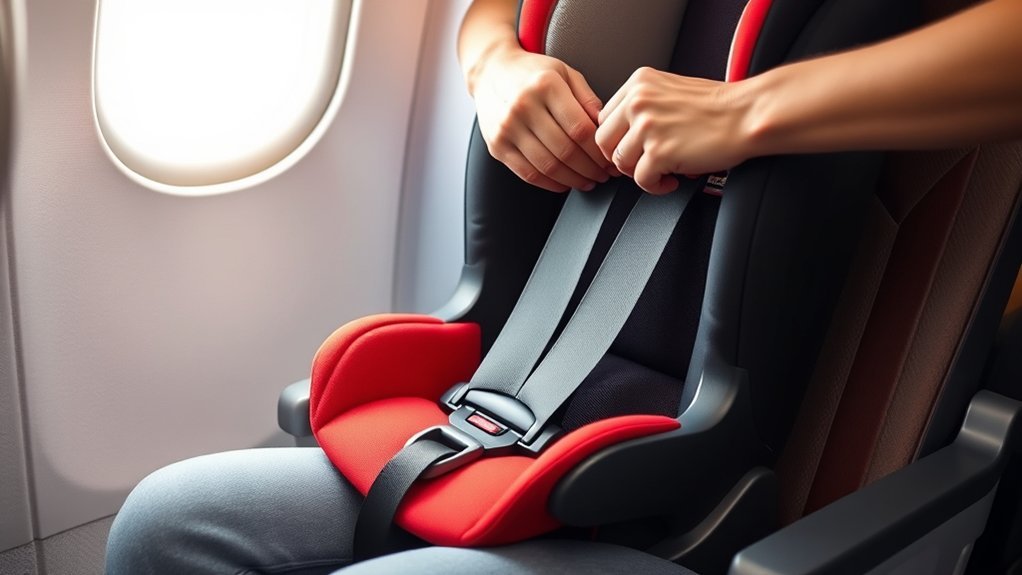
Next, thread the airplane seatbelt through the car seat’s designated belt path.
Tighten the seatbelt firmly with no twists, making sure the car seat moves less than one inch side-to-side.
Avoid leaning on trays or loose items for additional support, as these can compromise stability.
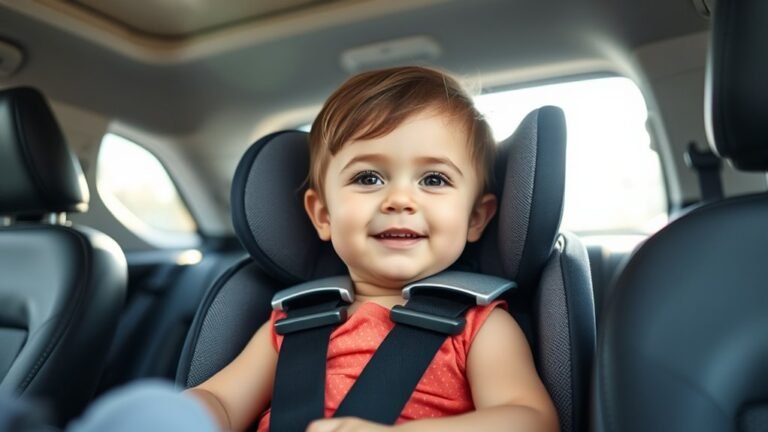
Secure your child by properly positioning the harness at or around the shoulders. Also, ensure the chest clip stays at armpit level for maximum safety.
For more essential tips on seating and safety, keep exploring.
Types of Car Seats Allowed on Airplanes
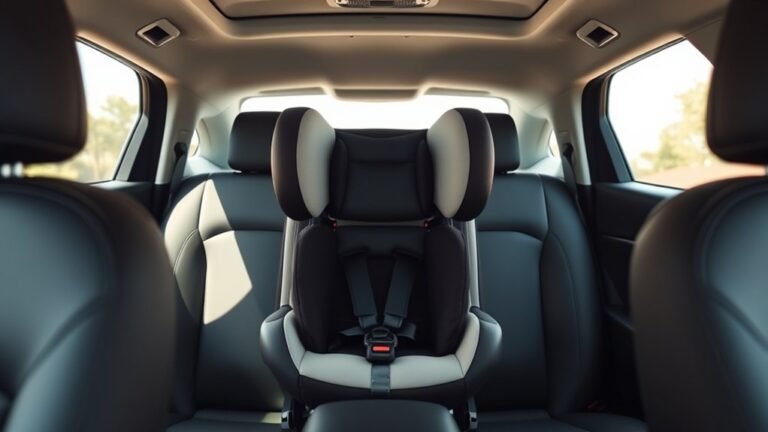
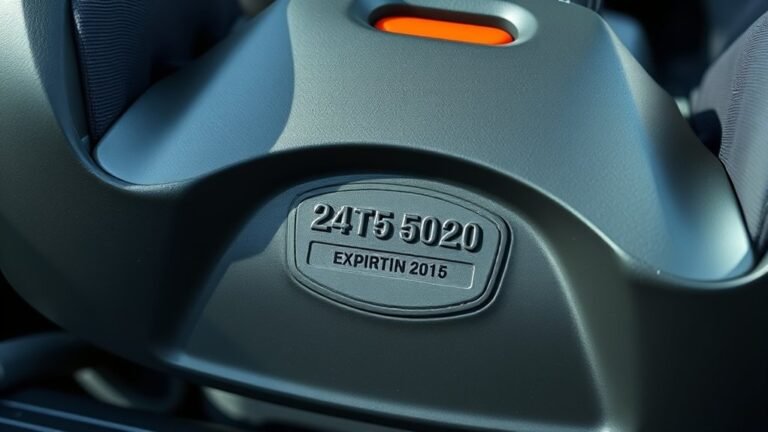
What types of car seats can you bring on an airplane? Generally, FAA-approved car seats designed for aircraft use are your best bet. These include rear-facing infant seats, forward-facing seats with harnesses, and booster seats with back support.
You should avoid confusing this with irrelevant topic discussions like general car seat safety or unrelated guidance about car seats in vehicles. Only seats labeled with FAA approval meet the strict requirements for airplane use.
Car seats without this certification might not fit airplane seats properly or provide adequate safety during turbulence. Remember, your priority is selecting a seat that’s compact, certified, and compatible with the airplane seat dimensions, not getting distracted by unrelated guidance that doesn’t pertain to air travel.
This ensures your child’s safety and compliance.
Checking Airline Car Seat Policies Before Flying
How can you guarantee a smooth travel experience when bringing a car seat on board? Start by thoroughly checking airline policies well before your flight. Each airline has specific rules regarding car seat use, including approved types, size restrictions, and whether the seat must have a safety certification.
Verify seat compatibility, ensuring your car seat fits securely in the airplane seat dimensions provided by the airline. Some carriers require advance notification or special approvals to use a car seat. Ignoring these details can lead to denied boarding or last-minute hassles.
Confirm whether the airline allows car seats in bulkhead or exit rows, as these usually have different regulations. By proactively reviewing airline policies and verifying seat compatibility, you’ll ensure compliance and a safer, hassle-free journey for you and your child.
Tips for Choosing the Best Airplane Seat for Your Car Seat
Where you place your car seat on the plane can considerably impact both safety and comfort during your flight. Prioritize airline seat selection that offers sufficient space and anchorage points for secure car seat compatibility.
Bulkhead seats often provide extra legroom but may have restrictions, so verify with your airline beforehand. Avoid seats with tray tables or armrests that can obstruct installation. Here’s a quick guide to help you choose:
| Seat Type | Pros |
|---|---|
| Bulkhead | Extra legroom, no seat in front |
| Window | Minimal disturbance, stable |
| Aisle | Easy access, more mobility |
| Middle | Least ideal, limited space |
Selecting the right seat ensures your car seat fits securely, keeping your child safe and comfortable throughout the journey.
How to Install a Car Seat on a Plane
Wondering how to guarantee your child’s car seat is securely installed on an airplane? Start by placing the car seat in the airplane seat, ensuring it faces the correct direction as per the manufacturer’s instructions.
Use the airplane seat belt to tightly secure the car seat’s base, threading the belt through the designated slots. Pull the belt firmly to eliminate slack. Avoid relying on the airline snack tray or other loose items for support; they won’t provide stability.
Once installed, double-check by giving the seat a firm shake; it shouldn’t move more than an inch in any direction. While waiting, capture terminal photography to document your setup and ensure compliance.
Following these precise steps guarantees a secure installation before you focus on your child’s safety during the flight.
Securing Your Child Safely in the Car Seat on Board
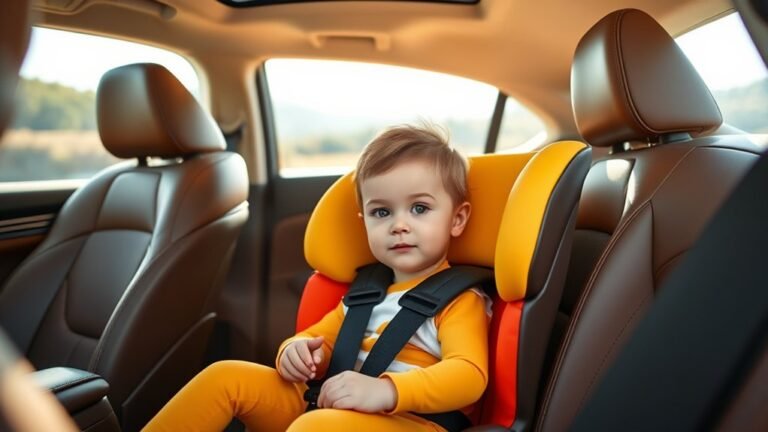
To secure your child safely on board, start by choosing a car seat that’s approved for airplane use and fits the aircraft seat properly.
Next, install the seatbelt through the car seat’s designated path, making sure it’s locked tightly.
Finally, double-check that the car seat is snug and stable before settling your child in.
Choosing Compatible Car Seats
How do you guarantee your child’s safety by choosing the right car seat for airplane travel? First, avoid incompatible seats that don’t fit airplane seats securely, as misfit car seats compromise safety. Prioritize models certified for aircraft use, ensuring compliance with FAA regulations.
When selecting a compatible car seat, consider these factors:
- Size and dimensions: Confirm the seat fits within the airplane’s seat width and pitch.
- Certification labels: Look for FAA approval or specific airline compatibility.
- Ease of installation: Choose seats with straightforward harness systems and secure locking mechanisms.
Proper Seatbelt Installation
Where exactly should you thread the airplane seatbelt to secure your child’s car seat properly? Always route the airplane seatbelt through the car seat’s designated belt path, which is clearly marked in the manufacturer’s instructions.
Avoid common seatbelt myths suggesting alternative threading methods; these can compromise safety and violate cabin regulations. The seatbelt must lie flat without twists and lock securely around the airplane seat’s buckle.
Ensure the belt fits snugly through the car seat’s belt path before fastening. Remember, cabin regulations require that any child restraint system be installed per the manufacturer’s guidelines and secured with the airplane seatbelt, not the lap belt or any other device.
Proper installation ensures your child remains safe and compliant throughout the flight.
Ensuring Tight and Secure Fit
Why does a tight and secure fit matter when installing your child’s car seat on an airplane? Because it guarantees your child’s safety during turbulence or sudden movements. A loose installation can compromise protection, increasing injury risk.
To achieve a secure fit, focus on these key steps:
- Firmly press the car seat into the airplane seat while tightening the seatbelt until no movement is detected.
- Double-check that the seatbelt is locked and the car seat doesn’t shift more than one inch side to side or front to back.
- Avoid discussion ideas that veer into unrelated topics during installation to maintain focus and precision.
What to Do If Your Car Seat Isn’t Approved for Airplane Use
What should you do if your car seat isn’t approved for airplane use? First, verify car seat compatibility with your airline’s specific policies, as approval can vary. Check the manufacturer’s label or manual for FAA approval, and confirm with your airline before traveling.
If your seat lacks airline approval, consider renting or purchasing an FAA-approved car seat designed for air travel. Alternatively, you can use the airplane’s seat belts to secure your child, but only if the airline permits it and your child meets the minimum age and weight requirements for a seat belt.
Always prioritize safety and compliance by securing airline approval beforehand. Preparing in advance ensures a smooth, safe trip even without a fully compatible car seat.
Managing Car Seat Storage and Transport at the Airport
Handling your car seat at the airport can be challenging, but with the right approach, you can keep it safe and manageable throughout your journey. Proper car seat storage and airport transport planning help prevent damage and ease your travel experience.
Start by using a durable travel bag designed for your car seat, which protects it from dirt and rough handling. When navigating the airport, consider a lightweight stroller or car seat cart to ease movement.
Use a durable travel bag and a lightweight stroller or cart to protect and transport your car seat easily.
Lastly, always label your car seat with your contact information in case it gets misplaced.
- Use a padded travel bag for secure car seat storage
- Employ a stroller or cart for smooth airport transport
- Clearly label your car seat for easy identification
These steps ensure your car seat stays protected and accessible.
Common Installation Mistakes to Avoid
Make sure your car seat’s harness is positioned correctly to keep your child secure during the flight. Avoid improper seat attachment by firmly locking the car seat into the airplane seat using the correct method.
These common mistakes can compromise safety, so double-check every step before takeoff.
Incorrect Harness Positioning
Why does harness positioning matter so much when installing a car seat on an airplane? An incorrect harness compromises your child’s safety and comfort during the flight. When the harness is too loose or positioned improperly, it can fail to secure your child correctly, increasing injury risk in turbulence or sudden stops.
To avoid issues with incorrect harness during airplane installation, ensure you:
- Position the harness straps at or just below your child’s shoulders for rear-facing seats, or at or just above for forward-facing seats.
- Tighten the harness so you can’t pinch any slack at the shoulder. Snugness is crucial.
- Check that the chest clip sits at armpit level to keep straps properly aligned.
Following these steps guarantees a secure, safe fit every time.
Improper Seat Attachment
Once the harness is secured correctly, your focus should shift to how the car seat attaches to the airplane seat. Improper seat attachment is a common mistake that compromises safety.
Make sure you use the airplane’s seat belt, threading it through the car seat’s belt path exactly as the manufacturer instructs. Avoid airplane misuse by not relying on overhead compartments or armrests to stabilize the seat.
Don’t attach the car seat loosely or at an angle; it must be tight and flush against the airplane seat back. Double-check that the seat belt clicks securely and holds the car seat firmly in place.
Failing to follow these steps leads to improper seat installation, increasing risk during turbulence or sudden stops. Your careful attention prevents these errors and ensures maximum protection.
Frequently Asked Questions
Can I Bring a Car Seat for a Child Under 2 Years Old?
Yes, you can bring a car seat for a child under 2 years old. Check airline policies first to guarantee compliance.
Using an approved car seat enhances child safety during the flight, providing secure restraint throughout travel.
Are Booster Seats Allowed on Airplanes?
You’re in luck. Booster seats usually dance on the edge of aircraft seating regulations. While booster seat legality varies by airline, most require FAA-approved harnesses.
Double-check before flying to keep your child safe and compliant.
How Do I Clean a Car Seat After Air Travel?
You’ll want to start with gentle cleaning hacks like vacuuming crumbs, spot-treating stains with mild detergent, and using a damp cloth.
For stubborn stain removal, try a mix of baking soda and water, then air dry thoroughly.
Can I Use a Car Seat on a Private Jet?
Yes, you can use a car seat on a private jet, but you’ll need to verify the jet’s car seat compatibility and FAA approval. Always check the aircraft’s seat dimensions and secure attachment options before flying.
Is It Necessary to Buy a Separate Plane Ticket for the Car Seat?
You don’t need to buy a separate plane ticket just for your car seat, but you do need to follow the airline seating policy carefully.
Check car seat insurance options to protect your little one during the flight.
Conclusion
Now that you know how to install your car seat on an airplane, you’re ready to travel confidently like it’s the Jet Age all over again. Always double-check airline policies and choose the best seat for secure installation. Avoid common mistakes and ensure your child’s safety by fastening the seat properly.
If your car seat isn’t approved, have a backup plan ready to avoid any last-minute issues. With these steps, flying with your little one will be smooth, safe, and stress-free.
By following the proper guidelines on how to install your car seat on an airplane, you can enjoy peace of mind throughout your journey.