How to Install a Car Seat
To install a car seat correctly, place it in the vehicle’s back seat, ideally in the center.
Securing the car seat properly is essential for your child’s safety.
Use either the seat belt—threaded through the seat’s belt path and locked—or the LATCH system by attaching connectors to the anchors.
Ensure the seat moves less than an inch side-to-side and front-to-back.
Adjust the seat angle according to your child’s age.
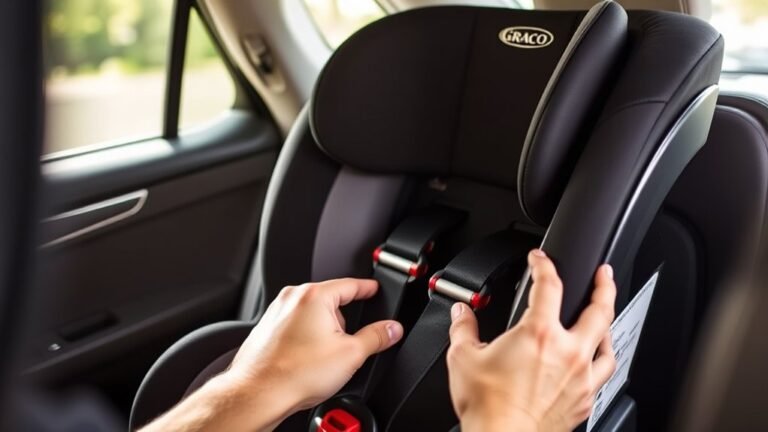
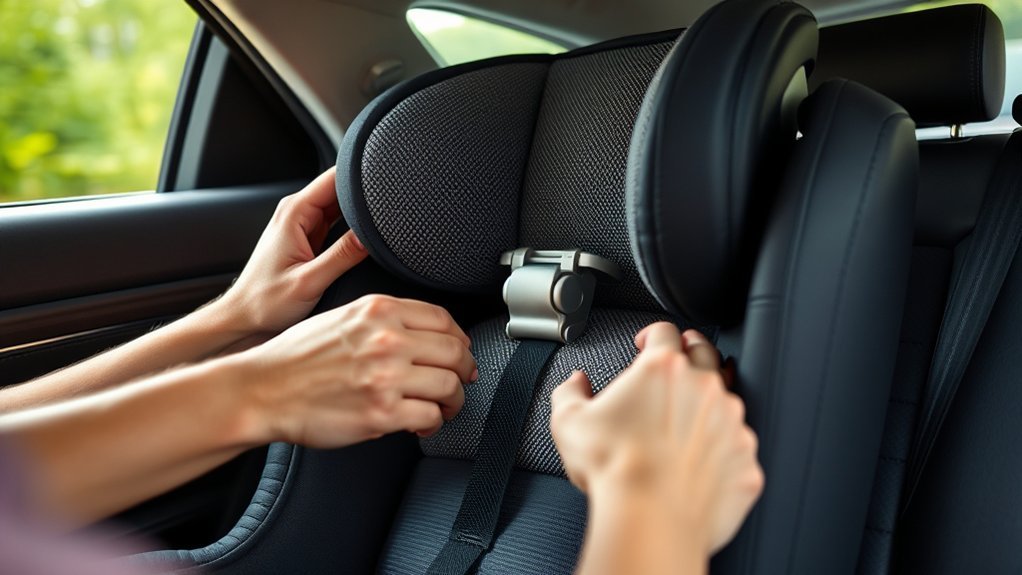
Harness them snugly with straps flat and the chest clip at armpit level.
Keep going to master every step safely.
Following these guidelines will help ensure your child’s protection on every trip.
Rear-Facing vs. Forward-Facing Seats Explained
Why does the orientation of a car seat matter so much? It directly impacts your child’s safety during a crash. Rear-facing seats provide essential protection by supporting your child’s head, neck, and spine, which is vital for infants and toddlers.
When choosing a rear-facing seat, ensure it offers infant compatibility, meaning it securely fits newborns and small babies. Forward-facing seats are designed for older children who have outgrown rear-facing limits, but switching too soon can increase injury risk.
You also need to check vehicle compatibility; not all car seats fit every vehicle model properly. Confirm your car’s manual and the seat’s instructions align to guarantee a secure installation. Understanding these differences helps you make informed safety decisions.
How to Choose the Right Car Seat for Your Child
To choose the right car seat for your child, start by checking age and weight guidelines to guarantee a proper fit. Understand the different types of car seats: infant, convertible, and booster, to match your child’s growth stage.
Finally, prioritize essential safety features like side-impact protection and secure harness systems to keep your child safe on every ride.
Age and Weight Guidelines
When selecting a car seat, how do you ensure it fits your child’s specific needs? Start by carefully reviewing age and weight guidelines provided by manufacturers and safety authorities.
Infants require rear-facing seats that accommodate their limited neck strength, generally up to 2 years or 30 pounds. Toddlers transition to forward-facing seats with harnesses, suitable until they reach about 4 years or 40 pounds.
Once your child exceeds these limits, booster seats become essential for proper seatbelt positioning. Following these guidelines supports discrete parenting by prioritizing safety without drawing unnecessary attention.
When planning travel, you’ll appreciate that choosing the right seat reduces hassle and enhances comfort. Always verify that the car seat matches your child’s current size, as this precision ensures maximum protection in every journey.
Types of Car Seats
How do you choose the right car seat to guarantee your child’s safety and comfort? Understanding the types of car seats is essential. Here’s a clear breakdown to guide your choice:
1. Rear-facing seats
Ideal for infants and toddlers, they support your child’s head and neck during sudden stops. This aligns with discussion ideas1 on early safety priorities.
2. Forward-facing seats
Suitable for older toddlers and preschoolers, these come with harnesses that keep your child securely in place, a key point in discussion ideas2.
3. Booster seats
Designed for children who’ve outgrown forward-facing seats but still need a seatbelt positioned correctly.
Selecting the right type based on age, weight, and height ensures your child’s comfort and protection during every ride.
Safety Features to Consider
Several critical safety features can make all the difference in protecting your child during travel. When choosing a car seat, focus on harness systems, side-impact protection, and ease of installation. These features ensure your child stays secure and comfortable, even on long trips where restroom etiquette breaks and a well-curated driving playlist keep everyone calm.
| Safety Feature | Benefit | Why It Matters |
|---|---|---|
| 5-Point Harness | Secure restraint | Prevents ejection in crashes |
| Side-Impact Protection | Absorbs collision forces | Protects head and torso |
| Easy Installation | Ensures correct setup | Minimizes misuse |
| Adjustable Straps | Grows with your child | Maintains proper fit and safety |
Focus on these details to keep your child protected every mile.
Find the Safest Spot in Your Car for the Car Seat
Where should you place your child’s car seat to maximize safety? Avoid getting caught up in unrelated topics or random debates about car seat placement. The safest spot is clear and backed by research. Follow these guidelines:
- Center of the back seat: This position is farthest from impact zones during collisions, offering maximum protection.
- Avoid front seats: Airbags can cause severe injury to children in car seats, so never place one in the front passenger seat.
- Consider your vehicle layout: Some cars have a narrower center spot or lack proper anchors. If the center isn’t feasible, use a side seat with secure LATCH or seatbelt installation.
Prepare Your Car Seat and Vehicle for Installation
Before installing your car seat, you need to thoroughly prepare both the seat and your vehicle to guarantee a secure fit. Start by removing any bulky accessories or loose items from the vehicle interior layout that could interfere with installation.
Thoroughly prepare your car seat and vehicle, removing any bulky items that might obstruct installation.
Next, check the car seat aesthetics to ensure no damage or wear affects safety. Clean the seat’s harness and buckles, removing debris that might hinder proper fastening.
Adjust the vehicle seat to its most upright position, creating a stable base. Review your vehicle’s manual for specific instructions about seat belt routing or LATCH anchors.
Also, verify that the car seat’s base or shell fits well within the contours of your vehicle interior layout, minimizing gaps and ensuring stability. Proper preparation is essential for a safe, secure installation.
Step-by-Step Installation of a Rear-Facing Car Seat
How do you guarantee your rear-facing car seat is installed correctly for maximum safety? Follow these precise steps to guarantee a secure fit:
- Position the car seat: Place it in the back seat, angled according to the manufacturer’s guidelines to support your child’s head and neck properly.
- Secure with seat belt or LATCH: Thread the seat belt or latch straps through the designated path, locking it firmly. Check for less than one-inch movement side-to-side or front-to-back.
- Adjust harness and angle: Ensure the harness fits snugly on your child, and the seat maintains the correct recline.
Remember to perform regular car seat cleaning and avoid prolonged car seat storage in extreme temperatures to maintain integrity and safety.
Step-by-Step Installation of a Forward-Facing Car Seat
Why is proper installation essential for a forward-facing car seat? It ensures maximum safety by securely restraining your child during travel. Start by positioning the car seat upright in the back seat, following the manufacturer’s height and weight guidelines.
Adjust the harness straps to fit snugly over your child’s shoulders, ensuring child seat comfort without restricting movement. Attach any included travel accessories, like cushioned inserts, to enhance comfort and support.
Check that the car seat base sits flat against the vehicle seat with minimal side-to-side movement. Tighten all straps and connectors firmly, but avoid overtightening to protect both the seat and your vehicle’s interior.
Double-check every step to guarantee the forward-facing car seat is stable, offering your child safe and comfortable journeys.
How to Secure the Car Seat Using Seat Belt or LATCH
You’ll secure the car seat using either the vehicle’s seat belt or the LATCH system, depending on your car’s compatibility. Make sure to thread the seat belt tightly through the correct path or connect the lower anchors firmly if using LATCH.
Both methods require you to lock the belt or ensure the LATCH connectors click securely to prevent any movement.
Using Seat Belt
Where should you start when securing a car seat using a seat belt? Begin by reading your car seat manual carefully. It’s not an unrelated topic but essential knowledge. Avoid random tidbits from unofficial sources to ensure safety. Follow these steps:
- Thread the seat belt through the car seat’s belt path, ensuring no twists.
- Buckle the seat belt and lock it by pulling the belt all the way out, then letting it retract to engage the locking mechanism.
- Press down firmly on the car seat while tightening the seat belt to eliminate any slack.
Double-check the seat doesn’t move more than an inch side-to-side or front-to-back. This precise method ensures your child’s safety without confusion or guesswork.
Using LATCH System
How exactly do you secure a car seat using the LATCH system? First, locate the lower anchors in your vehicle’s back seat, typically marked with a small icon. Attach the car seat’s LATCH connectors firmly to these anchors, ensuring the connectors latch securely onto the metal bars.
Next, tighten the straps by pulling the adjustment belt until the car seat materials are snug against the vehicle seat, preventing any movement over one inch side-to-side or front-to-back. Be mindful of your vehicle’s travel restrictions, as some cars limit LATCH use by weight or seat position.
Always check your car seat manual and vehicle guide to confirm compatibility. Proper installation with the LATCH system enhances safety and ensures your child’s seat is stable during every trip.
Ensure a Tight and Properly Angled Car Seat Installation
Why is it vital to guarantee your car seat is both tightly secured and properly angled? A secure, correctly positioned seat maximizes safety and reduces injury risk during sudden stops or collisions. Avoid letting discussion ideas or unrelated topics distract you; focus on these critical steps:
Ensuring your car seat is tightly secured and properly angled is crucial for maximizing safety and minimizing injury risk.
- Check Tightness: Grab the seat near the belt path and push or pull. It should move no more than one inch in any direction.
- Confirm Angle: Use the car seat’s built-in angle indicator or a level tool. Infants require a reclined position to keep airways open.
- Adjust as Needed: If the angle is off, adjust the base or use a rolled towel to achieve the correct tilt.
These precise actions ensure your child’s safety without compromising installation integrity.
How to Harness Your Child Safely in the Car Seat
Securing your child properly in the car seat is essential for their safety during every trip. Begin by placing your child in the seat and positioning the harness straps at or just below their shoulders for rear-facing seats, or at or above for forward-facing.
Ensure the straps lie flat without twists and pull the harness tight until you can’t pinch any slack at the shoulder. Position the chest clip at armpit level to keep the straps securely in place.
This precise harness adjustment maximizes child safety by preventing excessive movement during sudden stops or collisions. Always maintain car awareness by double-checking harness fit before driving.
Proper harnessing isn’t just routine; it’s a critical step to protect your child every time you hit the road.
Fix Common Car Seat Installation Issues
You’ll want to start by checking the seat belt tightness to ensure the car seat doesn’t move more than an inch side to side or front to back.
Next, adjust the recline angle so your child’s head stays properly supported and airway remains open.
Finally, secure the tether strap tightly to reduce forward movement in a crash.
Check Seat Belt Tightness
How tight should the seat belt be when installing a car seat? Ensuring proper seat belt tightness is crucial for seat belt integrity and vehicle compatibility. You want the belt snug enough to prevent movement but not so tight that it damages the seat or belt system.
Follow these steps:
- Pull the belt firmly: After routing the seat belt through the car seat, pull it firmly to remove any slack.
- Lock the belt: Engage the vehicle’s seat belt locking mechanism to maintain tension.
- Perform the wiggle test: Push and pull the car seat at the belt path. It should move less than one inch side to side or front to back.
Maintaining proper tightness ensures your car seat remains secure and functions as designed for your child’s safety.
Adjust Recline Angle
Why is adjusting the recline angle essential when installing a car seat? Properly setting the seat angle ensures your child’s safety and comfort. An incorrect recline can cause the car seat to tip forward or reduce head support, increasing injury risk.
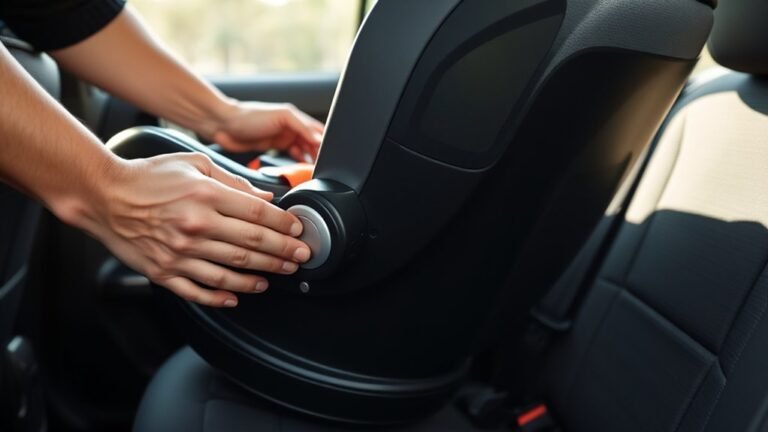
To adjust recline, use the car seat’s built-in recline mechanism or base adjustment. Always refer to the manufacturer’s instructions for the correct seat angle for your child’s age and weight.
| Child Age | Recommended Seat Angle | Notes |
|---|---|---|
| Infant | 45 degrees | Prevents head slumping |
| 6 months | 30-45 degrees | Supports neck and back |
| 1 year | 30 degrees | Transition to upright seats |
| 2 years | 25 degrees | Increased posture support |
| 4 years | 20 degrees | Prepares for booster seats |
Adjust recline carefully to maintain safety compliance.
Secure Tether Strap
Where should you attach the tether strap to maximize your car seat’s stability? Always connect it to the designated tether anchor point in your vehicle, usually located behind the seat, on the rear shelf, floor, or seatback. Proper use of the tether strap reduces forward movement in a crash, enhancing safety.
Follow these steps to secure the tether strap correctly:
- Locate your vehicle’s tether anchor by checking the owner’s manual.
- Pull the tether strap tight, ensuring no slack remains.
- Fasten the tether hook securely to the anchor point.
Frequently Asked Questions
How Often Should I Replace a Car Seat?
You should replace your car seat according to the replaceability guidelines, usually every 6-10 years. Always check for recall notices and damage after accidents to ensure your child’s safety and comply with manufacturer recommendations.
Can I Use a Car Seat on a Plane?
Picture your child safely buckled in mid-flight. You can use a car seat on a plane, but check car seat compatibility with the airline’s travel restrictions first.
Ensure it meets safety standards and fits the airplane seat properly.
What Should I Do if My Car Seat Is Involved in an Accident?
If your car seat’s involved in an accident, you should stop using it immediately. Get an inspection after the crash or replace it entirely, as manufacturers recommend an accident replacement for your child’s safety. Don’t take risks.
How Do I Clean and Maintain My Car Seat?
You don’t want a spotless car seat ruined by grime. Follow this maintenance checklist: vacuum crumbs, wipe harness straps with mild soap, and spot-clean fabric.
Use these cleaning tips regularly to keep your car seat safe and fresh.
Are There Any Car Seat Laws I Need to Know?
Yes, you need to follow car seat laws that vary by state, but federal regulations set safety standards.
Always check your state’s specific rules to ensure your child’s car seat is compliant and installed correctly for maximum safety.
Conclusion
Now that you’ve mastered installing your child’s car seat, remember this isn’t a job for the Stone Age—modern safety standards matter. Always double-check the tightness, angle, and harness fit every time you drive. Your attention to detail keeps your child secure and confident on the road.
Stay vigilant, update your knowledge with the latest guidelines, and never underestimate how vital a properly installed car seat is for your child’s safety. Proper installation is key to protecting your little one, so make sure your car seat is always correctly installed.