How to Get Pee Out of Car Seat
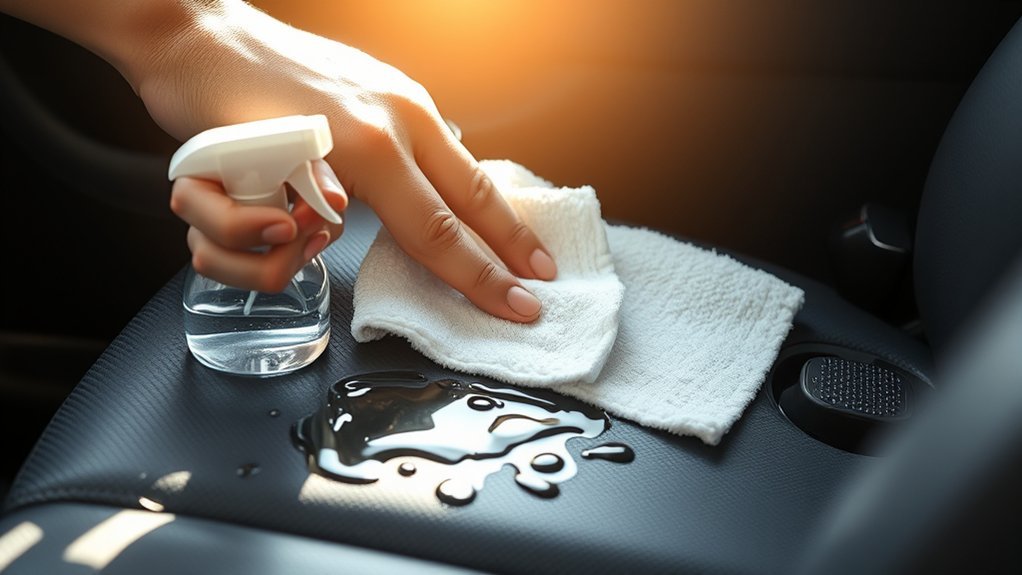
To get pee out of your car seat, act quickly to prevent stains and odors from setting in. Start by gently blotting the urine with a clean microfiber cloth. Avoid rubbing, as this can spread the stain further.
Next, use a solution of equal parts white vinegar and water or an enzymatic cleaner to break down the stain and neutralize odors. After applying the solution, sprinkle baking soda over the area and let it sit for a while.
Finally, vacuum the baking soda thoroughly. For best results, consider using a wet/dry vacuum or steam cleaner to extract moisture deeply and sanitize the seat. You’ll find even more effective steps and tips ahead.
Act Immediately After Pee Hits Your Car Seat
When pee spills on your car seat, how you respond in the first few minutes makes all the difference. Your primary goal is pee containment to prevent the liquid from spreading deeper or wider. Start by keeping calm and immediately identifying the affected area without delay.
Avoid rubbing or pressing down, which can push the urine further into the fabric or foam. Instead, set clear post accident limits by restricting movement around the spill zone to minimize contamination.
Quickly gather absorbent materials nearby but resist blotting at this stage to avoid spreading. Acting swiftly and methodically within these crucial minutes helps you control the damage and sets the stage for effective cleaning.
Your prompt action now will make later removal far easier and more successful.
How to Blot and Absorb Urine Without Spreading It
Exact how should you blot urine to avoid spreading it further? Start by gently pressing a clean, absorbent cloth onto the affected area. Don’t rub, as that only pushes urine deeper. Focus on urine blotting with careful, repeated dabbing to maximize urine absorption without smearing the stain.
Gently press a clean cloth onto urine stains, avoiding rubbing to prevent deeper spreading and smearing.
To do this effectively:
- Use a thick microfiber towel or paper towels for better absorption
- Apply light, steady pressure; avoid aggressive scrubbing
- Replace towels frequently to prevent re-contamination
- Work from the outer edges toward the center to contain the spill
This methodical approach ensures you lift as much urine as possible while preventing spread. Remember, urine blotting is about absorbing liquid, not redistributing it. Taking these precise steps immediately helps minimize lingering odor and staining.
Best Cleaning Solutions for Pee Stains: DIY and Commercial Options
Why choose between DIY and commercial cleaning solutions for pee stains when you can select the one that fits your situation best? For DIY options, a mixture of white vinegar and baking soda works effectively to neutralize odors and lift stains, but avoid common DIY mistakes like using bleach, which can set stains permanently.
When exploring commercial products, look for enzymatic cleaners designed specifically for urine; they break down proteins to eliminate odors and residues. In product comparisons, enzymatic cleaners generally outperform generic stain removers.
Always test your chosen solution on an inconspicuous area first to prevent discoloration. By weighing your options carefully, you’ll tackle the stain efficiently without causing further damage whether you prefer a homemade remedy or a specialized commercial product.
When Should You Use a Wet/Dry Vacuum or Steam Cleaner?
How do you decide whether to use a wet/dry vacuum or a steam cleaner for removing pee from your car seat? Use a wet/dry vacuum when you need to extract excess liquid quickly without soaking the fabric further. A steam cleaner is ideal for deep sanitizing and breaking down stubborn odors and stains.
Consider these care tips and storage ideas for your equipment:
- For quick liquid removal, a wet/dry vacuum saves time and prevents mildew.
- Use a steam cleaner for thorough disinfection, especially with fabric seats.
- Store your vacuum in a dry, ventilated area to avoid mold buildup.
- Keep steam cleaner components clean and dry to extend lifespan.
Choosing the right tool depends on the stain severity and your equipment’s maintenance.
Deep Clean a Pee-Stained Car Seat in Simple Steps
A thorough deep cleaning process is essential to fully remove urine stains and odors from your car seat, restoring its appearance and hygiene. Start by blotting the area with a clean cloth to absorb excess moisture.
Deep cleaning is key to eliminating urine stains and odors, restoring your car seat’s freshness and cleanliness.
Next, prepare a cleaning solution of equal parts white vinegar and water to neutralize urine acids. Apply it evenly, then scrub gently with a soft brush. Afterward, sprinkle baking soda over the damp area to absorb lingering moisture and odors.
Let it sit for at least 30 minutes before vacuuming thoroughly. For fabric seats, consider using an enzymatic cleaner designed for pet care, which breaks down urine molecules effectively.
Completing these steps enhances travel safety by preventing slippery or smelly surfaces, ensuring your car remains clean and comfortable during all trips.
Eliminate Pee Odors From Car Seats
To eliminate pee odors from your car seat, start by pinpointing the exact areas where the smell lingers, including hidden crevices.
Next, apply natural deodorizers like baking soda or vinegar to neutralize lingering scents effectively. Finally, use enzyme-based cleaners to break down odor-causing molecules at their source for a thorough refresh.
Identify Odor Sources
Where exactly is the pee odor coming from in your car seat? Identifying odor sources is crucial for effective cleanup. Start by thoroughly inspecting the seat, focusing on:
- Seams and stitching, where urine often seeps and hides
- Crevices between cushions, which trap moisture and odor
- Seat belt buckles and fabric folds, common spots for unnoticed spills
- Underneath the seat, where liquids can settle and fester unnoticed
During an emergency spill response, quickly pinpoint these areas to prevent odor from setting in. Use a flashlight and a clean cloth to detect dampness or discoloration. By methodically locating all contaminated zones, you ensure that cleaning agents target the true sources of odor, not just the surface. This precision is key to permanently eliminating the smell and restoring your car’s freshness.
Use Natural Deodorizers
How exactly can you neutralize stubborn pee odors without relying on harsh chemicals? Start by sprinkling baking soda liberally over the affected car seat area. Baking soda excels at natural deodorization by absorbing moisture and neutralizing smells.
Let it sit for at least several hours, preferably overnight, then vacuum it thoroughly. For enhanced odor prevention, mix equal parts white vinegar and water in a spray bottle and lightly mist the seat.
Vinegar’s acidic nature neutralizes urine odors without damaging fabric. Allow the seat to air dry completely to prevent mold and lingering smells.
You can also place a small bowl of activated charcoal or coffee grounds inside the car overnight to absorb residual odors. These natural deodorizers provide effective, chemical-free odor control, keeping your car seat fresh and clean.
Apply Enzyme Cleaners
Why do enzyme cleaners work so effectively on urine stains and odors? They break down the organic compounds in urine, eliminating the source of the smell rather than masking it.
When you apply an enzyme cleaner, you’re targeting bacteria and proteins that cause persistent odors. For best results, follow these steps precisely:
- Test the cleaner on a hidden spot to avoid damage.
- Saturate the affected area thoroughly, allowing enzymes to penetrate deep.
- Let the cleaner sit for at least 15 minutes to break down residues.
- Blot with a clean cloth, then air dry completely.
How to Clean Pee on Leather, Fabric, and Vinyl Seats
When dealing with urine on your car seats, the cleaning approach varies substantially depending on the material, leather, fabric, or vinyl, each requiring specific techniques to avoid damage and ensure thorough removal. For leather, start by blotting excess moisture, then gently clean with a leather care cleaner using a soft cloth. Avoid harsh chemicals to prevent drying or cracking.
For fabric seats, blot the area, apply an enzyme cleaner, and scrub gently with a soft brush to break down urine proteins and control odor. Rinse with a damp cloth, then air dry.
Vinyl seats can be wiped with a mixture of mild soap and water; use a soft cloth to clean, then dry thoroughly. For all materials, addressing odor control promptly is essential to prevent lingering smells.
Prevent Future Pee Accidents in Your Car
To prevent future pee accidents, start by fitting your car seats with waterproof covers that provide a reliable barrier.
Next, create a clear schedule for bathroom breaks to reduce urgency during trips. Finally, keep cleaning supplies within reach so you can quickly address any accidents that do occur.
Use Waterproof Seat Covers
A waterproof seat cover acts as an essential barrier that prevents liquids from soaking into your car’s upholstery, making cleanup much easier after an accident. By adopting waterproof strategies, you’ll safeguard your car’s interior from stains and odors.
When choosing a cover, focus on durable materials that provide reliable seat protection without compromising comfort.
Consider these points to maximize effectiveness:
- Select covers with deep waterproof layers for total liquid resistance
- Prioritize easy-to-remove, machine-washable fabrics for quick cleaning
- Ensure a snug fit to avoid slipping and full coverage of vulnerable areas
- Choose covers with breathable materials to prevent heat buildup and discomfort
Implementing these seat protection methods reduces stress after pee accidents and keeps your car fresh and clean.
Establish Bathroom Breaks
Protecting your car seats with waterproof covers helps minimize damage from accidents, but preventing those accidents altogether saves you time and effort. One effective way to do this is by establishing regular bathroom breaks during your trips.
Before hitting the road, plan stops every two hours or sooner if you’re traveling with young children or pets. Consistently reminding passengers to use restrooms before departure reduces the urge to urinate while in the car.
Use clear communication to set expectations and incorporate these bathroom breaks into your routine. These car tips not only help maintain cleanliness but also enhance comfort for everyone on board. By proactively managing bathroom needs, you significantly lower the risk of future pee accidents and protect your vehicle’s interior.
Keep Cleaning Supplies Handy
Where should you keep your cleaning supplies to handle pee accidents quickly and effectively? Keeping them within easy reach ensures you can act fast, preventing stains and odors from setting in.
Consider creating a cleaning schedule to regularly check and restock your supplies, so you’re never caught off guard.
Follow these storage tips to stay prepared:
- Store a compact cleaning kit in your glove compartment or under the seat
- Include essentials like enzyme cleaner, microfiber cloths, disposable gloves, and odor neutralizer
- Use a waterproof, resealable bag to contain moisture and prevent leaks
- Label your kit clearly for quick identification during emergencies
Frequently Asked Questions
Can Pet Urine Damage Car Seat Foam?
Yes, pet urine can damage your car seat foam by causing foam deterioration. It seeps into pet upholstery, breaking down the foam’s structure.
This leads to unpleasant odors and weakened cushioning if you don’t clean it promptly and thoroughly.
Is It Safe to Use Enzyme Cleaners on All Car Seat Materials?
Enzyme cleaners aren’t a one-size-fits-all magic wand; you’ll need to check if the product is enzyme friendly and confirm material compatibility.
Store them safely, avoiding odor masking agents that can hide persistent smells instead of eliminating them.
How Long Does Urine Typically Take to Dry on Car Seats?
Urine drying on car seats typically takes 1 to 3 hours, but pet urine can linger longer due to foam damage. You’ll need thorough cleaning to prevent odors and damage, especially if foam absorbs the moisture deeply.
Can Pee Stains Cause Mold Growth in Car Seats?
Yes, pee stains can cause mold growth in car seats if moisture remains trapped. You’ll increase mold risk and urine odor, so it’s essential to clean and dry the area thoroughly to prevent lingering smells and microbial buildup.
Are Professional Cleaning Services More Effective Than DIY Methods?
Professional cleaning is usually more effective than DIY methods because experts use specialized tools and solutions. However, your DIY effectiveness depends on the stain’s severity and your thoroughness in following cleaning steps carefully and promptly.
Conclusion
When a little accident leaves its mark, don’t let it linger like an unwelcome guest. Act swiftly to blot and lift away the evidence, choosing the right solution for your seat’s fabric. Deep cleaning and odor elimination restore your car’s fresh embrace, whether leather, fabric, or vinyl.
With careful attention and prevention, you’ll keep your ride a sanctuary, free from future surprises and ready for every journey ahead. Remember, knowing how to get pee out of car seat is key to maintaining a clean and comfortable vehicle environment.