How to Get Blood Out of Car Seat
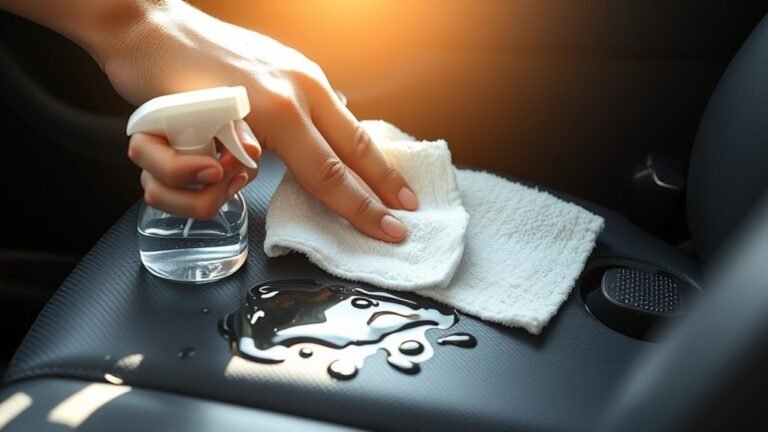
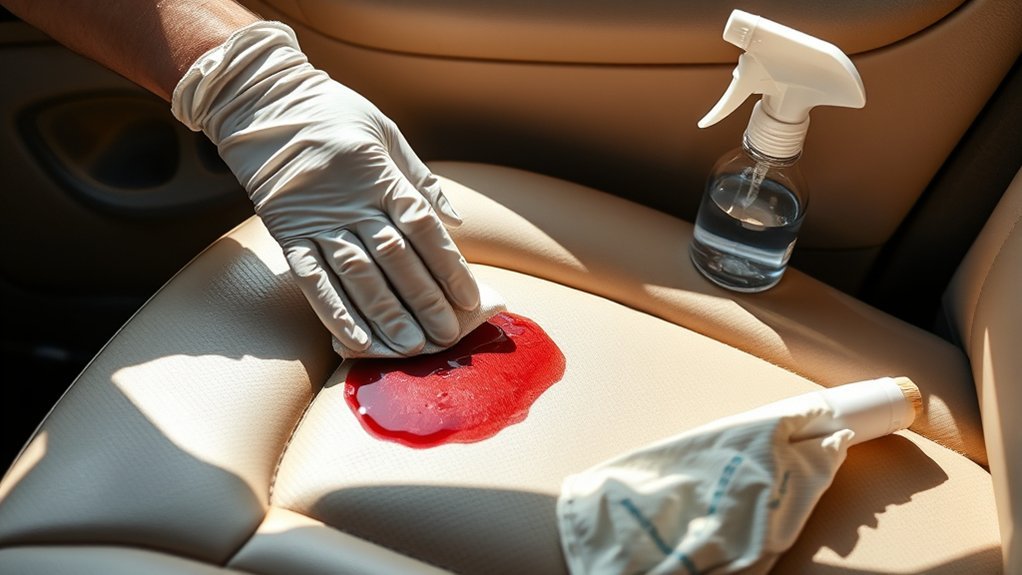
When blood spills on your car seat, put on gloves and blot the stain gently with a cold, damp cloth—never rub, as that spreads it. Applying quick care is essential to get blood out of car seat fabric effectively.
Use a mild detergent solution with a soft brush to treat the area, then rinse with cold water and blot dry.
For dried stains, test hydrogen peroxide on a hidden spot first, then apply carefully to avoid damage. After cleaning, air dry completely to prevent odors and consider using protective covers.
To master every detail of treatment and prevention, keep exploring the best practices.
What to Do Immediately After Blood Spills on Your Car Seat
Act quickly when blood spills on your car seat to prevent permanent stains. First, prioritize blood safety by wearing disposable gloves to avoid direct contact. Use a clean cloth or paper towel to gently blot the blood. Don’t rub, as this will spread the stain.
Blot from the edges toward the center to contain the spill. Next, carefully remove any excess blood by dabbing, avoiding saturation that can push blood deeper into the fabric. Avoid using hot water or harsh chemicals at this stage, as they can set the stain.
Instead, focus on immediate stain prevention by keeping the area damp with a small amount of cold water if necessary, preparing the seat for a more thorough cleaning process later. Prompt, careful action is essential.
How to Use Cold Water and Mild Soap to Lift Fresh Blood Stains
A careful approach using cold water and mild soap can effectively lift fresh blood stains from your car seat without causing damage. Blood chemistry reveals that warm or hot water can set the stain by coagulating proteins, so always opt for cold water to interrupt stain biology.
Start by dampening a clean cloth with cold water, then gently blot the blood stain. Never rub, as this pushes blood deeper into the fabric. Next, apply a small amount of mild soap to the cloth and continue blotting, allowing the soap to break down blood proteins gradually.
Rinse the cloth frequently with cold water to avoid reapplying blood. Repeat this process until the stain fades. This method respects the delicate balance of stain biology and prevents permanent setting.
What Supplies You Need to Remove Blood Stains From Car Seats
Which tools will ensure you tackle blood stains on your car seats effectively? Start with cold water and a mild detergent for fresh stains. For more stubborn stains, gather a soft-bristled brush, clean white cloths, and a spray bottle for applying cleaning solutions.
Keep hydrogen peroxide or an enzyme-based cleaner handy, as they’re effective on protein-based stains, but only after assessing stain severity. A small bowl aids in mixing solutions precisely. Don’t forget rubber gloves to protect your hands during cleaning.
Before applying any solution, colorfast testing is crucial to prevent discoloration or damage to your upholstery. Having these supplies ready lets you methodically address blood stains, adjusting tools based on severity while preserving your car seat’s fabric integrity.
How to Test Cleaning Solutions Safely on Your Upholstery
Before applying any cleaning solution to your car seat, you’ll want to test it on a small, hidden area of the upholstery. This step is crucial for testing upholstery dyes and evaluating cleaner safety to prevent discoloration or damage. Follow these steps:
- Select an inconspicuous spot, such as under the seat or near a seam.
- Apply a small amount of your cleaning solution using a cotton swab.
- Wait 10-15 minutes to observe any changes in color, texture, or fabric integrity.
- If no adverse effects appear, gently blot the area to remove excess solution.
How to Use Hydrogen Peroxide to Remove Dried Blood From Car Seats
Start by gently loosening the dried blood with a soft brush or cloth to avoid embedding it further into the fabric.
Next, apply a small amount of hydrogen peroxide directly onto the stain, allowing it to fizz and lift the blood. Be sure to blot the area carefully with a clean cloth to absorb the solution and dissolved blood.
Preparing The Stain
How exactly do you prepare a dried blood stain on your car seat for treatment with hydrogen peroxide? You must address the stain memory, the tendency of blood to set deeply, and respect removal ethics by avoiding damage to your seat’s material.
Follow these steps:
- Gently scrape off any crusted blood with a dull edge to avoid embedding it further.
- Blot the area with a damp cloth, using cold water to prevent heat setting the stain.
- Test hydrogen peroxide on a hidden spot to ensure no discoloration or damage.
- Let the seat air dry completely before applying any treatment, maintaining fabric integrity.
This careful preparation optimizes stain removal while preserving your car seat’s condition ethically and effectively.
Applying Hydrogen Peroxide
Once the dried blood stain is properly prepared and the seat is completely dry, you can carefully apply hydrogen peroxide to target the stain. Use a 3% solution and pour a small amount directly onto the blood spot. Let it bubble and sit for about 5 to 10 minutes.
Avoid saturating the fabric to prevent damage or discoloration, especially in edge cases where the material is fragile or older. Afterward, blot the area gently with a clean cloth to lift the blood and peroxide residue. Repeat if necessary, but always test in an inconspicuous spot first.
Since hydrogen peroxide can leave a distinctive smell, consider using a mild fabric-safe scent masking spray afterward to maintain freshness without compromising the seat’s integrity.
How to Remove Blood Stains From Leather Car Seats Without Damage
When removing blood stains from leather car seats, start with a gentle cleaning solution to avoid damaging the material. Always perform a spot test in an inconspicuous area to ensure the cleaner won’t discolor or harm the leather.
After cleaning, apply proper leather conditioning to restore moisture and maintain the seat’s integrity.
Gentle Cleaning Solutions
Why choose gentle cleaning solutions for blood stains on leather car seats? Leather is delicate, and harsh chemicals can cause discoloration or damage. Gentle solutions effectively lift blood without compromising the material. Proper stain detection ensures you target the affected area precisely, reducing unnecessary exposure.
Follow these steps for safe cleaning:
- Use a mild soap mixed with water to create a gentle cleaning solution.
- Dampen a soft cloth and gently blot the stain; avoid rubbing, which can spread it.
- Ensure ventilation safety by working in a well-ventilated area to prevent inhaling any fumes.
- Wipe the area with a clean, damp cloth to remove residue, then dry with a soft towel.
This method protects your leather’s integrity while effectively removing blood stains.
Spot Testing Importance
How can you guarantee your cleaning method won’t harm your leather car seats? Start with spot testing. Before applying any cleaner, choose an inconspicuous area to perform blood testing. This allows you to observe how the leather reacts, preventing unexpected damage like discoloration or texture changes.
Apply a small amount of your cleaning solution, wait a few minutes, then gently blot to assess removal effectiveness and leather condition. Spot testing also aids in stain forecasting by revealing how stubborn the blood stain might be, helping you adjust your approach accordingly.
Skipping this step risks worsening the stain or damaging the leather finish. By methodically testing first, you ensure a safe, effective cleaning process that preserves your leather car seats’ integrity.
Proper Leather Conditioning
After confirming your cleaner’s safety through spot testing, focus on maintaining your leather’s natural moisture and flexibility. Proper leather conditioning is essential for stain prevention and long-term durability. Follow these steps carefully:
- Choose a high-quality leather conditioner designed for automotive seats.
- Apply a small amount to a clean, soft cloth, not directly on the leather.
- Gently rub the conditioner in circular motions, covering the entire seat evenly.
- Let the leather absorb the product fully, then buff lightly with a dry cloth.
This method helps restore oils lost during cleaning, prevents cracking, and creates a protective barrier against future stains. Regular leather conditioning ensures your car seat stays supple and resilient, making blood stain removal easier without risking damage.
How to Clean Blood Stains From Fabric and Cloth Car Seats
Blood stains on fabric car seats require prompt and careful treatment to prevent permanent discoloration. First, gently blot the stain with cold water to avoid setting it deeper. Warm water can coagulate blood proteins, worsening the stain. Understanding stain science helps: blood is a protein-based stain, so breaking down proteins is key.
Next, apply a mild detergent solution to the area and gently agitate with a soft brush. Rinse thoroughly with cold water, then blot dry. For odor control, sprinkle baking soda once the fabric is damp; it absorbs residual scent and moisture. Let it sit before vacuuming.
Avoid harsh scrubbing or excessive moisture, as these can damage fabric fibers or spread the stain. Methodical treatment preserves your car seat’s appearance and freshness effectively.
When Should You Use Enzyme Cleaners for Blood Stains?
While mild detergents work well for fresh or small blood stains on fabric seats, enzyme cleaners become particularly valuable when dealing with older or stubborn stains. These cleaners target the stain biology by breaking down protein molecules in the blood, making removal more effective.
Mild detergents suit fresh blood stains, but enzyme cleaners excel at removing older, stubborn ones by breaking down proteins.
You should use enzyme cleaners when:
- Blood stains have dried and set deeply into fibers.
- The stain covers a large or irregular area.
- You want to minimize bloodborne risks by fully degrading organic material.
- Previous cleaning attempts with detergents failed to remove the stain.
Using enzyme cleaners under these conditions ensures a thorough breakdown of blood components, reducing the chance of lingering stains and health hazards. Always follow product instructions carefully for optimal results on your car seat fabric.
How to Dry and Protect Your Car Seat After Cleaning Blood
After cleaning blood from your car seat, you’ll want to air dry it thoroughly to prevent moisture buildup and odors.
Once dry, protect the fabric by fitting a durable seat cover to shield against future stains. For extra defense, consider applying a fabric sealant to create a barrier that repels liquids and makes cleaning easier.
Proper Air Drying Techniques
Although cleaning removes most of the stain, you’ll need to guarantee the car seat dries thoroughly to prevent mold and lingering odors. Proper drying is essential for blood safety and spill prevention, ensuring bacteria don’t multiply.
Follow these steps for effective air drying:
- Open all car doors and windows to maximize airflow around the seat.
- Use a portable fan directed at the damp area to speed evaporation without overheating.
- Avoid direct sunlight, which can damage fabric and warp seat materials.
- Check the seat regularly; once surface moisture is gone, allow extra time for deep layers to dry.
Using Protective Seat Covers
Ensuring your car seat dries thoroughly is just one part of maintaining its condition after cleaning blood stains. Once dry, using protective seatcovers will help shield the fabric from future spills and dirt.
Choose seatcovers made from waterproof or stain-resistant materials to maximize stain prevention. Fit them snugly to avoid shifting, which can expose your seat to new damage.
Regularly remove and wash the seatcovers according to manufacturer instructions to keep them clean and effective. Protective seatcovers not only guard against blood stains but also reduce wear and tear, extending your car seat’s lifespan.
Applying Fabric Sealants
How can you further protect your car seat fabric once it’s completely dry from blood stain cleaning? Applying fabric sealants offers a reliable barrier against future stains and spills.
Follow these steps for effective stain prevention:
- Choose a fabric sealant compatible with your car seat material.
- Test the sealant on a small, hidden area to avoid discoloration.
- Apply the sealant evenly using a spray or brush, covering all exposed fabric.
- Allow the sealant to dry fully, following manufacturer instructions, before using the seat.
Tips to Prevent Blood Stains From Setting and Protect Your Car Seat
A critical step to protect your car seat from permanent blood stains is to act quickly before the stain sets. Don’t fall for prevention myths suggesting you should let blood dry before cleaning—it only makes removal harder.
Instead, blot the area gently with cold water immediately to dilute the blood. Avoid rubbing, which pushes the stain deeper. Using a reliable stain barrier product can provide an extra layer of protection, making future cleanups easier and preventing blood from bonding with the fabric fibers.
Regularly applying these barriers, especially after cleaning, maintains your seat’s defense. Remember, speed and the right products are your best allies to stop blood stains from setting and keep your car seat in top condition.
Frequently Asked Questions
Can Blood Stains Cause Odors if Not Cleaned Promptly?
Yes, blood stains can cause odor if you don’t act quickly. Understanding stain removal science helps you perform safe cleaning, improving blood stain recovery while preventing lingering smells.
This ensures your car seat stays fresh and spotless.
Is It Safe to Use Bleach on Car Seat Blood Stains?
Bleach safety is a double-edged sword; you shouldn’t use bleach on car seats because it can damage fabric and cause discoloration. Instead, focus on gentle cleaners to prevent odor and preserve your seat’s integrity carefully.
How Long Do Blood Stains Typically Take to Set?
Blood stains typically set within 30 to 60 minutes, depending on temperature and fabric.
As blood ages, you’ll notice odor development caused by bacterial growth, making timely cleaning essential to prevent permanent damage and unpleasant smells.
Can Professional Detailing Remove Old Blood Stains Completely?
You won’t always get a spotless “Mona Lisa” after old stain removal. Professional detailing can notably improve old blood stains, but detailing limitations mean some deeply set marks might never vanish entirely despite expert care.
Are There Natural Alternatives to Chemical Blood Stain Removers?
Yes, you can use natural alternatives like cold water, salt paste, or hydrogen peroxide to remove blood stains. These methods avoid harsh chemical cleaners and work effectively when applied promptly and gently blotted with a clean cloth.
Conclusion
Now that you’ve tackled the blood stain with care and precision, your car seat is ready to shine like new. Think of your efforts as a gentle rain washing away the stubborn marks, restoring freshness and comfort. By acting quickly, testing solutions wisely, and drying thoroughly, you keep your seat protected and pristine.
Remember, a little vigilance today prevents stains from setting tomorrow. Your car’s interior will thank you with lasting cleanliness and charm. With these steps, getting blood out of car seat becomes a manageable task that preserves both appearance and value.