How to Fly With a Car Seat
When flying with a car seat, it’s important to first check your airline’s specific rules and ensure your seat has an FAA approval label.
Choose a lightweight, travel-friendly model that fits your child’s size and weight.
Pack the car seat carefully using protective covers and remove any detachable parts.
Arrive early for security screening, where you may need to remove your child for inspection.
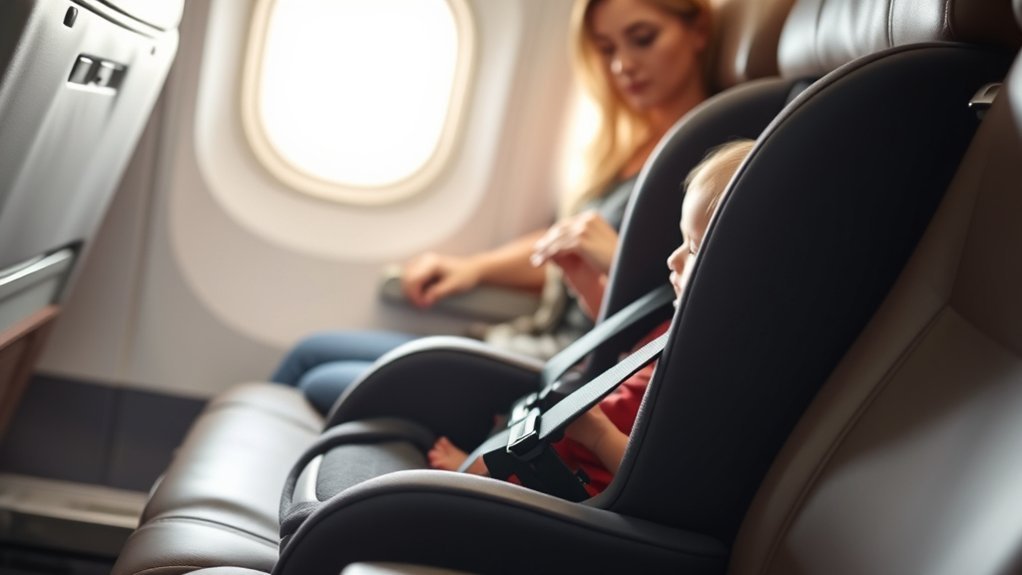
Securely install the seat in a window seat using the seatbelt, and keep your child comfortable throughout the flight.
There’s more to prepare for a smooth, safe flight.
Understand Airline Policies for Flying With a Car Seat
How do airline policies affect flying with a car seat? They play a crucial role in ensuring car seat safety during your flight. Each airline may have different regulations about using car seats onboard, so you need to check their specific rules before booking.
Some airlines allow you to bring and install your car seat in a window seat, which is often the safest spot. Others might require advance notice or charge extra fees. Understanding airline regulations helps you avoid surprises at the gate and ensures your child’s safety.
Additionally, airlines often provide guidelines on which car seats are acceptable, so reviewing these policies ensures compliance. Being informed about these rules guarantees a smoother, safer travel experience for you and your little one.
Verify FAA Approval for Your Car Seat
Before your flight, locate the FAA approval label on your car seat to ensure it meets safety standards. Double-check that your car seat model is compatible with airline requirements.
Also, review your airline’s specific policies to avoid any surprises at the airport.
Locate FAA Approval Label
Where can you find proof that your car seat is safe for air travel? Look for the FAA approval label, usually located on the back or bottom of the seat. This label confirms the car seat meets federal safety standards for use on airplanes.
It typically includes a statement like “This restraint is certified for use in motor vehicles and aircraft.” While checking, pay attention to details like battery placement if your car seat has electronic features, ensuring nothing interferes with aircraft regulations.
Also, note the color psychology used. Bright labels or contrasting colors help you quickly spot the FAA approval. Always locate this label before your trip to avoid last-minute issues at the airport security or gate, ensuring a smooth transition for your child’s safety during the flight.
Check Model Compatibility
After locating the FAA approval label on your car seat, the next step is to confirm that your specific model is compatible with air travel requirements. You’ll want to check compatibility by reviewing the car seat’s manual or the manufacturer’s website for explicit FAA approval statements.
Not all models with the label are suitable for airplane use, so verifying model compatibility prevents surprises at the airport. Ensure the car seat fits within airline size restrictions and meets safety standards for aircraft use.
If you’re unsure, contact the manufacturer directly to confirm compatibility. Taking these steps guarantees your car seat is approved for air travel and properly supports your child’s safety throughout the flight. Always prioritize verified model compatibility before you travel.
Review Airline Car Seat Policies
How do you ensure your car seat meets airline requirements beyond FAA approval? Start by reviewing each airline’s car seat policies carefully. While the FAA approves certain car seats for in-flight use, individual airlines may have additional rules about size, weight, or installation methods.
Confirming car seat legality with your airline helps avoid surprises at the gate. Also, understand the airline’s stance on liability. Some airlines limit responsibility for damage or misuse during the flight.
Choose the Right Car Seat for Air Travel
You’ll want to pick a car seat that’s FAA-approved to ensure it’s safe for air travel.
Keep in mind the size and weight limits, since airlines often have restrictions on bulky or heavy seats. Choosing the right car seat makes your trip smoother and keeps your child secure.
FAA-Approved Car Seats
Where can you find the best car seat options for air travel? Focus on FAA-approved car seats, as they meet strict car seat safety standards and are designed for use on airplanes. Using an FAA-approved seat ensures you follow airline etiquette, making the boarding process smoother.
When choosing your car seat, consider these factors:
- Look for a label stating FAA approval
- Confirm it fits your child’s age and weight
- Ensure it has a five-point harness for safety
- Check that it can be installed securely on airplane seats
- Opt for lightweight and portable designs for ease of travel
Size and Weight Limits
What size and weight limits should you consider when selecting a car seat for air travel? First, check your child’s weight and height against the car seat’s limits to ensure proper fit and safety.
Airlines often have size constraints for carry-on items, so pick a car seat with good adaptability, one that’s compact yet meets safety standards. Bulky or heavy models can be challenging to handle and may not fit easily in airplane seats.
Look for car seats designed specifically for travel; they tend to be lighter and more portable without compromising protection. Also, verify the seat’s dimensions against your airline’s seat size policies to avoid issues at boarding.
Prioritizing car seat adaptability within size and weight limits ensures both safety and convenience during your flight.
Pack and Protect Your Car Seat for Flying
How can you guarantee your car seat stays safe during air travel? Start by focusing on packing tips and protective cases designed specifically for car seats. These help cushion your seat against rough handling.
To pack and protect your car seat effectively, consider:
- Using a padded, airline-approved protective case
- Wrapping the car seat in bubble wrap or foam for extra cushioning
- Removing detachable parts and packing them separately
- Securing straps and buckles to prevent damage
- Labeling the case clearly with your contact information
Manage Airport Security When Flying With a Car Seat
When maneuvering airport security with a car seat, you’ll want to stay organized and prepared to speed up the process. Have your boarding pass and ID ready, and be prepared to remove your child from the car seat if requested.
You may need to carry the car seat through the metal detector separately or have it inspected by security personnel. To ease this step, consider using a lightweight car seat or a travel-friendly model designed for air travel.
Keeping your car seat clean and accessible helps maintain car seat travel safety and reduces stress during your family road trip. Always follow TSA guidelines and ask TSA agents if you’re unsure about specific procedures, ensuring a smooth experience without compromising your child’s safety.
Install Your Car Seat Safely on the Airplane
After navigating airport security with your car seat, the next step is to install it properly on the airplane to ensure your child’s safety throughout the flight. Proper installation is crucial for smooth family travel and peace of mind.
Here’s how to secure your car seat safely:
- Confirm your car seat is FAA-approved for airplane use.
- Place the car seat in a window seat to avoid blocking the aisle.
- Use the airplane seatbelt to tightly secure the car seat base.
- Check that the seat belt routes through the correct slots on the car seat.
- Ensure the car seat doesn’t move more than one inch side to side or front to back.
When to Use a Car Seat vs. Holding Your Child
Why should you choose a car seat over holding your child during a flight? Using a car seat provides maximum safety and comfort, especially for long trips or turbulent conditions. It keeps your child securely restrained, reducing injury risk.
However, holding your child might work for short flights or when your child is very young and calm. Consider sibling bonding. If you have multiple kids, using a car seat allows you to focus on engaging them together without juggling one on your lap.
Also, plan snack strategies; a car seat gives your child a designated space to eat without spills or fuss, making mealtime easier for everyone. Ultimately, weigh safety, comfort, and convenience when deciding between a car seat and holding your child on the plane.
Overcome Challenges Flying With a Car Seat
How can you make flying with a car seat easier despite the extra gear? Addressing challenges head-on helps maintain focus on child safe topics and travel budgeting. Start by researching airline policies to avoid surprises at check-in.
Flying with a car seat is easier when you plan ahead and understand airline policies.
Use a lightweight, compact car seat model or a travel-friendly car seat bag for easier handling. Plan your arrival early to allow extra time for security checks involving the car seat. Consider gate-checking the seat to save energy while boarding and deplaning.
Finally, pack efficiently to reduce overall luggage weight and expenses.
- Confirm airline car seat requirements in advance
- Choose a car seat designed for travel convenience
- Allocate extra time for security screening
- Gate-check to ease carrying burden
- Budget for potential seat-related fees
These steps help you fly smoothly while prioritizing safety and cost.
Keep Your Child Comfortable During the Flight
When should you start preparing to keep your child comfortable during a flight? Ideally, you begin well before boarding by packing familiar items like a favorite blanket or stuffed toy to ease anxiety and enhance child comfort.
Dress your child in soft, layered clothing to adjust to changing cabin temperatures. Once on the plane, make use of in-flight entertainment options to keep your child engaged and distracted, whether it’s a tablet loaded with games or movies.
Ensure snacks and drinks are easily accessible to prevent hunger-related fussiness. Regularly check your child’s comfort by adjusting their seating position in the car seat and offering breaks when possible.
Preparing thoughtfully helps your child stay relaxed, making the flight smoother for everyone involved.
Frequently Asked Questions
Can I Check My Car Seat as Luggage Instead of Carrying It on Board?
You can check your car seat as luggage, but car seat policies vary by airline. Always review airline luggage rules beforehand to avoid damage or fees.
Carrying it on board often offers better protection and convenience.
Are There Airlines That Provide Loaner Car Seats for Flights?
Some airlines offer airline loaners, but they’re rare and usually limited to specific flights. You can also check car seat lounges at major airports, where you might rent or borrow car seats for your journey.
How Do I Clean a Car Seat After Air Travel?
You’ll want to freshen up your car seat after travel by removing covers and spot-cleaning gently with mild soap.
Regular cleaning after travel keeps car seat maintenance easy and ensures your little one’s ride stays safe and comfy.
Can I Use a Car Seat on Private or Charter Flights?
You can usually use your car seat on private charter flights, but each operator’s car seat policy varies.
Always check with the private charter company beforehand to ensure your car seat meets their safety and installation requirements.
What Are the Weight and Size Limits for Car Seats on Planes?
Car seat regulations vary, but most airlines accept seats up to 22x16x26 inches and 40 pounds. You should check specific flight safety guidelines to ensure your car seat meets size and weight limits before flying.
Conclusion
Flying with a car seat can feel like a feat, but with focused preparation, you’ll find it flows smoothly. Familiarize yourself with FAA-approved options, follow airline policies faithfully, and pack your seat with protective precision.
Secure your seat safely, soothe your small one, and stay steady through security checks. These steps help reduce stress and keep your child comfortable throughout the journey.
By tackling these tips thoughtfully, you’ll turn travel troubles into triumphant trips, creating calm, comfortable experiences for both you and your child when flying with a car seat.