How to Dispose of Car Seat
When disposing of a car seat, first check if it’s expired, damaged, or involved in a crash—it should be replaced if any of these apply. Cutting the straps and buckles is important to prevent reuse.
Remove the fabric or padding for recycling whenever possible. Contact your local waste center to learn about proper disposal or recycling options, since rules vary by area. Avoid simply tossing the car seat in the trash without disabling it.
If you want to learn how to dispose of your car seat responsibly and explore safe repurposing ideas, keep going.
When to Replace vs. Dispose of Your Car Seat
When should you replace your car seat instead of simply disposing of it? Replace your car seat if it’s expired, involved in a moderate or severe crash, or shows signs of damage.
Don’t fall for recycling myths suggesting all car seats can be recycled. Many materials aren’t accepted curbside, and improper recycling can compromise safety. Safety myths claiming that a car seat remains safe indefinitely are dangerous. The plastic and components degrade over time, reducing protection.
If your car seat fails to meet current safety standards or lacks essential features, replacing it is crucial. Always prioritize safety over convenience. Disposing of a car seat is appropriate only when it’s beyond repair or expired, while replacement ensures your child’s protection on every ride.
How to Check If Your Car Seat Is Still Safe to Use
You’ll want to start by checking the expiration date on your car seat, usually found on a label or molded into the plastic.
Next, verify whether the seat has been involved in any crashes, as even minor accidents can compromise its safety. If you’re unsure about its history or the date has passed, it’s best to replace the seat.
Expiration Date Check
How can you tell if your car seat is still safe to use? One crucial step is checking the expiration date. Car seats don’t last forever; manufacturers set an expiration date, usually found on a sticker or molded into the plastic shell.
This date typically ranges from six to ten years after the manufacture date. Performing a safety check means confirming your seat hasn’t passed this limit, as materials degrade over time, reducing protection in a crash.
If you can’t find the expiration date, consult the manual or manufacturer’s website for guidance. Never use a car seat beyond its expiration date, even if it looks intact.
Regularly verifying the expiration date is an essential part of keeping your child safe on every ride.
Crash History Verification
Why is it important to verify a car seat’s crash history before continued use? Because even minor accidents can compromise its structural integrity, reducing its ability to protect your child.
To ensure safety, you need to conduct a thorough crash history verification process. Start by checking the car seat’s labels and documentation for any reported incidents.
If you bought the seat used, ask the previous owner for crash details. Additionally, contact the manufacturer with your seat’s model number and manufacture date to confirm it hasn’t been involved in a recall or known crash.
Avoid using any car seat with an unknown or confirmed crash history. This verification process is essential for ensuring your child’s safety and deciding whether it’s time to dispose of the seat responsibly.
What You Need to Know About Local Car Seat Disposal Rules
Where should you take your old car seat when it’s time to dispose of it? Local rules vary widely, and knowing them ensures safe, responsible disposal. Don’t fall for recycling myths that suggest all car seats can be recycled curbside. Many can’t due to mixed materials.
Check if your area offers seat recycling programs or designated drop-off sites.
| Location Type | Accepts Car Seats | Notes |
|---|---|---|
| Municipal Dump | Sometimes | Call ahead to confirm |
| Recycling Center | Rarely | Most don’t accept car seats |
| Retailer Take-Back | Often | Many offer take-back programs |
| Special Events | Occasionally | Limited-time collection drives |
Always verify local guidelines to protect your family and the environment.
How to Prepare a Car Seat for Disposal or Recycling
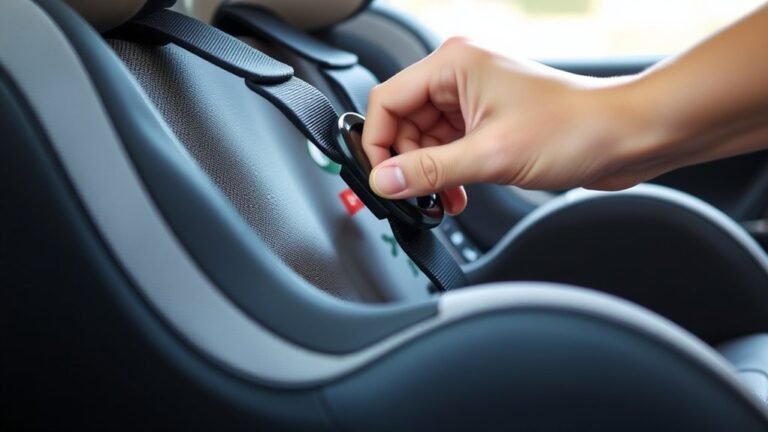
Preparing your car seat for disposal or recycling starts with disabling its safety features to prevent reuse. First, remove the straps and harnesses by cutting through them carefully, ensuring no one can reuse the seat in unsafe conditions.
Begin by disabling safety features and cutting straps to prevent unsafe reuse of your car seat.
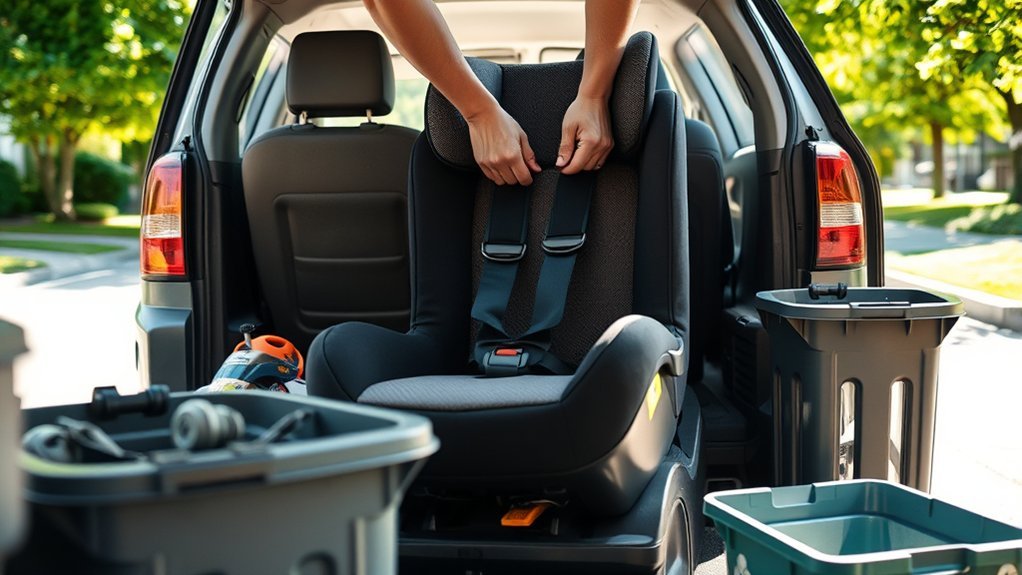
Next, detach the plastic shell and foam padding, separating materials as much as possible. This step supports careful disposal and helps recycling facilities process components correctly.
Be aware of recycling myths. Car seats are often made from mixed materials that can’t be recycled in curbside bins. Instead, check with local programs that accept car seat parts or specialized recycling centers.
Label the seat “Not for resale” to avoid accidental reuse. Following these steps ensures you dispose of your car seat responsibly and safely, protecting future users.
Where to Donate or Sell a Gently Used Car Seat
If your car seat is gently used and meets current safety standards, you can donate it to local charities that accept child safety equipment. You can also sell it on trusted online marketplaces, but always disclose its history and confirm it hasn’t been in any accidents.
Local Charities Accepting Seats
How can you guarantee your gently used car seat benefits another family safely? Start by contacting local charities that accept car seat donations. These organizations often have strict donation guidelines to ensure every seat meets current safety certifications before passing them on.
Before donating, verify that your car seat hasn’t expired, been in an accident, or shows excessive wear. Charities typically inspect seats for manufacturer recalls and proper functioning. By following their donation guidelines, you help protect children from unsafe equipment.
Reach out to community centers, children’s hospitals, or nonprofit organizations focused on child safety. They’ll guide you through the process and may even offer pickup services. Donating through these trusted channels ensures your car seat gets a second life while prioritizing safety for its next little passenger.
Online Marketplaces For Sales
Where can you find a safe and reliable way to pass on your gently used car seat? Online marketplaces offer a convenient platform to sell or donate, especially as car seat trends evolve. This ensures you connect with buyers or recipients who prioritize safety.
Before listing, verify the seat’s condition and expiration date. Here are popular options:
| Marketplace | Features | Safety Tips |
|---|---|---|
| Facebook Marketplace | Local reach, easy messaging | Disclose seat history, confirm expiration |
| eBay | Wide audience, auction option | Provide detailed photos, mention recalls |
| Craigslist | Local, no fees | Meet in public places, share info clearly |
Using these online marketplaces helps you responsibly extend your car seat’s life while keeping safety top of mind.
Safety Guidelines For Donations
Wondering what safety steps you should take before donating or selling a gently used car seat? First, always check if the seat has been involved in a car seat recall. You can do this by entering the model number on the manufacturer’s website or the National Highway Traffic Safety Administration (NHTSA) site.
Never donate a car seat that’s expired, damaged, or has been in a crash, as these compromise infant harness safety. Clean the seat thoroughly and include all original manuals and parts. Donate to reputable organizations, like local shelters or certified childcare programs, that ensure proper use.
How to Recycle a Car Seat Properly
Why should you recycle a car seat properly? Proper seat recycling protects the environment and ensures misuse prevention by disabling the seat from being reused unsafely. When you recycle correctly, you help prevent expired or damaged seats from causing accidents.
To recycle a car seat properly, follow these steps:
- Remove all fabric and padding to separate materials for recycling.
- Cut the straps and buckle to render the seat unusable, preventing misuse.
- Take the disassembled parts to a recycling center that accepts car seats or check with local waste programs.
Disposing of Damaged or Expired Car Seats
How do you safely dispose of a damaged or expired car seat? First, check the labeling requirements to confirm the seat’s expiration date and any specific disposal instructions. Expired or damaged seats compromise safety and shouldn’t be reused or donated.
Next, consider legal considerations in your area. Some states require you to destroy the seat to prevent resale or reuse. You can cut the straps and remove the padding to make the seat unusable.
Avoid simply tossing it in the trash without disabling it, as this can pose risks if someone else tries to use it. Finally, contact your local waste management or recycling center for proper disposal options that comply with safety and environmental regulations, ensuring the car seat is handled responsibly.
Fun Ideas to Repurpose Your Old Car Seat
Once you’ve determined that your old car seat can no longer be used safely, there are plenty of creative ways to give it a new purpose. Here are some fun ideas and repurpose tips to make the most of your car seat while ensuring safety:
When your car seat’s no longer safe, discover creative ways to repurpose it while keeping safety in mind.
- Pet Bed: Remove straps and padding, then add a soft cushion to create a cozy bed for your pet.
- Outdoor Chair: Reinforce the frame and weatherproof the fabric to use it as a durable outdoor seat.
- Garden Planter: Take out the cushioning, fill the shell with soil, and plant flowers or herbs for a unique garden display.
Make sure to clean the seat thoroughly and avoid using any damaged parts in your projects. These ideas help you repurpose your old car seat safely and creatively.
Environmental Tips for Safe Car Seat Disposal
Protecting the environment requires careful consideration when disposing of your old car seat. To minimize waste, look for local programs that accept car seats for recycling. Recycling these materials helps reduce landfill impact by extracting valuable recycled materials like plastics and metals.
If recycling isn’t available, consider safe reuse ideas that prevent environmental harm while keeping safety in mind.
| Disposal Method | Environmental Benefit | Safety Consideration |
|---|---|---|
| Recycling Centers | Recovery of recycled materials | Ensure seat is clean, no damage |
| Donation Programs | Extends product life | Confirm seat meets safety standards |
| Upcycling Projects | Reduces waste | Use for non-child purposes only |
| Municipal Waste | Last resort | Remove harness to prevent reuse |
| Hazardous Waste Sites | Proper material handling | Follow local disposal laws |
Always prioritize proper disposal to protect both the environment and community safety.
Frequently Asked Questions
Can Car Seat Disposal Fees Vary by Location?
Yes, car seat fees can vary depending on disposal locations. You’ll want to check local regulations to avoid surprises.
Proper disposal guarantees safety and environmental care, so always confirm costs before dropping off your old car seat.
Are There Any Safety Concerns When Transporting Old Car Seats?
Yes, you should watch for safety concerns when transporting old seats, like ensuring regulatory compliance and avoiding hazardous materials exposure.
Secure the seat properly to prevent damage or injury during transit, keeping everyone safe.
How Long Does the Recycling Process for Car Seats Take?
The recycling timeline for car seats varies, but the old process often takes several weeks. You’ll want to ensure the seat is properly prepared to meet safety standards, speeding up the recycling timeline and preventing hazards.
Can Car Seats Be Disposed of in Regular Household Trash?
You see a bulky car seat next to your regular trash, but car seat regulations often forbid tossing them there. Don’t fall for recycling myths; most can’t be recycled easily. Always follow safety rules for proper disposal.
What Materials in Car Seats Are Most Challenging to Recycle?
You’ll find neon plastics and foam adhesives in car seats are toughest to recycle because they resist breaking down. Handling them safely matters, so always check local guidelines to avoid environmental harm or personal injury.
Conclusion
When it comes to car seats, remember: “Better safe than sorry.” Always check if your seat is expired or damaged before deciding to dispose of it. Follow local rules for disposal or recycling to protect the environment and keep safety a priority.
If it’s still in good shape, consider donating or selling it. Preparing your car seat properly ensures you’re doing the right thing—for your child’s safety and the planet’s health.
Proper disposal is essential. Knowing how to dispose of car seat responsibly helps keep everyone safe and supports environmental care.