How to Check a Car Seat at Airport
To check a car seat at the airport, first confirm it meets airline and TSA regulations, including size and weight limits. Removing loose accessories and cleaning the car seat before travel is essential. Label it with clear contact information to ensure it can be identified easily.
Use a sturdy travel bag or protective cover to shield the car seat from damage. Secure all straps tightly to prevent any movement during transit.
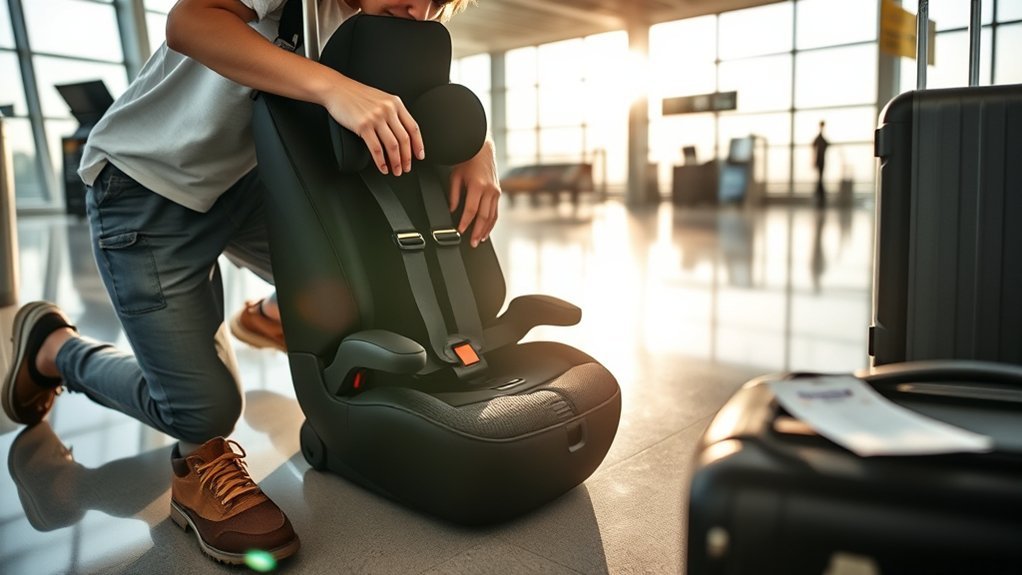
When you arrive at the airport, inform the airline agent at check-in, especially if you are checking the car seat along with a stroller combo. Follow their instructions carefully to ensure a smooth process.
Knowing these steps will help you handle your car seat smoothly throughout your trip.
How to Check If Your Car Seat Can Be Checked at the Airport
How do you know if your car seat can be checked at the airport? First, verify the car seat compatibility with airline regulations by reviewing the manufacturer’s guidelines. Some car seats are designed specifically for travel and meet airline eligibility standards for checked baggage.
Next, check the size and weight restrictions to ensure your car seat fits within the airline’s limits. Look for any labels indicating FAA approval or special travel compatibility.
Additionally, consider the durability of your car seat’s materials; a sturdy, well-padded seat is more likely to withstand handling during transit. By proactively confirming car seat compatibility and airline eligibility before your trip, you’ll avoid surprises at the airport and ensure your child’s safety gear travels smoothly.
Airline Policies for Checking Car Seats
Once you confirm your car seat meets airline requirements, the next step is understanding each airline’s specific policies for checking it. Airlines vary in how they handle car seats. Some allow you to check them for free, while others may charge a fee.
You must ensure your car seat complies with car seat legality and safety standards recognized by the airline and local regulations. Check if the airline requires the car seat to be in a protective bag or if it needs to be tagged specially.
Some airlines limit the size or weight, so verify those details beforehand. Knowing these policies prevents surprises at check-in and ensures your child’s safety gear is transported correctly. Always review the airline’s official website or customer service before you travel.
How to Prepare Your Car Seat for Airport Check-In
Preparing your car seat for airport check-in starts with cleaning and inspecting it thoroughly. Make sure there’s no dirt or debris, and check for any damage that might affect safety.
Review the current car seat regulations set by the airline and TSA to ensure your seat meets their requirements. If your car seat is part of a travel system, confirm stroller compatibility, as some airlines allow you to check the stroller and car seat together.
Remove any loose accessories or toys to prevent loss or damage. Label your car seat with your contact information clearly.
Finally, make sure all straps and buckles are secured to avoid tangling or damage during handling. These steps help guarantee a smoother check-in process and protect your car seat’s integrity during travel.
How to Pack and Protect Your Car Seat for Travel
Where should you start when packing your car seat to keep it safe during travel? Begin by reviewing car seat regulations from your airline to understand size limits and whether your seat qualifies for gate check or requires checked baggage.
Use a sturdy, well-padded car seat travel bag or a protective cover to shield against scratches and dirt. Secure any loose parts and straps to avoid damage. Label your bag clearly with your contact information.
Keep in mind that some airlines waive airline fees for car seat check-in, so confirm this to save money. Finally, avoid overpacking around the seat to prevent pressure damage.
Taking these steps helps ensure your car seat arrives intact and ready for use at your destination.
How to Check a Car Seat With a Stroller Combo
When checking a car seat with a stroller combo, you’ll need to separate them if the airline requires it. Make sure to secure both items with proper padding to prevent damage during handling.
Always label each piece clearly and confirm the airline’s policies ahead of time to ensure smooth check-in.
Stroller And Car Seat Check
How do you efficiently check a car seat when it’s attached to a stroller? First, consult your airline’s policy on stroller and car seat check-in to ensure compliance. Keep your travel documentation handy, including receipts or tags verifying your car seat’s safety certification.
At the airport, detach the car seat from the stroller if possible; this reduces damage risk. If you must check them together, secure the car seat firmly within the stroller frame using straps or clips designed for this purpose.
Clearly label both items with your contact information and include “Car Seat Inside” tags to alert baggage handlers. By following these steps, you maintain car seat safety throughout your journey while meeting airline requirements and protecting your child’s essential gear.
Tips For Safe Handling
Why should you take extra care when checking a car seat attached to a stroller? Because improper handling can damage the car seat’s safety features, compromising your child’s protection.
Always detach the car seat from the stroller before checking it in, if airline seating policies allow. This prevents unnecessary strain and helps maintain car seat maintenance standards.
Use a sturdy travel bag designed for car seats to protect it from scratches and impacts. Label your car seat clearly with your contact information to avoid loss.
Avoid placing heavy items on top of the stroller or car seat during transit. By following these tips, you ensure your car seat remains safe and functional, complying with airline seating policies and preserving its integrity for your child’s next ride.
How to Drop Off Your Car Seat at the Airline Counter
Before dropping off your car seat at the airline counter, make sure you’re familiar with the airline’s specific policies to avoid surprises.
Prepare your seat by securing any loose parts and protecting it with a sturdy bag or cover. Don’t forget to label your car seat clearly with your contact information for easy identification.
Prepare Your Car Seat
A few simple steps can make dropping off your car seat at the airline counter quick and hassle-free. First, deflate any car seat inflation devices, like air cushions or inserts, to reduce bulk and comply with airline rules.
Next, check your car seat for stroller compatibility. If your seat attaches to a stroller frame, consider whether you’ll check it separately or as part of your stroller.
Clean your car seat and remove loose items to prevent damage during handling. Secure harness straps and fold the seat if possible, making it more compact for easier transport.
Finally, place your car seat in a protective bag or cover to shield it from dirt and scratches. Proper preparation ensures smooth check-in and protects your child’s safety gear.
Check Airline Policies
How do you guarantee your car seat travels safely and without hassle? First, check the airline policies on car seat check-in and carry-on rules. Each airline has specific guidelines about dropping off car seats at the counter, including size restrictions and fees.
Knowing these details helps you avoid last-minute issues and ensures smooth processing. Pay close attention to security considerations; some airlines require you to remove the seat cover for inspection or confirm that the seat installation won’t be compromised during transit.
When you arrive at the airline counter, clearly communicate that you’re checking a car seat and follow their instructions carefully. This proactive approach minimizes damage risk and keeps your child’s safety intact when you reach your destination.
Label and Protect Seat
Once you’ve confirmed the airline’s policies, focus on labeling and protecting your car seat to ensure it stays safe during handling. Start by securely attaching a durable luggage tag with your contact information and flight details. This labeling helps airline staff quickly identify your seat if it gets misplaced.
Next, consider using a car seat travel bag or cover to protect it from dirt, spills, and rough handling. Make sure the cover is well-padded and easy to carry.
When you arrive at the airline counter, inform the agent that you’re checking a car seat, so they handle it appropriately. Securing your seat properly guarantees it arrives intact, giving you peace of mind and keeping your child safe for the trip ahead.
What to Do If Your Car Seat Gets Lost or Damaged
If your car seat gets lost or damaged during travel, don’t panic. You have options to resolve the situation quickly. First, report the issue immediately to your airline’s lost luggage or baggage claim office.
If your car seat is lost or damaged while traveling, report it immediately to your airline’s baggage claim office.
Next, document the damage with photos and keep all receipts if the seat is beyond repair. Remember, having car seat insurance can simplify reimbursement or replacement claims.
Here’s what you should do:
- File a lost luggage claim as soon as possible
- Take clear photos of any damage to the car seat
- Contact your car seat insurance provider for coverage details
- Keep all travel and purchase documents handy for claims
- Ask the airline about their policy on damaged or lost car seats
Acting swiftly ensures you get the support and compensation you need.
Alternatives to Checking Car Seats When Traveling
Wondering how to avoid the hassle of checking your car seat at the airport? One practical alternative is to use a car seat travel bag with wheels, letting you carry it like a piece of luggage, saving time and stress.
Another option is to rent a car seat at your destination, which can ease your family travel experience and support budget planning by avoiding checked baggage fees.
Some parents opt for lightweight, compact car seats designed specifically for travel, which are easier to bring on board as carry-ons.
If you’re traveling with a stroller, consider one that accommodates your car seat, reducing what you need to check.
These alternatives keep your car seat safe while streamlining your travel process and cutting extra costs.
How to Pick Up and Inspect Your Car Seat After Your Flight
How do you ensure your car seat survived the trip intact? When picking up your car seat after flight, a careful inspection is essential. Here’s how to inspect it effectively:
Check for visible cracks or dents in the plastic shell. Verify that all buckles and straps are intact and functional.
Look for any missing or loose parts, including padding. Smell the seat for unusual odors signaling damage.
Confirm the label and expiration date remain legible.
Tips for Traveling Smoothly With Your Car Seat
Where should you start to guarantee your car seat travels safely and hassle-free? First, choose a sturdy travel bag or cart designed for car seats to protect against bumps and dirt. Always check airline policies ahead of time to avoid unexpected travel challenges.
Label your car seat clearly with your contact information. When boarding, consider carrying the seat through security to prevent damage. Use a seat protector in the taxi or rental car to maintain seat safety.
Securely fasten the seat in your vehicle immediately upon arrival to ensure proper installation. Finally, inspect the seat for any damage after your journey. By planning ahead and staying vigilant, you’ll minimize travel challenges and keep your child’s car seat safe throughout your trip.
Frequently Asked Questions
Are Car Seats Allowed in Airplane Cabins?
Yes, you can bring a car seat onboard if it meets airline seating rules and car seat compatibility standards. Always check with your airline beforehand to ensure your car seat is approved for use during the flight.
Can I Use My Car Seat on the Airplane Seat?
Yes, you can use your car seat on the airplane seat if it’s FAA-approved. Brief airline policies vary, so check ahead.
Do Car Seats Need to Meet Specific Safety Standards for Air Travel?
Yes, your car seat must meet specific car seat regulations and airline compliance standards for air travel. Check if it’s FAA-approved to ensure safety and acceptance onboard, protecting your child and avoiding travel issues.
Is There an Extra Fee for Checking a Car Seat?
Wondering about fees? Most airlines don’t charge extra fees for checking car seats, but policies vary. You’ll save hassle by confirming fees and policies ahead, so communication tips like calling your airline really pay off.
How Do I Know if My Car Seat Fits on an Airplane Seat?
You’ll know your car seat fits by checking compatibility with the airline’s seat dimensions. Measure your car seat’s width and height, then compare it to the airplane seat specs listed on the airline’s website before you fly.
Conclusion
Checking your car seat at the airport doesn’t have to be a leap into the unknown. By knowing airline policies, packing it securely, and preparing for any hiccups, you’ll safeguard your child’s safety gear like a trusted guardian.
Remember, a little planning turns travel chaos into smooth sailing. Stay proactive, and your car seat will arrive ready for the road ahead.
Because peace of mind is the best travel companion you can carry, checking your car seat at the airport ensures your child’s safety gear is protected throughout your journey.