How Long Is a Car Seat Good for
You should replace your car seat every six to ten years because materials degrade and safety standards change over time. Knowing how long a car seat is good for is essential to ensure your child’s safety during travel. Exposure to heat, sunlight, and crashes weakens the seat’s structure, risking your child’s protection.
Infant seats tend to last 4-6 years, while boosters can be good up to 10 years. Always check the manufacturer label for exact expiration dates and discard any seat involved in a crash. There’s more to know about proper maintenance, storage, and when exactly to upgrade.
Why Car Seats Have Expiration Dates
Why do car seats come with expiration dates? You need to know that materials degrade over time, reducing the seat’s ability to protect your child during impacts. Just like pairing wine requires attention to detail for the perfect match, manufacturers set expiration dates based on rigorous testing to ensure optimal safety.
Exposure to sunlight, temperature changes, and wear, especially during off grid travel, can accelerate deterioration. Expiration dates also reflect evolving safety standards and technology improvements, meaning older seats might not meet current crash test criteria.
Using a car seat past its expiration means risking compromised structural integrity, which could result in serious injury. So, always check these dates carefully to keep your child secure, no matter where your journeys take you.
How Long Do Car Seats Last on Average?
Knowing why car seats have expiration dates helps you understand the importance of adhering to those limits. On average, a car seat lasts about six to ten years from the date of manufacture. This timeframe accounts for material degradation, safety standard changes, and wear from regular use.
Even if your car seat looks clean and intact after thorough car seat cleaning, its structural integrity can weaken over time. Additionally, prolonged storage duration, especially in extreme temperatures or humid environments, can accelerate deterioration.
You need to check the manufacturer’s label for the exact expiration date, as it varies by model. Using a car seat beyond its recommended lifespan compromises safety, so always replace it once it reaches the expiration date, regardless of appearance or cleaning frequency.
How Different Types of Car Seats Vary in Lifespan
How do different types of car seats impact their lifespan? Each type, infant, convertible, or booster, uses distinct child seat materials that affect durability. For example, infant seats often feature softer fabrics and lighter frames, which may degrade faster.
Convertible seats, designed for extended use, employ sturdier materials, enhancing longevity. Color trends also matter; darker hues resist visible fading better than lighter ones, preserving aesthetic appeal over time.
| Car Seat Type | Typical Lifespan |
|---|---|
| Infant | 4-6 years |
| Convertible | 6-10 years |
| Booster | 8-10 years |
Understanding these differences helps you choose a car seat that balances safety, material resilience, and style, ensuring it remains reliable throughout its lifespan.
Key Factors That Shorten Car Seat Lifespan
Several key factors can considerably reduce your car seat’s usable life if you don’t address them carefully. Exposure to extreme temperatures, for example, can weaken the plastic shell and compromise safety. Sunlight and heat cause materials to degrade faster, so avoid leaving the seat in a hot car for extended periods.
Extreme temperatures can weaken your car seat’s plastic shell and reduce its safety and lifespan.
Additionally, improper installation or frequent moving between vehicles can stress components, shortening lifespan. Be wary of ignoring manufacturer guidelines, as that can lead to premature wear.
Avoid getting distracted by irrelevant topics or unrelated discussions about car accessories; focus strictly on the car seat’s condition and usage. Also, neglecting routine cleaning and inspections allows dirt and damage to accumulate unnoticed, further reducing longevity.
Staying vigilant about these factors helps ensure your car seat remains reliable and safe.
How Crashes Affect When to Replace a Car Seat
If your car seat has been involved in a crash, you need to replace it immediately, regardless of visible damage, since impact can compromise its safety. Manufacturers typically recommend discarding seats after any collision to ensure optimal protection.
Always follow the specific replacement guidelines provided with your car seat to keep your child safe.
Crash Impact on Safety
When should you replace a car seat after a crash? Even if the damage isn’t visible, any crash impact can compromise your car seat’s structural integrity and safety performance.
The safety implications are serious. Materials like plastic and foam may weaken or crack, reducing crash protection in a future accident. Car seats are designed for one-time impact; they aren’t engineered to endure multiple collisions.
Using a seat after a crash increases the risk of injury because hidden damage can affect critical components like harnesses, buckles, and the shell. For your child’s protection, always assume a car seat has been compromised after any crash impact.
Don’t take chances. Replace the seat to ensure optimal safety on the road.
Manufacturer Replacement Guidelines
How do manufacturers determine when you need to replace a car seat after a crash? They base their guidelines on extensive testing focused on child safety and structural integrity.
Even if damage isn’t visible, the forces involved in a crash can weaken the car seat’s frame or harness system, compromising protection. That’s why most manufacturers recommend replacing the seat after any moderate to severe impact.
You should always consult the product labeling, which includes specific replacement instructions tailored to that model. Never ignore these guidelines, as using a compromised car seat puts your child at serious risk.
If you’re unsure whether a crash warrants replacement, contact the manufacturer directly for advice. Prioritizing these recommendations ensures your child’s safety remains uncompromised.
How to Find Your Car Seat’s Expiration Date
You’ll want to start by locating the manufacturer label on your car seat, which usually lists the expiration date or the date of manufacture. Learn to interpret the expiration codes carefully, as some use a fixed number of years from the manufacture date.
Also, check for any recalls or updates that might affect your seat’s safety and longevity.
Locate The Manufacturer Label
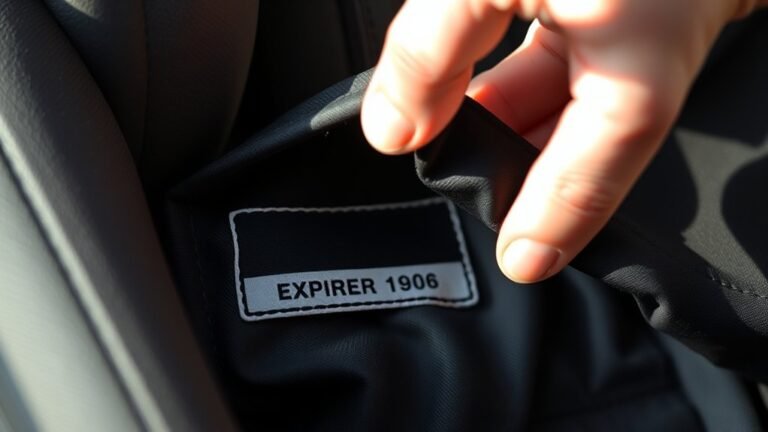
Where can you find the exact expiration date on your car seat? Start by locating the manufacturer label, which is typically affixed to the back, bottom, or side of the seat. This label contains critical information including the model number, manufacturing date, and expiration date.
Don’t confuse it with general branding trivia or care tips labels, which offer maintenance advice but don’t specify the expiry. Pay close attention to the label’s details; some manufacturers print the expiration date clearly, while others provide a manufacturing date with instructions to calculate the expiry.
Knowing exactly where to find this label ensures you never rely on a car seat past its safe use period. Always inspect this label carefully to maintain your child’s safety with every ride.
Understand Expiration Date Codes
When can you be sure your car seat has passed its safe usage period? You need to find and interpret the expiration date codes printed or embossed on the seat. These codes indicate the exact timeframe the manufacturer guarantees safety and performance.
Look closely at the label for:
- A clear expiration date or “use by” date
- Batch numbers that may relate to production runs
- Expired codes often appear as a stamped date or a code you can decode via the manufacturer’s website
- The location of this information is typically near the manufacturing label or molded into the plastic shell
Ignoring expiration codes is risky; materials degrade, and safety standards evolve. Always confirm the seat hasn’t passed its expiration before use to ensure your child’s protection.
Check For Recalls And Updates
After identifying the expiration date on your car seat, take a moment to verify if there have been any recalls or safety updates related to your model. You can do this by visiting official websites like the National Highway Traffic Safety Administration (NHTSA), where recall updates are regularly posted.
Enter your car seat’s model number and manufacture date to check for any safety recalls that might affect its integrity or performance. Staying informed about recall updates is essential because manufacturers occasionally uncover defects or hazards after the seat is sold.
If your car seat is subject to a safety recall, follow the manufacturer’s instructions immediately, whether that means repair, replacement, or discontinuation of use. Regularly checking for recalls ensures your child’s safety isn’t compromised by outdated or faulty equipment.
Signs Your Car Seat Is No Longer Safe to Use
How can you tell if your car seat has reached the end of its safe usage? It’s essential to recognize clear signs that compromise safety, rather than getting distracted by irrelevant topics or unrelated concepts. Your child’s protection depends on this vigilance.
Look for these warning signs:
- Cracks or fractures in the plastic shell.
- Faded, torn, or brittle straps and harnesses.
- Missing labels with expiration dates or manufacturing details.
- Evidence of previous accidents or impacts, even minor ones.
Ignoring these indicators can put your child at risk. Don’t assume a car seat is safe simply because it looks intact or hasn’t been involved in a severe crash. Always prioritize safety by evaluating these specific signs before continued use.
How to Maintain and Store Your Car Seat Safely
Recognizing signs that your car seat is no longer safe to use helps you avoid potential dangers, but maintaining and storing your seat properly extends its lifespan and reliability.
For effective storage maintenance, always clean the seat with mild soap and water; avoid harsh chemicals that degrade materials. Store the car seat in a dry, temperature-controlled environment to prevent mold growth and material warping.
Regularly inspect the safety alignment of straps and buckles, ensuring they remain correctly positioned and free from fraying or damage. Tighten any loose components promptly to maintain structural integrity.
Avoid prolonged exposure to direct sunlight, which can weaken plastics and fabrics. By following these precise storage maintenance and safety alignment practices, you ensure your car seat remains safe and functional for as long as possible.
When and How to Upgrade Your Child’s Car Seat
When should you upgrade your child’s car seat to guarantee maximum safety? You should replace it once your child outgrows the height or weight limits, when the seat shows signs of wear, or if it’s been involved in a crash. Always check product warranties to avoid using an expired or recalled seat.
Prioritize child safety by staying vigilant about these key indicators:
- Your child exceeds the manufacturer’s size limits.
- The car seat has visible damage or missing parts.
- The product warranty has expired.
- The seat has been in any accident, no matter how minor.
Upgrading promptly ensures you maintain the highest protection standards. Always follow manufacturer guidelines and consult safety experts to choose the right seat for your child’s current needs.
Frequently Asked Questions
Can I Use a Secondhand Car Seat Safely?
You can use a secondhand car seat safely only if it’s an unused seat, fits your vehicle’s brand compatibility, and has no damage. Always follow precise installation tips, and consider recycling options if unsure about its history or condition.
Are Car Seat Expiration Dates Regulated by Law?
Before smartphones, you’d rely on manuals, but today, product safety regulations do set expiration timelines for car seats. These laws ensure you don’t use outdated seats, keeping your child safer by following strict safety guidelines.
How Do Climate and Weather Affect Car Seat Materials?
You’ll find that climate wear accelerates material aging in car seats, especially under extreme heat or cold. Harsh weather breaks down plastics and fabrics, so regularly inspect your seat for cracks or fading to ensure safety.
What Should I Do if My Car Seat Manufacturer Goes Out of Business?
If your car seat manufacturer goes out of business, remember 59% of car seats fail safety tests over time. Prioritize new safety standards over old vs new safety concerns, and avoid after-market parts to assure maximum protection.
Can Car Seat Covers or Accessories Impact Safety or Expiration?
Yes, car seat covers or accessories can impact accessory safety and reduce car seat durability. You shouldn’t use non-approved items, as they may interfere with proper harness function or compromise crash protection, risking your child’s safety.
Conclusion
So, you’re thinking your car seat’s good forever? Think again. Those expiration dates aren’t just there to mess with you—they’re lifesavers. Crashes, wear, and time all turn your trusty seat into a not-so-trusty hazard.
Stay sharp, check those dates, and don’t let your kiddo ride in a relic. Upgrade when needed, store it properly, and remember: your child’s safety isn’t up for debate or nostalgia.
Car seats age—so should your caution. Knowing how long a car seat is good for is key to keeping your little one safe on every trip.