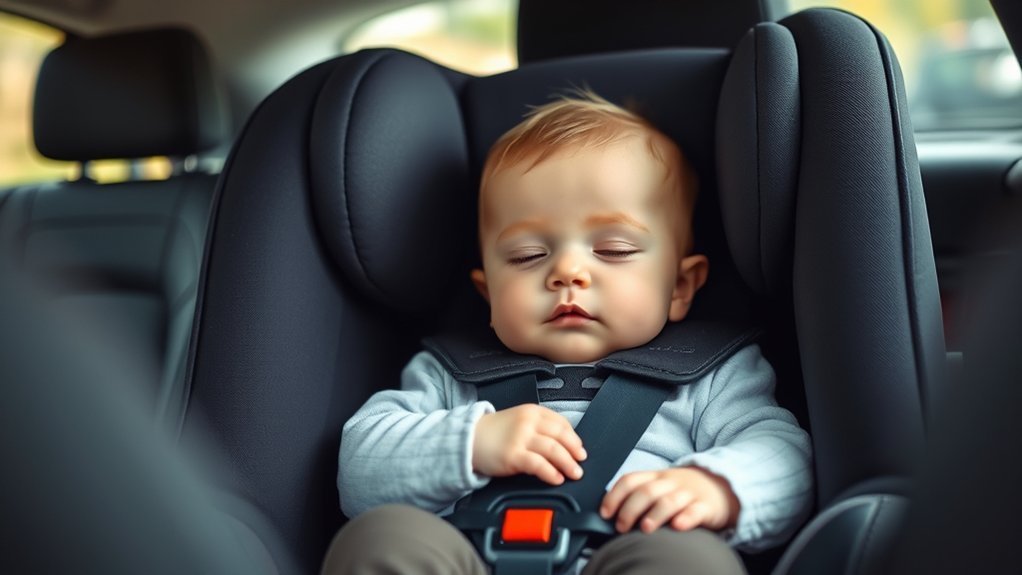
How Long Can a Baby Be in a Car Seat
You shouldn’t keep your baby in a car seat for more than two hours at a time. Prolonged periods can restrict blood flow, affect breathing, and disrupt sleep. It’s important to understand how long a baby can be in a car seat to ensure their safety and comfort.
Watch for signs like fussiness, restlessness, or slumping, which mean it’s time for a break. Plan to stop frequently for movement, hydration, and comfort.
Knowing when to switch seats as your baby grows also boosts safety. Learn how to ease travel stress and choose the best gear for every trip.
How Long Can Babies Safely Stay in Car Seats?
How long can babies safely stay in car seats before it becomes a concern? Experts recommend limiting continuous time in a car seat to no more than two hours.
Limit your baby’s continuous time in a car seat to two hours to ensure safety and comfort.
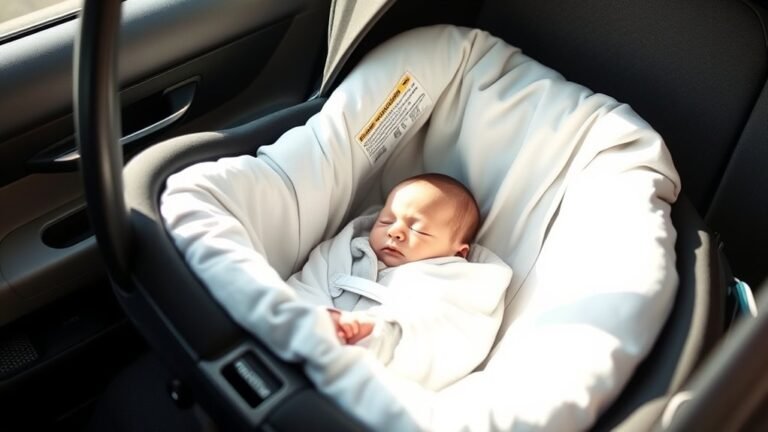
Prolonged periods can compromise car seat safety and affect infant sleep quality by restricting airflow and causing poor positioning. When your baby sleeps in the car seat, monitor their posture closely to ensure their airway remains open.
Extended use can increase the risk of positional asphyxia, particularly for newborns. Always prioritize breaks during long trips to remove your baby from the car seat and allow movement.
Adhering to car seat safety guidelines helps prevent discomfort and potential health risks. Remember, while car seats protect during travel, they are not designed for prolonged stationary use.
Signs Your Baby Needs a Break From the Car Seat
When should you take your baby out of the car seat for a break? Watch for clear signs like fussiness, restlessness, or arching their back. These indicate discomfort and the need for movement.
If your baby starts to slump forward or exhibits labored breathing, it’s essential to pause and reposition them. Frequent crying or difficulty settling also signals that it’s time for a break.
Incorporate regular stops during longer trips to address these signs effectively. Bringing along discussion ideas unrelated to the trip, such as singing or talking about non-travel topics, can calm your baby and make breaks more enjoyable.
Staying alert to these cues ensures your baby’s safety and comfort, preventing potential strain or distress linked to prolonged car seat time.
What Happens If Babies Stay Too Long in Car Seats
If your baby stays in a car seat too long, they face physical risks like restricted blood flow and breathing difficulties. Prolonged time in this position can also affect their development, potentially causing muscle strain or delayed motor skills.
You need to limit car seat time to protect your baby’s health and growth.
Physical Risks
Why should you limit the amount of time your baby spends in a car seat? Prolonged use poses serious physical risks that can affect their well-being. First, the restricted position can lead to poor circulation and breathing difficulties.
Second, the risk of overheating increases significantly, especially if the environment is warm or the baby is swaddled. Third, caregiver fatigue can result from constant vigilance needed to monitor your baby’s condition, which might lead to missed signs of distress.
To minimize these dangers, follow these guidelines:
- Limit car seat use to no more than 2 hours at a time.
- Ensure proper ventilation to reduce overheating risk.
- Take regular breaks to check your baby’s comfort and health.
Prioritizing these steps protects your baby’s physical health and your peace of mind.
Developmental Concerns
How long can your baby safely stay in a car seat before it starts affecting their development? Prolonged time in a car seat can interfere with essential developmental milestones, such as muscle strength and motor skills.
When babies spend too long restrained, they miss critical opportunities to move freely, which is vital for physical growth. Additionally, extended periods in a car seat can disrupt natural sleep patterns, leading to fragmented or poor-quality sleep.
This can affect brain development and overall well-being. To protect your baby’s progress, limit car seat time to necessary travel only, and ensure they have plenty of supervised, unrestricted time on flat surfaces to encourage healthy movement and rest.
Prioritizing these practices helps support your baby’s growth without compromising safety.
When to Switch From Infant to Convertible Car Seats
When should you switch from an infant car seat to a convertible car seat? The transition depends on your baby’s growth and the infant specific seat design limitations. Infant seats are tailored for newborns and smaller babies, often with weight and height caps.
You should consider switching when:
- Your baby exceeds the maximum weight or height recommended by the infant specific seat.
- Your baby’s head is within 1 inch of the top of the seat, indicating limited head support.
- The infant seat no longer provides a secure fit, compromising safety.
Convertible car seats accommodate larger sizes and offer rear-facing options longer, enhancing protection. By monitoring these factors, you ensure your child’s safety without rushing the transition prematurely.
How to Keep Your Baby Comfortable During Car Rides
To keep your baby comfortable during car rides, dress them in breathable, layered clothing that’s easy to adjust. Make sure to plan frequent breaks to give your baby a chance to stretch and move outside the car seat.
These steps help prevent overheating and reduce discomfort on longer trips.
Proper Clothing Choices
Why does your baby’s clothing matter during car rides? Proper attire ensures comfort, safety, and ease while buckled in. Fashion trends for infant wear often emphasize softness and flexibility, which you should prioritize over style alone.
When choosing clothes, consider these key points:
- Opt for breathable, non-bulky fabrics to avoid interfering with the car seat harness.
- Avoid thick coats or heavy layers that can compress, making the harness less effective.
- Use travel accessories like lightweight blankets or hats to regulate temperature without adding bulk.
Frequent Breaks Needed
How often should you pause during a car ride to keep your baby comfortable? Experts recommend taking breaks every 1 to 2 hours to prevent discomfort and reduce the risk associated with prolonged car seat use.
During stops, let your baby stretch out and enjoy some movement. Bring along safe toys to keep your little one entertained and pack nutritious snack ideas to maintain energy levels. These breaks help prevent fussiness and ensure your baby’s well-being throughout the journey.
| Break Interval | Activity Suggestion |
|---|---|
| 0–1 hour | Check diaper, adjust straps |
| 1 hour | Offer snack ideas, change position |
| 1.5 hours | Engage with safe toys |
| 2 hours | Take baby out for a walk |
| Every break | Hydrate and soothe baby |
Tips for Handling Long Car Trips With a Baby
When planning a long car trip with a baby, what strategies can help keep both your child and you comfortable and safe? First, debunk common car seat myths. Never remove your baby from the seat during travel for comfort, as it compromises safety. Instead, use proper travel gear designed for support and convenience.
Prioritize safety by keeping your baby securely in their car seat and using proper travel gear for comfort.
To manage long trips effectively:
- Schedule regular breaks every 1-2 hours to give your baby time out of the car seat.
- Pack essential travel gear like blankets, toys, and snacks to keep your baby engaged and cozy.
- Dress your baby in comfortable clothing that allows easy temperature regulation.
Safe Travel Options Besides Car Seats for Babies
Are there safe travel alternatives to car seats that you can consider for your baby? While car seats are the safest option for car travel, certain situations call for other baby gear designed for safe travel outside the vehicle.
Here are some options you might find useful:
| Travel Option | Description |
|---|---|
| Baby Carrier | Keeps baby close, ideal for short trips on foot. |
| Stroller | Great for walking; some models attach car seats. |
| Travel Bassinet | Provides a flat, safe sleeping surface on the go. |
| Portable Play Yard | Safe space for rest during stops or travel breaks. |
Each option supports safe travel by ensuring your baby’s comfort and security beyond the car seat environment. Always choose gear meeting safety standards.
Frequently Asked Questions
Can Car Seats Be Used for Sleeping Outside the Car?
You shouldn’t use car seats for sleeping outside the car because they don’t support proper sleeping safety. Limit naps in car seats to short durations only, ensuring your baby isn’t in one for extended periods.
How Do I Properly Install a Car Seat?
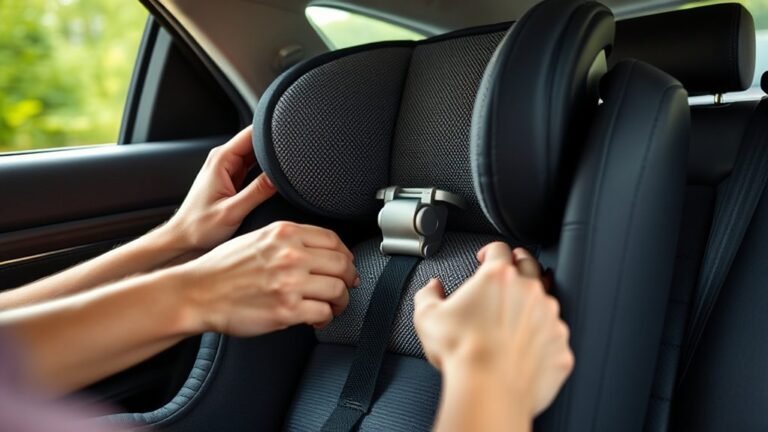
To properly install a car seat, secure it tightly using your vehicle’s seat belt or LATCH system. Buckle properly by clicking the harness, and check harness tension. It should be snug with no slack and lie flat against your baby’s chest.
What Are the Best Brands of Car Seats for Safety?
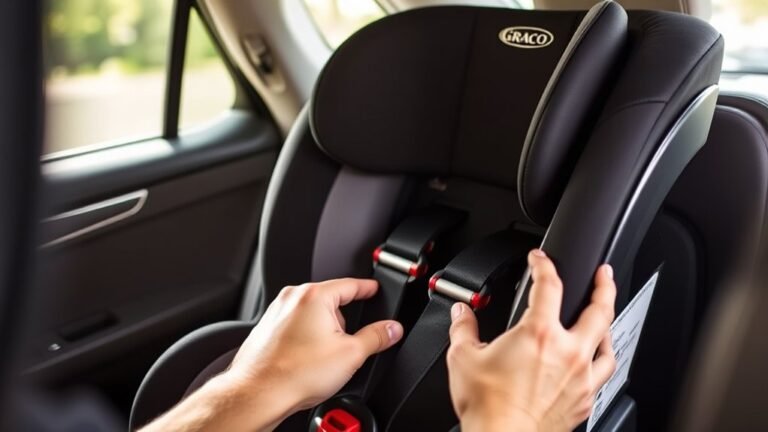
Coincidentally, brands like Chicco and Graco top the charts with the best safety ratings, especially focusing on infants.
You’ll want to choose infant-focused brands that combine comfort and protection for your baby’s safest ride.
How Often Should a Car Seat Be Replaced?
You should replace your car seat every 6-10 years or after any crash. Check car seat indicators and ensure newborn positioning remains correct to maintain safety and proper support for your baby’s development.
Are Secondhand Car Seats Safe to Use?
You shouldn’t assume secondhand safety is guaranteed. Always perform a thorough car seat evaluation, checking for recalls, expiration dates, and damage.
If any doubt exists, choose a new seat to ensure your baby’s protection.
Conclusion
You shouldn’t keep your baby in a car seat for more than two hours at a stretch—think of it like a knight’s armor, protective but not meant for long battles. Watch for fussiness or slumping as signs your little one needs a break.
Switching to the right seat at the right time and planning regular stops will keep your baby safe and comfortable.
Remember, smart travel choices ensure smooth, worry-free trips for you and your child. Always consider how long a baby can be in a car seat to maintain their safety and well-being.