How Do You Reupholster a Car Seat
To reupholster a car seat, first gather matching fabric, a staple gun, hog ring pliers, scissors, and foam padding. Removing the old upholstery carefully is essential, noting how it’s attached to the frame for reference.
Measure each section precisely, then cut new material with seam allowances. Fit the fabric onto the frame, checking alignment to ensure a smooth finish.
Attach the fabric tautly using clips or hog rings, reinforcing high-stress areas for durability. Finally, adjust for tension and safety. Following these steps ensures a professional finish and sets you up to master the full process effectively.
Gather Tools and Materials for Car Seat Reupholstering
Where do you begin when reupholstering a car seat? Start by gathering all necessary tools and materials to ensure a smooth process. You’ll need upholstery fabric that matches the existing color precisely, including any new headrest covers.
Begin your car seat reupholstering by collecting all essential tools and perfectly matched fabric.
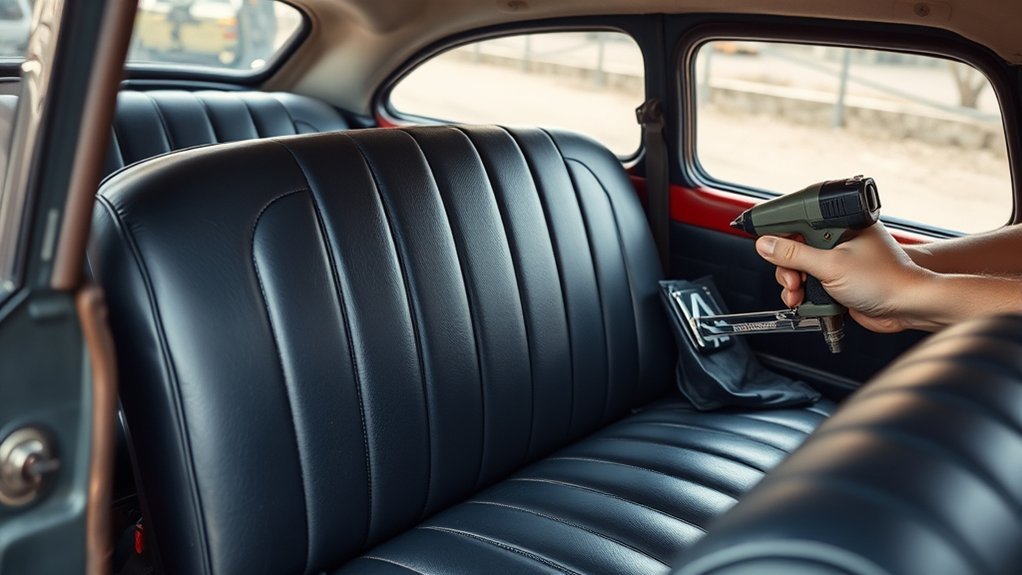
Achieving perfect color matching is critical for a professional finish. Essential tools include a staple gun, hog ring pliers, scissors, screwdrivers, and a heat gun for stretching fabric.
Don’t forget high-quality foam padding if the seat requires additional cushioning. Having replacement clips and fasteners on hand is also practical, as old ones may break during disassembly.
Assemble everything on a clean workspace with good lighting. By preparing these items upfront, you’ll avoid interruptions and maintain efficiency throughout the reupholstering project.
Remove Old Upholstery and Inspect Car Seat Frame
How do you begin removing the old upholstery without damaging the car seat frame? Start by carefully detaching any clips, staples, or screws securing the fabric. Use a flathead screwdriver or pliers to gently pry and pull out fasteners, avoiding excessive force.
Peel back the upholstery slowly to expose the foam and frame underneath. As you proceed, keep track of how the fabric is attached for reassembly.
Once the upholstery is removed, focus on inspecting the frame. Look for cracks, rust, or bent metal that could compromise seat integrity.
Check weld points and mounting brackets for stability. Clean off debris and old adhesive to get a clear view of the frame’s condition.
Address any frame damage before continuing to ensure your reupholstered seat is safe and durable.
Measure, Cut, and Fit Your New Upholstery Material (Fabric or Leather)
After ensuring the car seat frame is clean and free of damage, you can turn your attention to preparing the new upholstery material. Start by taking precise measurements of each seat section to guarantee measurements accuracy.
Transfer these dimensions to your fabric or leather, allowing extra margin for seams and tucking. When cutting, use sharp tools to avoid frayed edges. Fit each piece onto the seat frame, checking for proper seam matching to maintain alignment and aesthetic continuity.
| Step | Key Detail |
|---|---|
| Measure | Use a flexible tape for accuracy |
| Cut | Include 1-2 inch seam allowances |
| Fit | Align seams carefully for a smooth finish |
This methodical approach ensures a professional fit before final attachment.
Attach New Upholstery to Your Car Seat Securely
When do you know your new upholstery is securely attached? First, ensure the fabric or leather lies taut against the foam padding without wrinkles or loose areas. Use secure stitching techniques, like double stitching or heavy-duty thread, to fasten the material along seams and attachment points.
Pay special attention to high-stress zones, reinforcing them to maintain foam durability beneath the cover. Avoid overstretching, which can compromise foam integrity. Attach the upholstery to the seat frame using clips, hog rings, or adhesives designed for automotive use, ensuring each fastener is tight and evenly spaced.
Test the fit by applying pressure and moving the seat cover to check for shifts or slack. This precise attachment process guarantees longevity and maintains the structural support of your reupholstered car seat.
Make Final Adjustments and Care for Your Reupholstered Car Seat
Where should you focus to guarantee your reupholstered car seat performs well over time? Start by meticulously inspecting all attachment points to ensure the fabric is taut and securely fastened without wrinkles or loose edges. Make necessary tension adjustments, as improper fit can accelerate wear or cause safety issues.
Follow established care tips: regularly clean with manufacturer-approved products, avoid harsh chemicals, and protect from prolonged sun exposure to prevent material degradation. Address liability concerns by confirming that all modifications maintain the seat’s structural integrity and do not interfere with airbags or seatbelt function.
Document your work for reference and potential warranty claims. By prioritizing these final adjustments and ongoing care, you’ll extend the lifespan of your reupholstered seat while ensuring safety and reliability.
Frequently Asked Questions
How Long Does Reupholstering a Car Seat Typically Take?
Reupholstery timing typically ranges from 4 to 8 hours depending on seat complexity and materials. You can consider seat replacement alternatives for quicker solutions, but reupholstering guarantees a custom, precise fit tailored to your vehicle’s needs.
What Types of Upholstery Materials Are Best for Durability?
You want materials that stand like warriors against wear. Durable leather offers strength and breathability, while performance vinyl resists stains and UV damage. Both provide practical, long-lasting protection for your car seat’s daily battles.
Can I Reupholster Heated or Ventilated Car Seats Myself?
You can reupholster heated, ventilated seats yourself, but you’ll need to carefully disconnect electrical components and preserve functionality. Ensure custom stitching accommodates wiring, and test all features before final assembly to avoid damaging seat systems.
How Much Does Professional Car Seat Reupholstering Cost?
You’ll typically pay $500 to $1,200 for professional car seat reupholstering, depending on materials like premium vinyl or embossed leather.
Costs vary by labor intensity, seat complexity, and fabric quality you choose for durability and aesthetics.
Will Reupholstering Affect My Car Seat’s Safety Features?
Worried about reupholstery safety? You shouldn’t be if you guarantee seatbelt compatibility and don’t interfere with airbags or sensors. Proper materials and expert installation keep your car seat’s safety features fully functional and reliable.
Conclusion
Now that you’ve nailed the necessary tools, neatly removed the old upholstery, and measured meticulously, you’re ready to masterfully mount your new material. Securely stretching and stitching ensures a sleek, smooth seat surface.
Remember, making minor modifications maximizes comfort and maintains your car’s craftsmanship. With careful care and consistent check-ups, your reupholstered ride will remain resilient and refined.
Reupholstering your car seat is a satisfying, skillful solution that sharpens both style and functionality. Mastering how do you reupholster a car seat will elevate your vehicle’s interior and personal comfort.