How Do You Remove Car Seat From Base
To remove your car seat from the base, first identify the release lever, usually located near the rear or sides where the seat connects to the base, often color-coded.
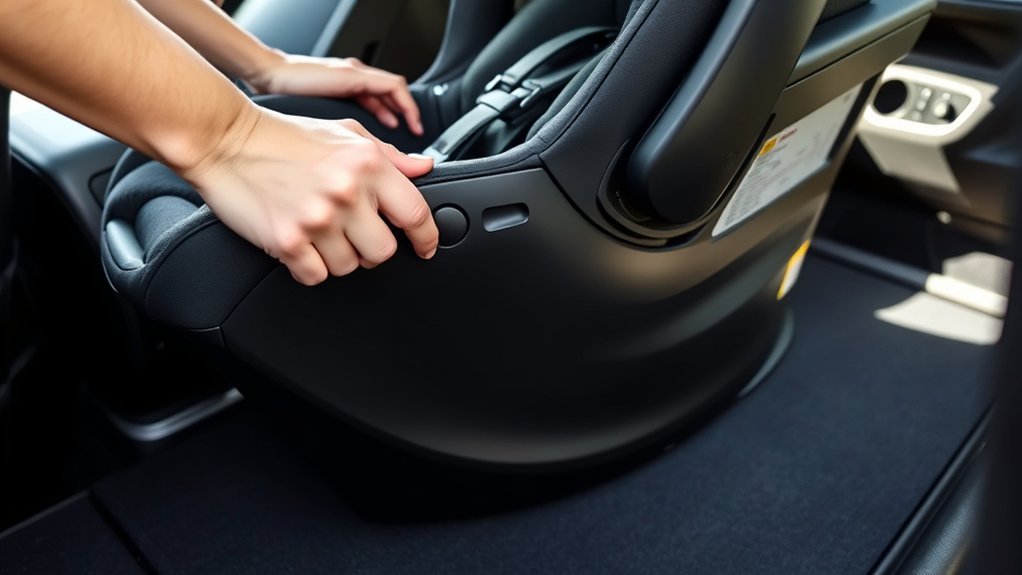
Firmly grip the handles, press or pull the lever as your model specifies, then lift the seat slightly to disengage all connectors, including LATCH hooks.
If it won’t release, check for jams or debris without forcing it.
Proper removal prevents damage and ensures safety—there’s more to know for maintaining and reinstalling your seat correctly.
Identify Your Car Seat and Base Model
Before you begin removing your car seat from its base, start by identifying the exact model of both components. Locate the manufacturer’s labels typically affixed to the underside or back of the base and the bottom or side of the car seat.
Record the model numbers, manufacture dates, and serial numbers. This step is critical to avoid identification pitfalls that can delay or complicate removal. You might encounter multiple versions of bases or seats that look similar but differ in release mechanisms.
Additionally, verify compatibility concerns; some car seats only fit specific bases, and misidentification could lead to improper detachment or damage. By methodically confirming these details, you ensure a smoother, safer removal process tailored to your particular car seat and base model.
Where to Find the Car Seat Release Lever?
After confirming your car seat and base model, focus on locating the release lever that detaches the seat from its base. Typically, this lever is a clearly marked handle or button positioned near the rear or sides of the car seat where it connects to the base. Some models have color-coded indicators guiding you to the release mechanism.
To find it, check the user manual first, as it provides exact diagrams and placement details. Avoid confusing the release lever with unrelated topics like harness adjusters or base recline controls, as these serve different functions.
Methodically inspect the junction between the seat and base, applying gentle pressure to identify a movable component designed specifically for detachment. This step ensures you’re prepared for a smooth, safe removal process without unintended damage.
How to Detach Your Car Seat From the Base
How exactly do you detach your car seat from the base without causing damage? Following a methodical approach ensures you maintain both car maintenance standards and travel safety. Start by locating the release lever identified earlier.
Then, proceed with these steps:
- Firmly grip the car seat handles.
- Press or pull the release lever as specified in your model’s manual.
- Slightly lift the car seat to disengage it from the base.
- Check that all connectors, such as LATCH hooks, are fully released.
- Slowly separate the car seat from the base without forcing.
This precise sequence prevents damage to the base or seat and maintains the integrity of safety mechanisms critical for your child’s protection during travel. Always consult your car seat manual for model-specific instructions.
Safely Lift and Remove the Car Seat
First, locate the release mechanisms to disengage the car seat from the base securely. Then, support the seat firmly while lifting to maintain control and balance.
Be careful to avoid pinching your fingers during the removal process.
Locate Release Mechanisms
Where exactly are the release mechanisms located on your car seat base? Identifying these two-word ideas is critical for a smooth removal process. Typically, release mechanisms are positioned to enable easy access and safe detachment.
Look carefully around these common areas:
- Rear of the base near the handle
- Underneath the car seat, close to the latch
- On the sides adjacent to the base locking arms
- Near the belt path or tether strap connection
- Integrated as a push button or pull lever with clear labeling
Familiarize yourself with these release mechanisms before attempting removal. Knowing their exact positions ensures you engage the correct controls without damaging the base or seat.
This methodical approach reduces risk and prepares you for the next step: supporting the seat while lifting.
Support Seat While Lifting
Once you’ve disengaged the release mechanisms, you’ll want to support the car seat firmly to maintain control during lifting. Grasp the seat base and body simultaneously to lift securely. Avoid sudden movements to prevent instability.
Ensure the base is fully disengaged before lifting to avoid damage.
| Step | Action | Purpose |
|---|---|---|
| 1 | Disengage base | Prevents locking |
| 2 | Support seat firmly | Maintains control |
| 3 | Lift securely | Ensures safe removal |
Avoid Pinching Fingers
How can you guarantee your fingers stay safe while lifting and removing the car seat? Focus on deliberate hand placement and controlled movements to prevent injury. Avoid distractions that might lead you to think about an unrelated topic or off-topic idea during this critical step.
Follow these precautions:
- Keep fingers clear of hinges and locking mechanisms.
- Use the designated grip areas on the car seat.
- Lift steadily, avoiding sudden jerks.
- Maintain visual focus on your hands and the base.
- Ask for assistance if the seat is heavy or awkward.
Know Your Car Seat Base Types
Why does identifying your car seat base type matter? Knowing your base type ensures proper detachment methods, which directly impact car seat safety. Different bases use varied release mechanisms; some have levers, others buttons or pull straps.
Understanding these distinctions helps you avoid damaging the base or compromising safety features. Common base types include standard bases with manual release and those with integrated LATCH systems for secure installation.
As part of parent education, familiarize yourself with the manufacturer’s instructions specific to your base. This knowledge prevents errors during removal and reinstallation, maintaining the integrity of the car seat system.
What to Do If the Car Seat Won’t Release?
If your car seat won’t release from the base, first check for common issues like a stuck release lever or latch. You’ll want to inspect the mechanism carefully for any obstructions or damage that could be causing it to jam.
Following a step-by-step troubleshooting process can help you free the seat safely without forcing it.
Common Release Mechanism Issues
When a car seat refuses to release from its base, you’ll want to carefully inspect the release mechanism for common issues such as jammed buttons, stuck latches, or debris obstructing movement. Addressing these promptly ensures car safety and helps you avoid common mistakes that complicate removal.
Check for:
- Dirt or crumbs clogging the release button or latch
- Misaligned locking arms preventing disengagement
- Worn or damaged components hindering smooth operation
- Residual tension in the seat’s harness system
- Incorrect button or lever usage due to unfamiliarity with the model
Troubleshooting Stuck Car Seat
How can you effectively free a car seat that won’t release from its base? First, ensure you’re using the correct release mechanism, as product testing shows variations across models. Apply steady pressure on the release button or lever without forcing it, which can compromise car safety. If stuck, inspect for debris or misalignment obstructing the latch.
| Step | Action | Purpose |
|---|---|---|
| 1 | Identify release type | Confirm correct method |
| 2 | Press release button/lever | Disengage latch |
| 3 | Inspect latch for debris | Remove obstructions |
| 4 | Wiggle seat gently | Align latch properly |
| 5 | Consult manual if unresolved | Follow manufacturer guidance |
Following these steps methodically ensures safe removal and preserves car safety integrity.
Clean and Maintain Your Car Seat and Base
Why should you prioritize cleaning and maintaining your car seat and base regularly? Proper upkeep directly impacts car seat safety by ensuring all components function as designed. A consistent maintenance routine helps detect wear, prevents dirt buildup, and extends the lifespan of your equipment.
To maintain optimal safety and hygiene, follow these steps:
- Remove fabric covers and wash according to manufacturer instructions.
- Wipe plastic and metal parts with a mild detergent and damp cloth.
- Inspect harness straps for fraying or damage.
- Check base connectors and locking mechanisms for debris or corrosion.
- Allow all parts to dry thoroughly before reassembly.
Reinstall Your Car Seat Correctly
Where should you start to guarantee your car seat is reinstalled correctly? Begin by verifying car seat compatibility with your vehicle and base. Consult both the car seat and vehicle manuals to ensure proper fit and alignment.
Next, follow base installation tips meticulously: secure the base using either the LATCH system or seat belt, ensuring minimal movement, less than one inch side-to-side or front-to-back. Confirm the base angle is appropriate for your child’s age and weight, using built-in indicators if available.
Once the base is firmly installed, attach the car seat by aligning it precisely with the base connectors until you hear a click. Finally, perform a firm tug on the car seat to confirm it locks securely. This methodical approach ensures optimal safety and compliance with manufacturer guidelines.
Avoid Common Car Seat Removal Mistakes
When removing your car seat from its base, what critical errors should you watch out for? Ensuring car seat safety means avoiding these frequent mistakes:
Failing to fully disengage the base’s locking mechanism before lifting.
Pulling the car seat at an angle, risking damage to connectors or travel accessories.
Neglecting to check for loose straps or attachments that could snag.
Removing the seat while the vehicle is moving, which compromises safety.
Forgetting to read the manufacturer’s instructions specific to your model.
Frequently Asked Questions
Can I Remove the Car Seat Base Without Uninstalling the Seat Belt?
You can remove the car seat base without uninstalling the seat belt by disengaging the locking mechanism carefully. Always prioritize safety considerations, ensuring the base remains secured during removal.
Follow proper removal mechanics to prevent damage or injury.
How Often Should I Check the Car Seat Base for Damage?
You should check the car seat base for damage monthly, inspecting for cracks, wear, and seat belt wear. Regularly check recalls to assure safety updates.
Promptly address any signs of wear or damage to maintain proper protection.
Is It Safe to Remove the Car Seat Base During Travel?
No, you shouldn’t remove the car seat base during travel. Removal safety protocols and travel guidelines emphasize securing the base firmly to guarantee stability and protection throughout transit.
This minimizes injury risk in case of sudden stops or collisions.
Can I Use a Universal Base for Different Car Seat Models?
You can’t rely on a universal base due to strict base compatibility requirements. Always follow removal etiquette by consulting your car seat’s manual to ensure proper installation and safety.
Avoid mismatched bases that compromise protection.
What Tools Do I Need to Remove the Car Seat Base?
You don’t need tools to remove the car seat base. Just release the latch or lever. Avoid off-topic concerns or unrelated topics like vehicle maintenance. Focus solely on the base’s locking mechanism for safe, efficient removal.
Conclusion
Removing your car seat from its base doesn’t have to be a headache. By identifying your model, locating the release lever, and following safe lifting techniques, you’ll ensure a smooth process every time.
Remember, patience is key—you don’t want to bite off more than you can chew by forcing the seat free. Regular maintenance and knowing your base type will keep everything working like clockwork.
This approach makes reinstallations quick and secure down the road, simplifying how to remove car seat from base every time.