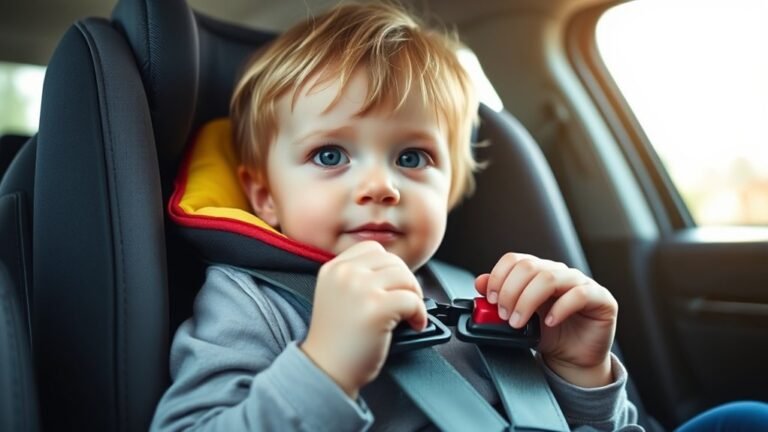
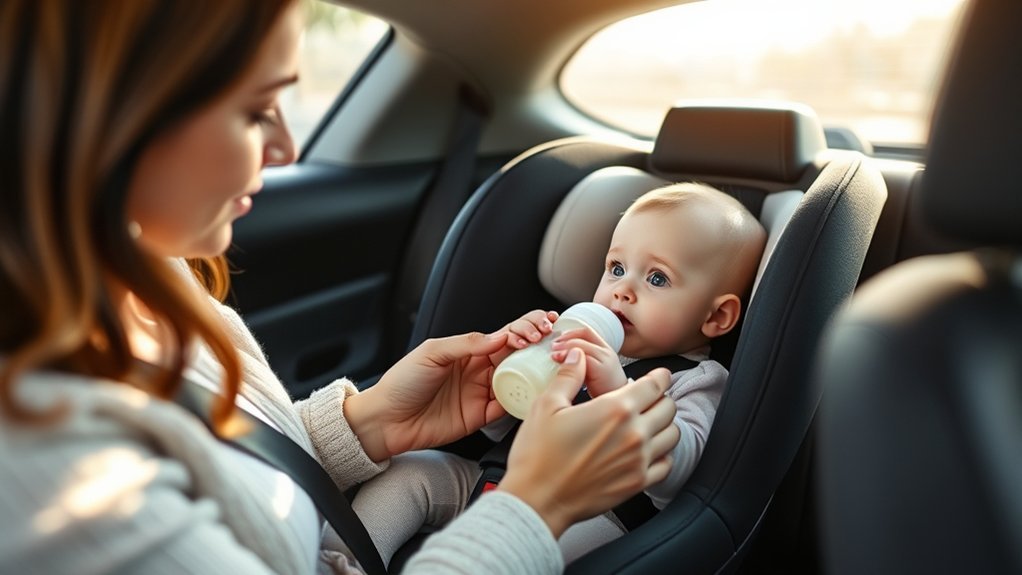
Can You Feed a Baby in a Car Seat
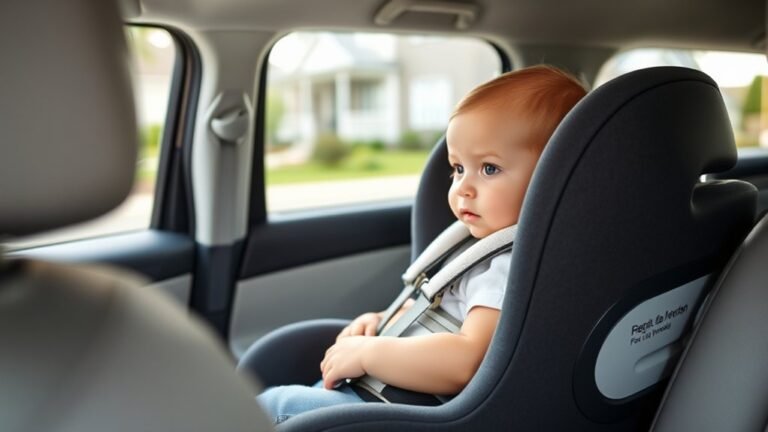
You shouldn’t feed a baby in a car seat because it raises choking risks and can disrupt breathing and digestion. Car seats are designed for protection during travel, not feeding, so feeding while in them—especially when moving—can cause the baby’s head to slump and milk to flow improperly.
Always remove your baby from the car seat during stops to feed them upright and alert. Keeping safety a priority ensures better comfort and digestion. There’s more to consider about proper feeding and travel safety.
Is It Safe to Feed a Baby in a Car Seat During Travel?
When it comes to feeding your baby in a car seat during travel, safety should be your top priority. You need to consider that car seats are designed primarily for protection during movement, not feeding.
Maintaining consistent feeding schedules is important, but interrupting travel to feed your baby outside the car seat is safer. Feeding while the car is in motion can compromise car seat safety because your baby’s head may slump forward, increasing risk.
If you must feed during stops, always remove your baby from the car seat, hold them upright, and ensure they’re alert. Following recommended car seat safety guidelines and prioritizing feeding schedules during breaks will help keep your baby safe and comfortable throughout your journey.
Health Risks of Feeding a Baby in a Car Seat: Choking and Digestion Issues
Why does feeding a baby in a car seat pose health risks? When you feed your baby in this position, the angle and posture increase the chance of choking because their airway isn’t fully aligned to swallow safely.
Additionally, digestion can be less efficient, potentially causing discomfort or reflux. It’s important to focus strictly on these risks, avoiding unrelated topics or irrelevant discussions that can distract you from the core safety concerns.
While some might bring up other points, staying informed by evidence about these specific health risks helps you make safer choices. Always prioritize feeding your baby in a properly supported, upright position outside the car seat to minimize choking hazards and support healthy digestion.
How Feeding a Baby in a Car Seat Affects Breathing and Digestion
How does feeding a baby in a car seat impact their breathing and digestion? When you feed a baby in a reclined car seat, their feeding posture isn’t ideal. The semi-upright position can cause milk to flow too quickly or pool in the throat, increasing the risk of breathing difficulties and choking.
Additionally, this posture may affect digestion by slowing gastric emptying and increasing reflux chances. Proper feeding posture, where the baby is more upright, supports safer swallowing and better digestion.
Also, maintaining travel hydration is important; dehydration can worsen digestive discomfort, especially during long trips. While it might seem convenient to feed your baby in the car seat, understanding these effects helps you prioritize safer feeding practices to protect their respiratory and digestive health.
When and How to Feed Your Baby Outside the Car Seat
You should always remove your baby from the car seat before feeding to ensure their airway stays clear and digestion isn’t compromised. Choose a safe, comfortable spot where you can hold your baby upright in a proper feeding position.
Plan regular feeding breaks during travel to reduce risks and help your baby feed more effectively.
Safe Feeding Locations
Where should you feed your baby to ensure both comfort and safety? Opt for a stable, upright surface like a high chair or a parent’s lap, avoiding feeding in the car seat to reduce choking risks.
Meal planning helps prepare nutritious options, while snack alternatives can keep your baby satisfied between feeds. Choose locations free from distractions and hazards.
| Location | Benefits |
|---|---|
| High chair | Stable, encourages good posture |
| Parent’s lap | Close supervision, comfort |
| Kitchen/dining area | Clean, controlled environment |
| Quiet room | Minimal distractions |
Prioritize spots where you can fully focus on your baby, ensuring feeding is safe and enjoyable. Avoid feeding on the go or in places where you can’t monitor your baby closely.
Proper Feeding Positions
When is the best time to feed your baby outside the car seat, and what positions promote safety and comfort? You should always remove your baby from the car seat before feeding to prioritize feeding safety and maintain car seat hygiene.
Feeding outside the car seat reduces the risk of choking and allows you to closely monitor your baby’s reactions. Hold your baby in a semi-upright position, supporting their head and neck to encourage easy swallowing and prevent aspiration.
Avoid reclining positions that can cause milk to flow too quickly or increase the chance of ear infections. Use a clean, comfortable spot with proper back support for both of you. This approach ensures safety, comfort, and helps maintain the cleanliness of the car seat for future travels.
Timing Feeding Breaks
Plan feeding breaks strategically during your travels to ensure your baby stays safe, comfortable, and well-nourished. Effective time management helps you decide when to pause your journey for feeding, ideally every two to three hours, depending on your baby’s hunger cues.
Avoid feeding your baby in the car seat, which can increase choking risks. Instead, remove your baby from the seat and hold them upright in a quiet, stable spot.
Snack timing is equally important for older infants; offer small, nutritious snacks during breaks to maintain energy without overstimulation. Remember, consistent breaks support digestion and reduce discomfort for your baby.
Safe Feeding Tips for Babies When Traveling
When feeding your baby while traveling, make sure they’re positioned safely to reduce choking risks. Use feeding tools designed for travel that help control flow and minimize spills.
Always keep a close eye on your baby during feeding to respond quickly if needed.
Positioning For Safe Feeding
How can you assure your baby stays safe while feeding in a car seat? Think of positioning like bedroom decor or office ergonomics: it’s all about support and alignment. Keep your baby’s head slightly elevated to reduce choking risks, just as you’d position a pillow for optimal neck support.
Avoid slumping or twisting that can block airways. Ensure the car seat is reclined according to manufacturer guidelines, mimicking the natural, slight incline babies need. Always support your baby’s head and neck with your hand or a well-designed insert, but never use bulky items that could interfere with the harness.
Position yourself so you can maintain eye contact and closely monitor swallowing. Following these evidence-based positioning tips helps minimize feeding hazards during travel.
Choosing Appropriate Feeding Tools
Supporting your baby’s head and positioning them correctly is just one part of safe feeding on the go. When choosing feeding tools, consider how they align with feeding logistics and car seat ergonomics.
Use bottles designed to minimize air intake, reducing the risk of gas and discomfort. Opt for nipples with a slow flow to help control milk intake and prevent choking.
Avoid feeding solids in the car seat, as swallowing may be impaired by the seat’s reclined angle. Bring easily cleanable tools to maintain hygiene during travel.
Make sure any accessories fit well with your car seat setup, allowing you to feed without compromising your baby’s posture. Thoughtful selection of feeding tools supports safety and comfort during travel.
Monitoring Baby During Travel
Why must you stay vigilant while feeding your baby during travel? Because feeding in a moving vehicle raises safety concerns, including choking risks and allergic reactions. Monitoring your baby closely helps you respond quickly to any distress.
Be especially mindful of food allergies and respect any spiritual considerations related to feeding practices.
Follow these key tips:
- Observe your baby’s reactions carefully for signs of choking or allergic response.
- Avoid distractions; focus solely on feeding to ensure safety.
- Keep in mind spiritual considerations that might influence feeding times or food choices.
- Choose safe, familiar foods to minimize allergy risks and discomfort.
Staying attentive ensures your baby’s wellbeing and makes travel feeding safer and more comfortable.
How to Prepare for Feeding Breaks on Long Car Trips
When planning feeding breaks on long car trips, you’ll want to schedule regular stops to ensure your baby stays comfortable and safe. Stick to consistent feeding schedules to prevent hunger cues from being missed. Prepare snack alternatives suitable for your baby’s age to keep them satisfied during travel delays.
| Time | Activity | Notes |
|---|---|---|
| Every 2 hours | Feeding break | Breastfeed or bottle feed |
| Midway | Diaper change | Check comfort and hygiene |
| Every 3 hours | Snack alternatives | Age-appropriate, easy to eat |
| Before rest | Hydration break | Offer water for hydration |
| End of trip | Final feeding | Ensure baby is well-fed |
Planning this way helps maintain your baby’s routine safely and effectively.
Frequently Asked Questions
What Types of Bottles Are Best for Feeding in a Car Seat?
You’ll want bottles with anti-colic valves and spill prevention features to reduce choking risks.
Make sure to practice thorough bottle sterilization before use, ensuring safety and hygiene during feeding in the car seat environment.
Can Breastfeeding Be Done Safely in a Car Seat?
You shouldn’t breastfeed in a car seat, as breastfeeding safety depends on proper positioning. Car seat positioning isn’t designed for feeding; it can increase risks of airway obstruction and suffocation.
Always feed outside the car seat for safety.
How Often Should I Stop for Feeding Breaks on Road Trips?
You should stop every 2-3 hours for feeding break frequency to guarantee your baby’s comfort and safety.
Choose bottle selection for travel carefully, opting for spill-proof bottles to make feeding smoother during these pauses.
Are There Car Seat Accessories That Help With Feeding?
Like Icarus seeking flight, you’ll want to avoid risky feeding setups. Some car seat accessories improve car seat ergonomics and feature travel bottle design, but always prioritize safety. Feeding’s best done during stops, not on the move.
What Signs Indicate a Baby Is Ready to Eat During Travel?
You’ll notice your baby shows hunger cues like lip-smacking, rooting, or fussiness during travel. Prioritize travel safety by stopping the car for feeding, ensuring proper feeding nutrition without risking choking or distraction while driving.
Conclusion
Feeding your baby in a car seat might seem convenient, but it’s best to avoid it to keep mealtime safe and comfortable. A quick pause outside the car seat not only helps your little one enjoy their meal but also supports healthy digestion and breathing.
Planning regular breaks during your trip ensures you both stay happy and healthy. Remember, a smooth journey includes safe, mindful feeding moments away from the hustle of the road.
For the best care, always consider whether you can feed your baby in a car seat safely, and opt for breaks that prioritize their well-being.